
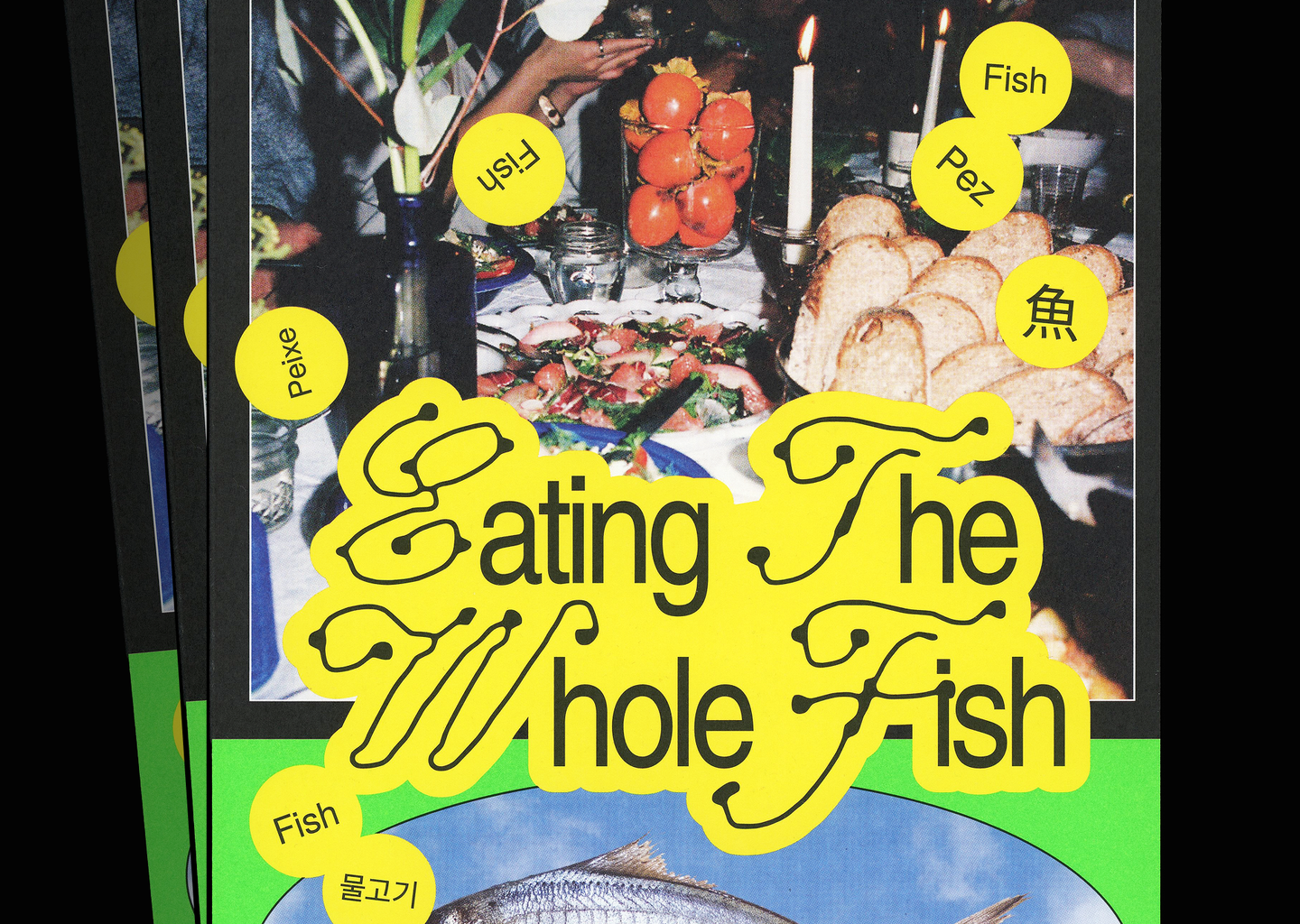
What started as an instructional zine – where the trio spoke to chefs, fishermen, fishmongers, and scientists – quickly grew into a bigger story, one about “culture, migration, supply chains, and ecology”, says Annie. This included a highly detailed, gatefold illustration of the relationship between a chef and a fisherman, hand-cut collages and a photo essay about a Chinese supermarket. This eclectic mix is mirrored in the editorial’s diverse design, featuring checkerboard patterns, anatomical diagrams and references to fish packaging, supermarkets and domestic craft. The influx of influences directly spoke to the magazine’s content too. “A lot of the fun came from seeing where these worlds could collide,” Ryan says, with the checkerboard motif that referenced familiar seafood shack tablecloths also reassembling pixel patterns, cross-stitch and data fields. “We wanted to strike a balance between playfulness and legibility without losing the personality of the book,” Ryans add.
Working with frequent collaborator Kayla Feng on Eating The Whole Fish’s design – who also studied at RISD – the magazine had a tremendous amount of love and care poured into its creation. “It’s a love letter to the diversity, eclectic kitsch, and heart of New England’s seafood culture,” Zoe says, and it’s one that doesn’t rely too heavily on nostalgia or New England tropes. “Beyond clam shacks and lobster rolls, are diasporic food cultures, Indigenous knowledge, and generations of different ways of catching, cooking, and understanding the fish in our waters,” Annie adds. This richness is what Eating The Whole Fish reflects. “The hope is to turn some of the curiosity and excitement around the book into real changes in how people buy, cook, and eat seafood,” Ryan ends, “while creating more opportunities for local fishermen and strengthening the connections between our coastal communities and the waters that sustain them.”