
 DarkSky.org is holding its annual dark sky conference on November 6-7, 2026. The event is called Under One Sky. Image via DarkSky.org.
Dark sky conference: Under One Sky, November 6-7
DarkSky International is a worldwide group aimed at combating light pollution. In 2026, its annual conference, titled Under One Sky, will be held virtually on November 6-7. The 24-hour event brings together a growing global community committed to reducing light pollution and protecting the night through advocacy and conservation.
Find out how to participate here.
DarkSky International describes what you can expect from the conference:
Under One Sky unites leading experts, inspiring storytellers, and dedicated advocates to share solutions and tools for preserving the night. From astronomers exploring distant galaxies to entomologists studying nocturnal insects, the conference covers topics as diverse as the night itself.
Experience transformative talks, insightful panels, and interactive workshops designed to empower you to make a difference in your community. Whether you’re improving urban lighting, protecting rural skies or promoting responsible astrotourism, there’s a session for you.
More about light pollution
The loss of the dark night sky has been happening for decades. Astronomers have even coined the word noctalgia (sky grief) for their sadness at the loss of dark skies. Approximately 99% of people in the U.S. and Europe live under light-polluted skies. And some 80% of people in North America can’t see the Milky Way from where they live.
But there is some good news. This year NASA shared a map of where the lights at night are getting dimmer. Read more about that here.
How are the skies where you live? This light pollution map can help you find the darkest skies close to home. Or visit EarthSky’s Best Places to Stargaze page to get recommendations from our community on where to enjoy dark skies.
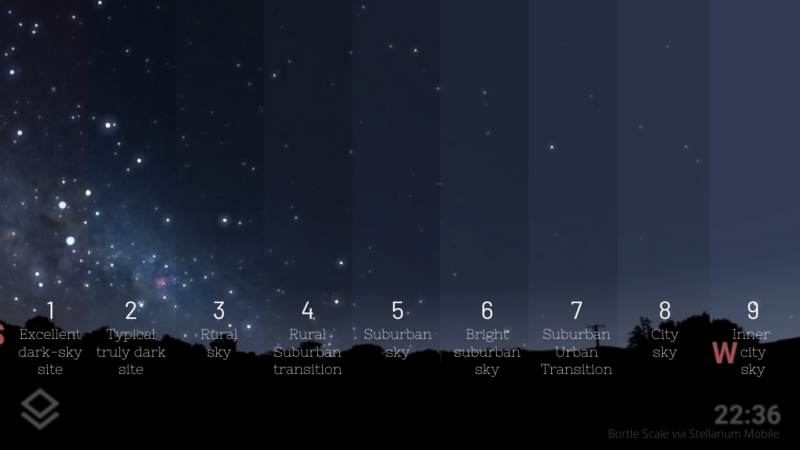 Artist’s concept showing dark skies versus more light-polluted skies. Sometimes astronomers talk about the Bortle scale. This is a rating given to an area’s night sky based on how many stars you can see due to light pollution. A higher number is a more light-polluted sky. A lower number is a more pristine sky. Image via Stellarium Labs.
Bottom line: On November 6-7, 2026, DarkSky International will hold a virtual dark sky conference called Under One Sky. Learn more about it here.
Kelly Kizer Whitt
View Articles
About the Author:
Kelly Kizer Whitt writes and edits some of the most fascinating stories at EarthSky.org. She’s been writing about science, with a focus on astronomy, for decades. She began her career at Astronomy Magazine and made regular contributions to other outlets, including AstronomyToday and the Sierra Club. She has nine published books, including a children’s picture book, Solar System Forecast, and a young adult dystopian novel, A Different Sky.