
Summary
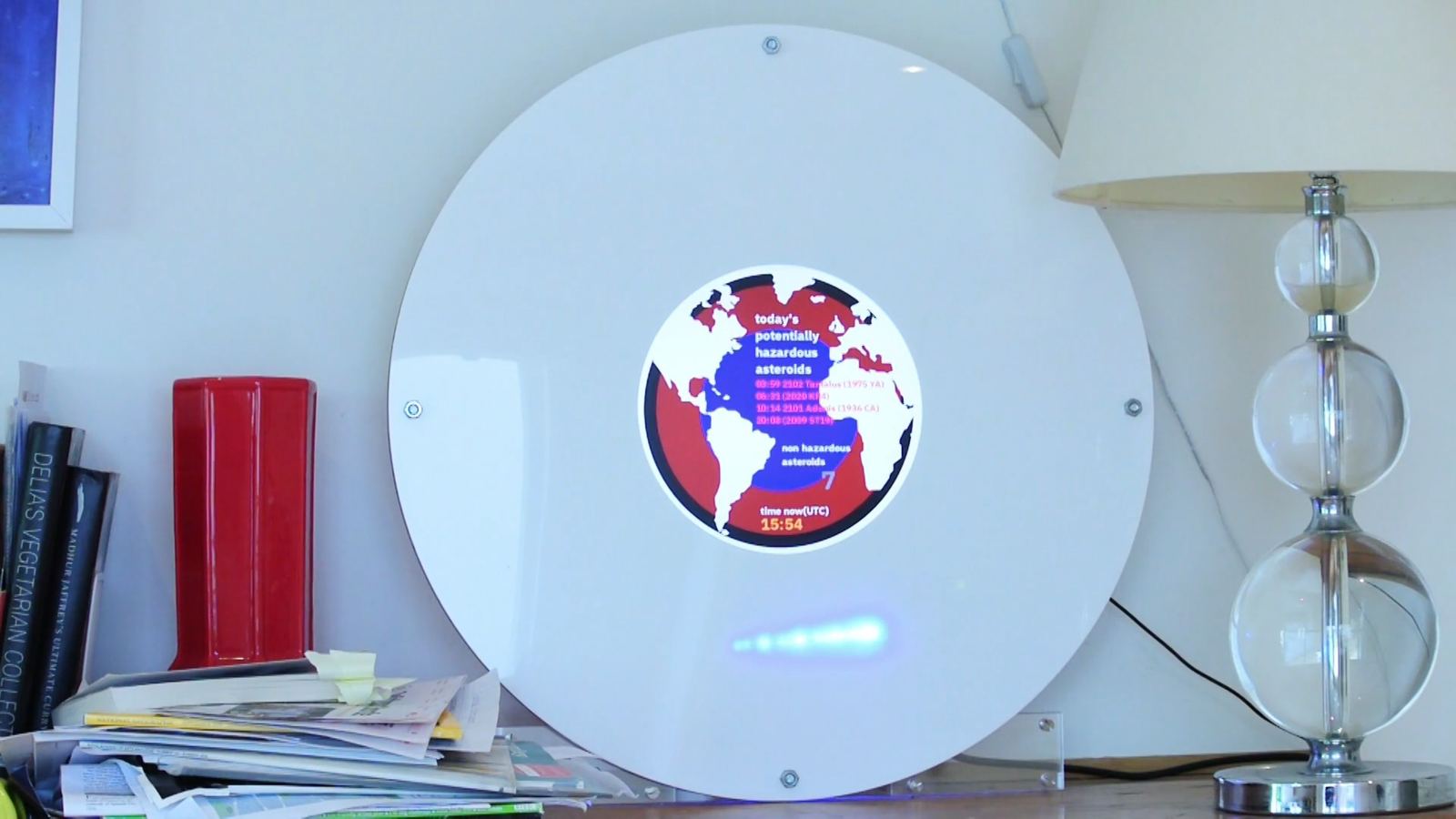
Raspberry Pi “asteroid clock” uses NASA API to list today’s asteroid flybys.
Red dots = potentially hazardous asteroids; blue dots = non-hazardous close passes.
It’s a playful, eerie reminder to stay aware of our place in space; code source starts with NASA API.
You know, I don’t think people are scared enough of asteroids. When we think of doomsday scenarios, we usually think of zombies, aliens, or natural disasters, but we don’t often consider the very real chance that a flying piece of space debris will smack into us and cause widespread destruction. I mean, if it did in the dinosaurs, it’d take us out for sure.
Fortunately, we have ways of scanning the night skies for anything that would potentially slam into our planet, and NASA keeps everyone informed about what’s on the horizon. So, if you’re sick and tired of feeling safe and secure on this planet, why not make this Raspberry Pi project that reminds us just how close we get to a collision every day?
This Raspberry Pi project gives you an “asteroid forecast” for the day
On the Raspberry Pi subreddit, user u/Big-Translator-3554 showed off the clock they’ve been working on. It’s not your average clock; instead of telling the time, it shows you all of the potentially hazardous asteroids (PHA) and non-hazardous asteroids (NHA) that will fly by Earth today. It even shows a little animation depicting where the asteroid flew past us; blue ones are NHA asteroids that came somewhat close, but posed no threat. Red ones are the PHAs that had the chance to do damage, but didn’t.
So, why would anyone set up something like this? Well, u/Big-Translator-3554 makes a pretty good case that we’re not as concerned about the universe we live in as we could be:
Ultimately space-time is the universal bond between all humans and non-humans. Being mindful of our connection to the universe strengthens our connection to each-other. With diminishing views of the Milky Way as a natural reminder, we must rely on our collective consciousness to retain awareness of our place in space. This is not easily achieved in modern society where our minds are pre-occupied with so many other things. Therefore, I created a dedicated communication channel in the form of an enchanted object to embed our universal connection into daily life.
While the creator hasn’t divulged the code behind the project, they do seem keen to share it, so keep an eye on them if you want to make your own. They do point toward the NASA API system for their data, so if you want to craft your very own project of existential dread, you could at least start there and then combine it with a Raspberry Pi display.