
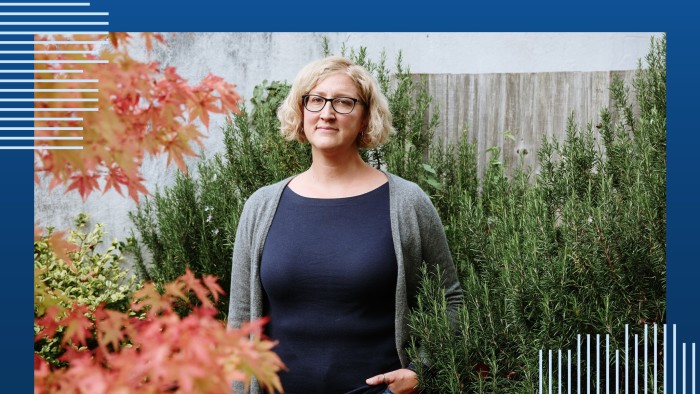
Jessica Spengler’s work as a translator is drying up. When new commissions do arrive they now often look more like proofreading poor-quality work than the specialised translation she has built a career on. The reason, she believes, is artificial intelligence.
“It’s really grim,” she says of the current jobs market. “More and more companies think, why should I hire somebody to do the work, if I can throw it through a program and pay someone much less to look over it.”
As employers explore outsourcing tasks to AI, translators are among the most vulnerable professions. More than a third had lost work to generative AI, according to a survey last year by the Society of Authors trade union. Four in ten said it had caused their income to fall.
“In the last three or four years there’s been a sea change,” says Ian Giles, chair of the translator’s Society of Authors branch. His own “dry spell” began six or seven months after the release of ChatGPT. “An awful lot of work has stopped coming . . . I’ve got a lot of colleagues who quietly bailed out of translating because you have to pay the bills.”
Automation has been creeping into translation for several years. The launch of Google Translate in 2010 brought the first big knock to employment growth in the profession, cutting the equivalent of 28,000 jobs in the US, according to estimates in the paper “Lost in Translation” published this year. DeepL, a machine translation tool started in 2017, was used by 82 per cent of language companies last year, according to a US association representing the sector.
But the arrival of generative AI is the biggest threat yet. Linguists were among the most endangered professions in this year’s index of generative AI exposure by the International Labour Organization. In Microsoft’s assessment of how workers used AI, interpreters and translators ranked as the most at-risk from automation.
AI at work: how are jobs changing?
This is part of a series of interviews examining how AI is reshaping different roles
Part one: How AI is helping one doctor treat cancer
Part two: Goldman Sachs bankers explore limits of AI
Companies such as GlobeScribe.ai promise “high-quality translation” for just $100 per language, per book — a fraction of what a human would typically charge.
Spengler, 52, who studied German and Jewish history and has specialised in translating books and documents linked to the Holocaust, says she uses DeepL occasionally “as a tool, like I’d use a dictionary”. She says it is “remarkably good” — but the outputs can be deceptive. It can hallucinate. “If you just want to get the gist of something it can be fine, you’ll get something very readable . . . but if the language is complicated or there’s specific terminology, it falls down.”
When she is contacted for work now, jobs often involve correcting crude machine translations. “Instead of going to a human translator first . . . they’ll throw it through a machine translation and ask a human to correct it.” The pay for these jobs is lower, and Spengler has so far turned them down when they are offered, though feels she is lucky to be able to do so.
The shift has “basically done away with” a great deal of commercial translation work, she says. Worse, she finds it “soul destroying” to be relegated to a proofreader of AI’s attempts at work she is skilled at. Because she needs the source text to identify errors, it is no easier than translating directly. “In the end, it takes more time, energy, and could be more costly for clients in the long run to correct something a machine has translated badly.”
Still, the Chartered Institute of Linguists, a UK organisation, says its members have reported a significant rise in this “machine translation post-editing”. In a 2024 survey, nearly half of respondents reported a significant decrease in translation work, with a further 21 per cent reporting at least some decline.
Spengler argues the sensitive nature of her field makes it inappropriate for AI: her portfolio includes books about why ordinary Germans carried out the Holocaust and materials for exhibitions at concentration camps.
She says it was a “gut punch” when, a few months ago, a client asked her to create a glossary so they could translate a new website for a concentration camp memorial — using AI.
“This was a long-term client — a steady source of income — and they wanted me to make myself obsolete,” Spengler says, noting that it was very sensitive material. “They need to get it right.” She refused the assignment, saying it felt “dehumanising to expect a fellow human being to fix a machine’s mistakes”.
Another time, an expert on a German sociologist asked Spengler to proofread a machine translation of her latest book. “I tried to explain that you’re not going to get anything readable from a machine translation for such complex work,” she says. “This is when I realised that even my niche literary career is at risk.”
Not everyone in the industry is pessimistic. Karen Decker, former president of the Association of Language Companies, says workers and employers are using AI for monotonous tasks, such as flagging errors, speeding up admin and generating notes. “We feel like it amplifies our services,” she says. “We still need the human touch.”
I tried to explain that you’re not going to get anything readable from a machine translation for such complex work
Jarek Kutylowski, the founder of DeepL, says the tool has “opened up new use cases for translation, such as composing emails to clients or colleagues in different languages” and is used by many professional translators who use it to “take on more projects and enhance their productivity”.
Giles suspects some work might return as clients begin to realise the limits of AI. Even Pedro Llanos-Paredes, one of the authors of the Lost in Translation paper, says its research does not show a “jobs apocalypse”. “We’re going to lose certain skills but . . . it will allow translators and other professionals to focus on what’s more important, the nuance and detail.”
Spengler believes there will “always be a sort of boutique” market for translation. But this type of work is sparse and often dependent on grants.
Post-editing work will become more common, she says. “You have to decide now, are you going to do that or not, and if you’re not, you have to take into account you might not have much — if any — work.”
Spengler does not plan to retrain — and hopes she can continue translating until “a reasonable retirement age”, even if just “scraping by”. Other options such as research, editing or archival work, are also threatened by AI.
But she is concerned for anyone starting out in the industry. With applications to language undergraduate degrees in the UK declining by more than a fifth between 2019 and 2025, a younger generation of translators appears to share those worries. “They will absolutely have to face this post-editing morass of bad texts to just get a foot in the door,” Spengler says.