
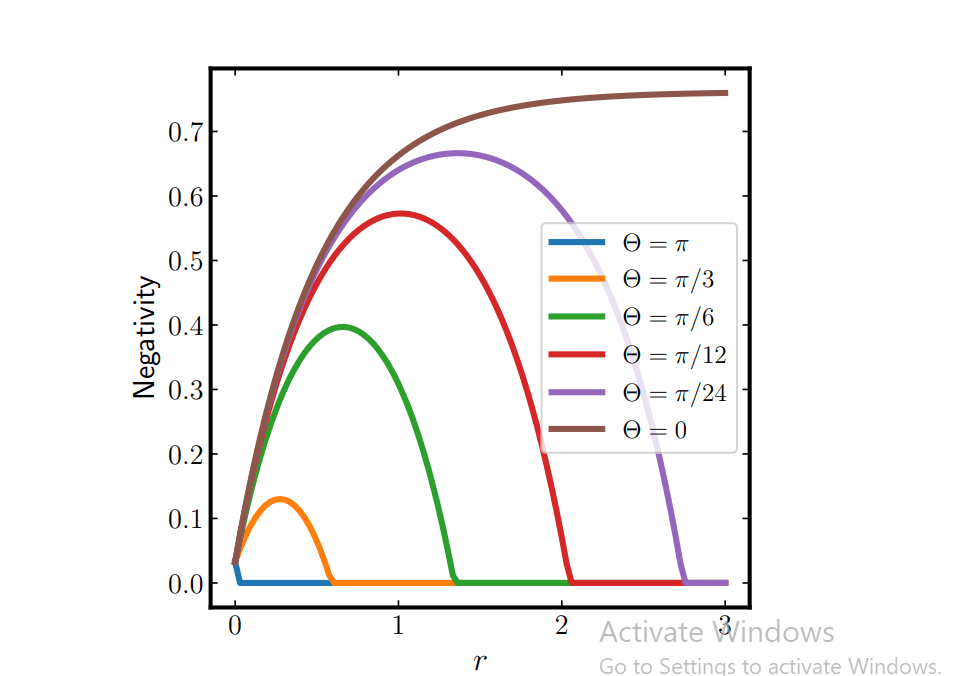
Quantum computers promise revolutionary computational power, but maintaining the delicate quantum states of qubits remains a significant challenge, as they are highly susceptible to environmental noise and decoherence. Barbara Šoda from University of Zagreb and Perimeter Institute for Theoretical Physics, Pierre-Antoine Graham from Perimeter Institute for Theoretical Physics and University of Waterloo, and T. Rick Perche from KTH Royal Institute of Technology and Stockholm University, alongside Gurpahul Singh from University of Waterloo and Perimeter Institute for Theoretical Physics, now present a new approach to quantum computing called trajectory-protected computing. This method cleverly utilises a qubit’s motion to shield it from decoherence, effectively isolating it from disruptive environmental influences, while simultaneously enabling the controlled implementation of quantum gates. By carefully controlling the qubit’s trajectory, the researchers demonstrate a pathway to perform both one- and two-qubit gates, and importantly, establish fundamental limits on the achievable speed of these operations, offering a promising new direction for building robust and scalable quantum computers.
Active Environmental Control Stabilizes Qubits
This research explores a new strategy for building more robust quantum computers by actively controlling the environment surrounding qubits, the fundamental units of quantum information. The central idea is to suppress decoherence, the process where quantum information is lost, not by isolating qubits, but by carefully managing their interactions. Researchers demonstrate that by precisely controlling a qubit’s trajectory, they can minimize disruptive interactions and maintain quantum coherence. The team achieves this by creating ‘transparent trajectories’, carefully designed paths that minimize resonant interactions, strong disturbances that cause rapid decoherence.
This approach allows them to harness weaker interactions to perform quantum gates, the operations that manipulate qubits to perform calculations. A key finding is a trade-off between qubit protection and computational speed, analogous to established limits in quantum computation, but with a physical mechanism that offers potential control. Furthermore, the research incorporates entanglement harvesting as a component of the computational process, enhancing the potential for complex calculations. This work offers a novel paradigm for quantum error correction, moving beyond passive shielding to active environmental control, potentially leading to more scalable quantum computers. The research deepens our understanding of the interplay between decoherence and quantum computation, addressing a core challenge in the field. By identifying a fundamental trade-off between protection and speed, the team provides valuable insights into the limits of quantum computation and potential pathways for optimization.
Qubit Protection via Dynamical Casimir Effect
Scientists have developed a quantum computing model that simultaneously isolates qubits from decoherence and enables controlled implementation of computational gates. The research models a qubit as an Unruh-DeWitt detector, accurately representing interactions between matter and the electromagnetic field. By confining the quantum field within a cavity, the team gained precise control over its interactions and minimized external influences. The team eliminated dominant decoherence channels by employing acceleration-induced transparency, precisely controlling the qubit’s trajectory. Simultaneously, they modulated the strength of non-resonant interactions, enabling the application of quantum gates.
By carefully separating and controlling these interaction channels, the study achieved a balance between qubit isolation and computational control. Researchers implemented one-qubit gates by stimulating counter-rotating wave terms and two-qubit gates by extracting entanglement from a squeezed state, demonstrating a universal set of gates. The work further investigates the fundamental limits of quantum error protection, specifically the trade-off between isolating qubits from decoherence and the speed at which entangling gates can be applied, demonstrating a relationship comparable to the established Eastin-Knill theorem for quantum error correction. This detailed analysis establishes a theoretical foundation for optimizing quantum computer performance and scalability.
Motion Protects Qubits, Enables Universal Gates
Scientists have achieved a new method for simultaneously isolating a qubit from decoherence and implementing controlled quantum gates by leveraging the qubit’s motion for protection. The research centers on a qubit interacting with a field, modeled using the Unruh-DeWitt detector framework, where the qubit follows a specific trajectory. By switching off resonant transitions using acceleration-induced transparency, the team eliminated dominant decoherence channels by precisely controlling the qubit’s trajectory. Experiments revealed the ability to perform one-qubit gates by stimulating counter-rotating wave terms and two-qubit gates by extracting entanglement from a squeezed state, demonstrating a universal set of gates.
The team quantified a fundamental trade-off between isolating the qubit from decoherence and the speed at which entangling gates can be applied, a relationship comparable to the established Eastin-Knill theorem for error correction. Measurements show that protecting qubits from a primary decoherence source significantly slows down the application of entangling gates, essential for universal quantum computation. Conversely, allowing decoherence-causing resonant transitions results in much faster application of two-qubit gates. This work discovered a different realization of the concept proven by the Eastin-Knill theorem, framing the impossibility of achieving both fast gates and complete coherence in terms of a trade-off between gate application speed and the rate of coherence loss. The team derived equations to compare the time required to apply an entangling gate to the time for qubit decoherence, establishing a feasibility condition where the gate application time must be less than the decoherence time to maintain computational advantage. This research demonstrates a physical mechanism by which protection from decoherence inherently slows down computation, rather than simply establishing a theoretical limit.
Transparent Trajectories Shield Qubits and Enable Gates
This work presents a new approach to protecting quantum information from decoherence and simultaneously implementing quantum gates. Researchers demonstrate a method for isolating a qubit by controlling its motion, leveraging the interaction between the qubit and a field modeled using the Unruh-DeWitt detector framework. By carefully manipulating the qubit’s trajectory, they achieve ‘transparent trajectories’ that suppress resonant transitions, a primary source of decoherence, and then utilize non-resonant transitions to perform both single and two-qubit gates, extracting entanglement from a squeezed field state. The team’s findings reveal a fundamental trade-off between the degree of decoherence protection and the speed at which quantum gates can be applied, echoing the principles of the Eastin-Knill theorem. However, unlike that theorem which establishes a limit, this research identifies a physical mechanism underlying this trade-off and provides a means of controlling it. While acknowledging this inherent tension, the researchers successfully demonstrate the ability to simultaneously protect a qubit and perform universal quantum gate operations.