

The world of James Bond has always thrived on risk. From the day Sean Connery first raised an eyebrow as 007, the franchise’s power has rested not on marquee names, but on the alchemy of a fresh face stepping into a legacy role. That’s why the latest casting update for Denis Villeneuve’s Bond revival is so promising. By stating that the production is looking for someone unknown and British, the franchise is signaling a return to its strongest creative instinct: choosing Bond, not chasing a box office name.
For months, names like Tom Holland and Jacob Elordi dominated fan wishlists and recirculated on the rumor mill. They’re bankable, charismatic, and already international stars — which is exactly why they’d be wrong for the role. Bond works best when the character swallows the actor, allowing audiences to rediscover 007 through a new lens. But equally important is the fact that Bond is quintessentially British — not just in accent, but in attitude, cultural texture, and the way he embodies a particular idea of national identity. A British actor grounds the character in the sensibility that made him iconic in the first place, keeping the role tethered to its roots rather than turning it into just another global franchise figurehead. This shift suggests the creatives behind the revival understand what has made past reinventions work — an unknown face allows Bond himself to take center stage. It’s a bet on the character’s enduring power, not a celebrity’s draw.
Bond Was Built on the Power of the Unknown
For all the mythmaking around James Bond, one thing has always remained constant: the franchise is most exciting when it chooses a Bond, not when it crowns a star. Connery wasn’t a global sensation when he took on the role. Roger Moore was known, but hardly the megastar he would become. Pierce Brosnan had TV success, and Daniel Craig was a respected working actor — not a household name. In each case, Bond elevated the actor, not the other way around. That dynamic is crucial to why the role has endured for over six decades. Bond isn’t just a character; he’s a cultural avatar. When an unknown or lower-profile actor steps into the tuxedo, it allows the performance to become a vessel for reinvention. Craig’s casting was met with skepticism in 2005, but Casino Royale shattered expectations because it let audiences meet Bond anew.
Contrast that with the hypothetical casting of a global celebrity. If someone like Holland or Elordi were cast, audiences wouldn’t be seeing Bond. They’d be seeing Holland playing Bond, inevitably weighed down by the star persona they already know. That instantly changes the chemistry of the franchise, pulling the spotlight away from the myth and onto the man behind it. Bond thrives in mystery, and mystery can’t exist when audiences walk into the theater with a decade of red carpets, brand deals, and franchise baggage attached to the face on the poster. The producers seem to understand this. They’re not looking for the next big name — they’re looking for the next Bond. And that distinction has always made the difference between a decent 007 movie and a cultural event.
Being British Isn’t Just Tradition — It’s Identity
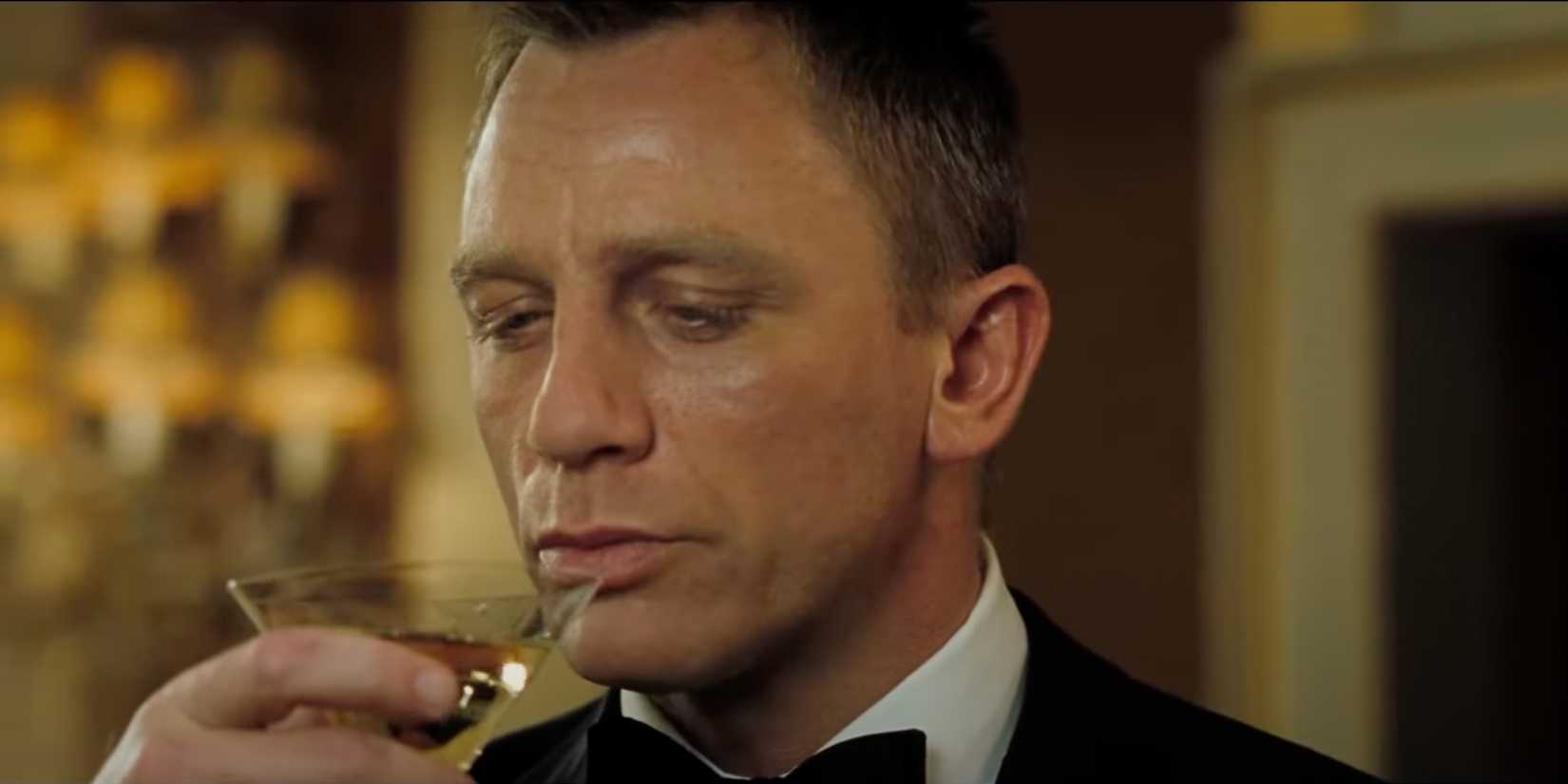
James Bond (Daniel Craig) looks impressed with his Vesper Martini in Casino Royale.Image via Sony Pictures Releasing
The other half of the casting puzzle is just as important. Bond’s Britishness isn’t window dressing; it’s the backbone of the character. Created by Ian Fleming in the early 1950s, Bond emerged from a very specific cultural moment — a postwar Britain that was redefining its place on the world stage. He was imagined as a suave, hyper-competent instrument of the British state, embodying both nostalgia for imperial confidence and a new, modernized sense of power. That identity is woven into everything about Bond — his clipped wit, his unshakable composure, his relationship to MI6, even the way he orders a martini. That doesn’t mean the franchise can’t evolve. In fact, Bond has repeatedly adapted to the times: Moore’s light touch in the ‘70s, Brosnan’s post–Cold War swagger in the ‘90s, Craig’s brooding millennial grit in the 2000s. But no matter the era, there’s always a distinctly British spine running through the performance.
Casting a British actor isn’t just tradition; it’s how the character stays grounded in the cultural soil that birthed him. A Bond who sounds, moves, and carries himself like someone raised outside that tradition risks becoming a vague “international man of mystery” rather than James Bond. Part of the appeal of watching 007 navigate international intrigue is that he’s representing something specific. He’s not just another secret agent, he’s Bond — shaped by the old-world charm and quiet ruthlessness that defines him. This isn’t about gatekeeping nationality, it’s about preserving texture. Audiences didn’t fall in love with Bond because he blended into every other franchise, they fell in love with him because he stood apart, and even another popular choice for the role, Glen Powell, has rejected wanting to be involved due to not being British.
The Spectacle Has Never Been the Star — Bond Has
The conversation around Holland or Elordi being frontrunners for the role was predictable. Big franchises love proven commodities. A star with a built-in fanbase feels like a safe bet in an era where IP and name recognition drive box office returns. But that line of thinking misunderstands what makes Bond different. Unlike superheroes, Bond isn’t a mask anyone can wear, he’s a persona. And that persona doesn’t need rescuing by a star — it creates stars. Look at the track record. Connery became a global icon because of Bond. Craig turned into an A-lister because of Bond. Brosnan was elevated to new heights because of Bond. At its best, the Bond machine doesn’t rely on someone’s fame, it manufactures it.
That’s why the decision to pursue the unknown isn’t risky — it’s smart. It frees the filmmakers to shape the film around the character instead of bending the character to fit the performer. A Bond movie shouldn’t have to compete with a celebrity’s existing brand, it is the brand. And this also opens creative doors. An unknown actor gives the creative team the chance to take bigger swings with tone, setting, and even how they frame the next era of 007. Instead of a star dictating what kind of Bond film can be made, Bond himself gets to dictate the star. The longevity of the franchise has never depended on who plays him. It depends on the idea of Bond being strong enough to eclipse the man playing him. Betting on an unknown is betting on that legacy.
Reinvention Is Bond’s Real Secret Weapon

James Bond (Daniel Craig) aims his gun and shoots down the barrel of the camera in the iconic James Bond franchise staple shot in ‘Casino Royale’ (2006).Image via Sony Pictures Releasing
James Bond has survived cultural shifts that would have swallowed most franchises whole. He’s endured the end of the Cold War, the rise of the internet, evolving gender politics, and an entirely new entertainment landscape. And every time the series starts to feel like a relic, it reinvents itself. Casino Royale proved this in 2006. Coming after the increasingly campy tone of the late Brosnan years, it stripped Bond back to something rawer and sharper. Craig’s Bond bled, he loved, and he lost. The franchise traded in gadgets and invisible cars for bruises and emotional stakes. The result was one of the most acclaimed entries in the series and a cultural resurgence.
Casting someone unknown and British now isn’t just about respecting tradition, it’s about setting the table for the next reinvention. Bond doesn’t need to chase trends. He is the trend when done right. In an era dominated by cinematic universes and recycled IP, Bond stands apart because it’s a character, not a shared multiverse. It doesn’t need a crossover event or a cameo to sell tickets, it just needs the right Bond. A familiar face like Holland or Elordi would anchor the franchise to the present — a celebrity-driven era where personalities outweigh characters. An unknown can help shape the future of Bond — where mystique, reinvention, and national identity remain its sharpest tools.
The announcement from Villeneuve may seem like a small detail, but it’s exactly this kind of decision that sets the tone for what comes next. By rejecting the easy star-power route, the Bond team is embracing what has always made this character extraordinary: mystery, identity, and confidence in its own mythology. A British actor isn’t a nostalgic nod, it’s the foundation of Bond’s DNA. An unknown face isn’t a gamble, it’s a return to the franchise’s most successful playbook. If the next Bond is chosen with the same clarity that defined Connery, Brosnan, and Craig’s castings, 007 could once again emerge not as an artifact, but as a cultural force. The tuxedo doesn’t need a star: it makes one.

Release Date
October 8, 2021
Runtime
163 Minutes
Director
Cary Joji Fukunaga
Franchise(s)
James Bond