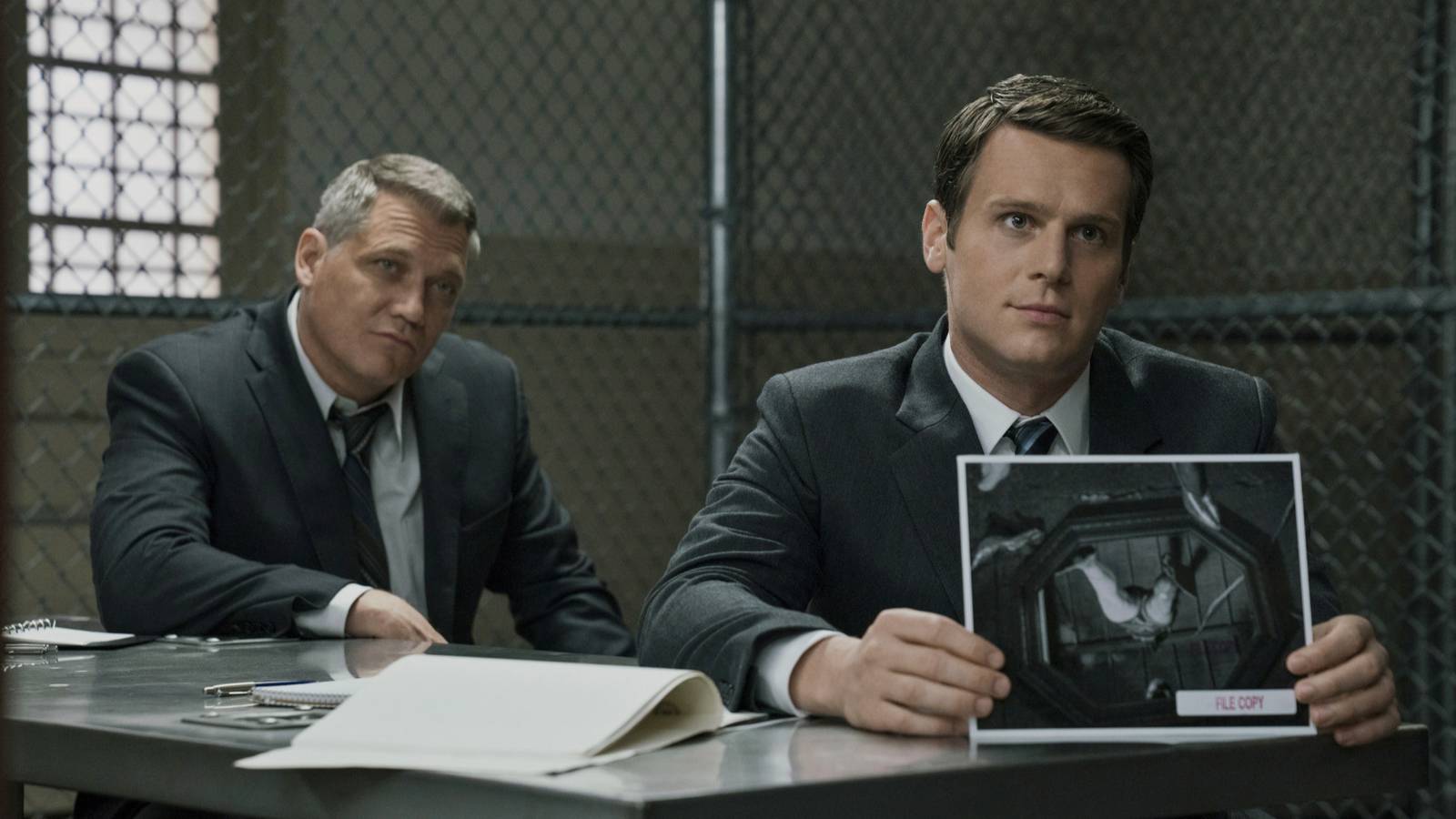
In an unsurprising turn of events, Ryan Murphy’s Monster: The Ed Gein Story, was released to a dismal critical reception. The third season of the Monster series not only perpetuates a troubling victim-exploiting narrative, but it also adds details and storylines that have no factual grounds. Charlie Hunnam’s turn as the titular serial killer is an overstretched killing extravaganza that sends all the wrong messages. As if this weren’t enough, the series also showcases a pair of detectives who became recognizable thanks to one of Netflix’s best series – Mindhunter.
The final episode of Monster: The Ed Gein Story shifts its narrative to focus on FBI agents John Douglas (Caleb Ruminer) and Robert Ressler (Sean Carrigan). This real-life pair was the inspiration to construct Mindhunter’s main characters – Jonathan Groff’s Holden Ford and Holt McCallany’s Bill Tench. The quasi-connection to the Netflix original reopens the scar of this far superior show never making its triumphant return for a third season. In spirit, this might be reinterpreted as an unofficial Mindhunter Season 3. That is, if you’re able to overlook how horrible all of it is.
‘Mindhunter’ Is Still One of the Best Contemporary TV Crime Thrillers
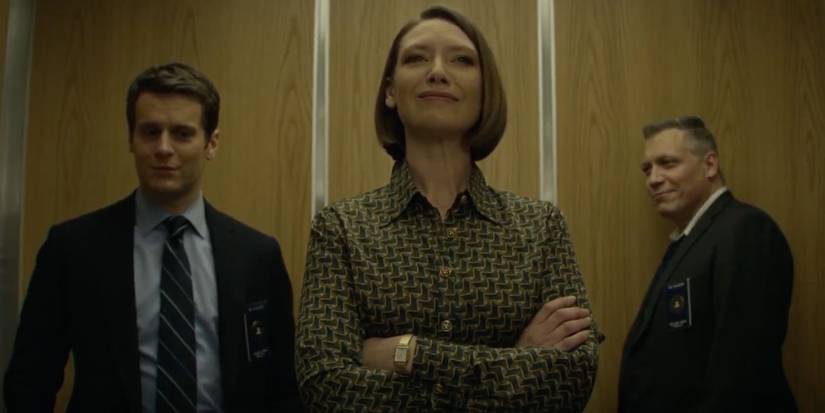
Jonathan Groff, Anna Torv, and Holt McCallany in Mindhunter. Image via Netflix
Mindhunter is rooted in Douglas’ novel, Mindhunter: Inside the FBI’s Elite Serial Crime Unit. Upon reading the book, Charlize Theron contacted David Fincher to bring it to life as a TV series. A journey that started in 2009, aiming to be an HBO release, shifted completely throughout the years. After House of Cards – with Theron still attached as producer – Fincher felt more confident about doing TV and decided to be the showrunner of Mindhunter, with the show moving instead to Netflix for a 2017 release. This careful conception reflects on what Mindhunter became – an intricate work that deeply explored both sides of the table, the interrogators and the interrogated.
In getting to know several of the most noteworthy serial killers of their age, Holden and Bill explore deeply unsettling aspects of their reasoning and thought process. With the aid of Anna Torv’s Wendy Carr, they launch a behavioral science project with the aim of solving other deadly cases. By getting into the killers’ minds, Mindhunter delves into their traumas, finding answers that move forward their narrative but, more importantly, expose the irredeemable nature of these monsters.
It doesn’t take long for their brushes with these criminals to take a toll on them. This way, Mindhunter fleshes out Holden, Bill, and Wendy, by portraying them not as soulless thought-processing machines, but as actual human beings who start to wear out as their experiment progresses. Gruesome murders are only described in Mindhunter, leaving it to the imagination of the audience to analyze and digest them. This ends up being one of Mindhunter’s best qualities, as it highlights how twisted the minds of the killers are, without making a morbid spectacle out of it.
‘Monster: The Ed Gein Story’ Features a Spiritual Sequel to ‘Mindhunter’
Even when Fincher had a five-season plan for the show, development for a third installment of Mindhunter stalled due to other of his projects, like the Academy Award-nominated Mank. Sometime during 2020, Netflix released Groff, McCallany, and Torv from their contracts, putting one of the many nails in the series’ coffin. And though hope has never fully died, the prospect of a Mindhunter continuation becomes more far-fetched as time moves forward. That was the case until Monster: The Ed Gein Story. Upon seeing Ruminer and Carrigan as John and Robert, the physical similarities to Mindhunter’s Holden and Bill are all but unnoticeable. Their conversations with other serial killers, even with Ed himself, recall the better days of Fincher’s two-season opus.
As if this weren’t enough, Episode 10 of Monster: The Ed Gein Story also features the pair of agents meeting with Jerry Brudos, a serial killer with a shoe fetish, responsible for the deaths of several women in the 80s. Complementing the agents’ appearance, Happy Anderson reprises the role of Brudos from Mindhunter – in which he portrayed him for two episodes. This seemingly-deliberate casting choice doubles down on the homage/quasi-sequel aspect of the third season’s last episode. But it also highlights the wide quality gap that divides Mindhunter from Monster.
‘Monster: The Ed Gein Story’s Pair of Detectives Pale in Comparison to ‘Mindhunter’s
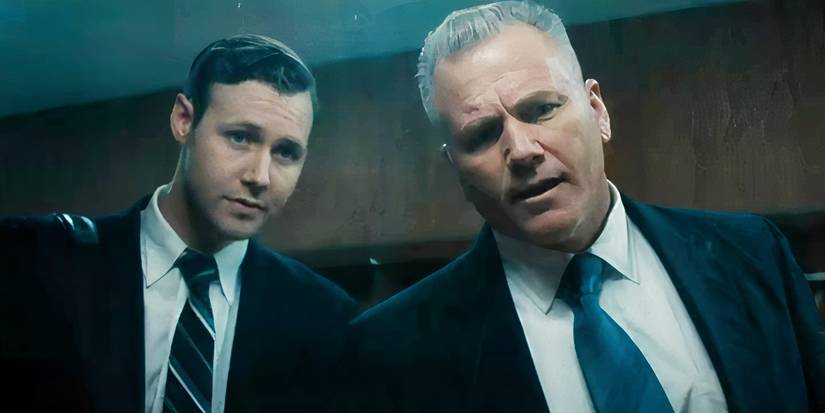
Caleb Ruminer and Sean Carrigan as John Douglas and Robert Ressler looking inquisitive in Monster: The Ed Gein Story.Image via Netflix
The inclusion of Douglas and Ressler in Monster: The Ed Gein Story seems like a fun easter egg at first. After years of drought on the Fincher-helmed series, the initial thought is of appreciation. When finally realizing they’re the real agents on which Mindhunter is based on, the inevitable comparison starts to broil in the audience’s minds. These two characters aren’t crafted with the confidence or bravado of their previous fictional counterparts. Their interrogation of Brudos seems like a cheaper reenactment of Holden and Bill’s interaction with him in Mindhunter. So, when the dust settles, the unintended homage only deepens the void left by Mindhunter’s absence.
Even when Douglas and Ressler are the focus of the episode, their treatment feels rushed and superficial. Soon, it becomes clear that the agents are only in Monster to serve one purpose – moving forward Ed’s journey to redemption. Feeling helpless in their search for Ted Bundy (John T. O’Brien), they resort to consulting with other criminals to find him. Ed is the one who provides them with vital information for them to be able to track Bundy down. This problematic storyline ends up glorifying Ed Gein, trying to find depth in his machinations, but failing catastrophically in doing so. In reality, there’s no concrete evidence of the FBI having met with Gein for this type of crime-solving investigation, much less Bundy’s.
I’m not exaggerating when I say Mindhunter is a contemporary masterpiece. Under Fincher’s direction, Groff, McCallany, and Torv crafted a trio of law enforcers who the audience connected with. The portrayal of these characters in Monster: The Ed Gein Story pales in comparison to Mindhunter’s. Their inclusion in the last episode of the show’s third season ends up being a half-baked homage at best, and a poorly-executed caricature at worst. Plunging them just for the sake of a very fictional plot – that aims to humanize the monstrous Ed Gein – tramples on the legacy Fincher built. Lastly, it doesn’t make up for what the fans have been clamoring for – a third season of Mindhunter.
mindhunter-tv-poster.jpg
Release Date
2017 – 2019
Showrunner
Joe Penhall
Writers
Joe Penhall