
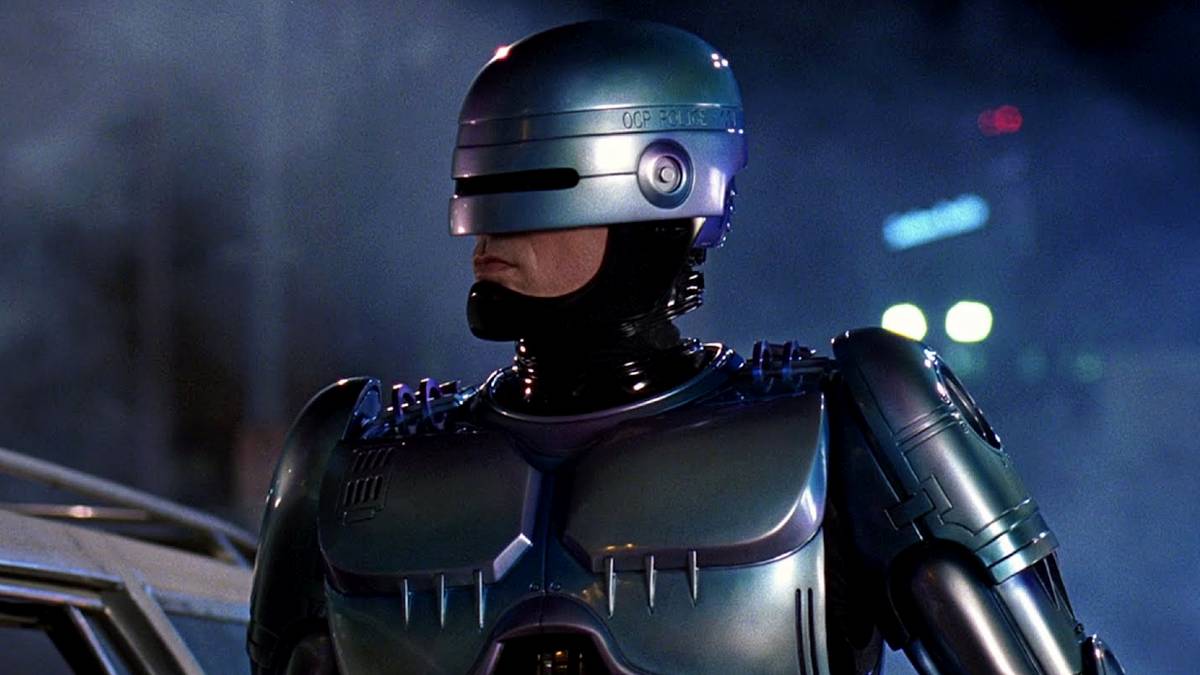
Science fiction had always been a compelling genre, but it had a moment in the 1980s. After a few successes in the ’70s, sci-fi directors such as Ridley Scott and James Cameron came into their own. This surge was a product of the time that the movies were made. The genre has always been rich for mining stories with real-world connections. In 1979, Scott’s Alien not only introduced an iconic movie monster that continues to yield results, but it also wove a tale with a needed feminist slant.
In the world of Alien, the female protagonist, Ripley, was thrust into a leadership role and continued to draw the most logical conclusions while everyone else acted emotionally. Sci-fi is the perfect genre to tell these socially conscious stories, which continued into the next decade. The ’80s were chock-full of sci-fi legends that are still remembered to this day.
1980: The Empire Strikes Back Made Star Wars History

C-3PO, left, and R2-D2 on the ice planet of Hoth in ‘The Empire Strikes Back’Image via Disney
The ’80s came right out of the gate with not only one of the most beloved sci-fi movies but also the widely considered best movie of the original Star Wars trilogy. In 1977, George Lucas struck gold with Star Wars: A New Hope. A clear allegory for the conflict in Vietnam, Star Wars followed Luke Skywalker in his pursuit to topple the evil empire. Star Wars also implemented influences from Kurosawa and Ancient Rome. As significant as A New Hope was to the sci-fi pantheon, The Empire Strikes Back became the true calling card for the franchise.
As Han and Leia battled their feelings for each other, Luke accepted training to finally become a Jedi. It was the first film to feature Yoda, as Skywalker weighed his love for his friends against his noble pursuit to become a Jedi. The Empire Strikes Back also became iconic with one of the biggest twists in cinema history as Vader confessed he was actually Luke’s father. All came together for an unforgettable film that began the decade strong.
1981: David Cronenberg’s Scanners Blew Audiences Away
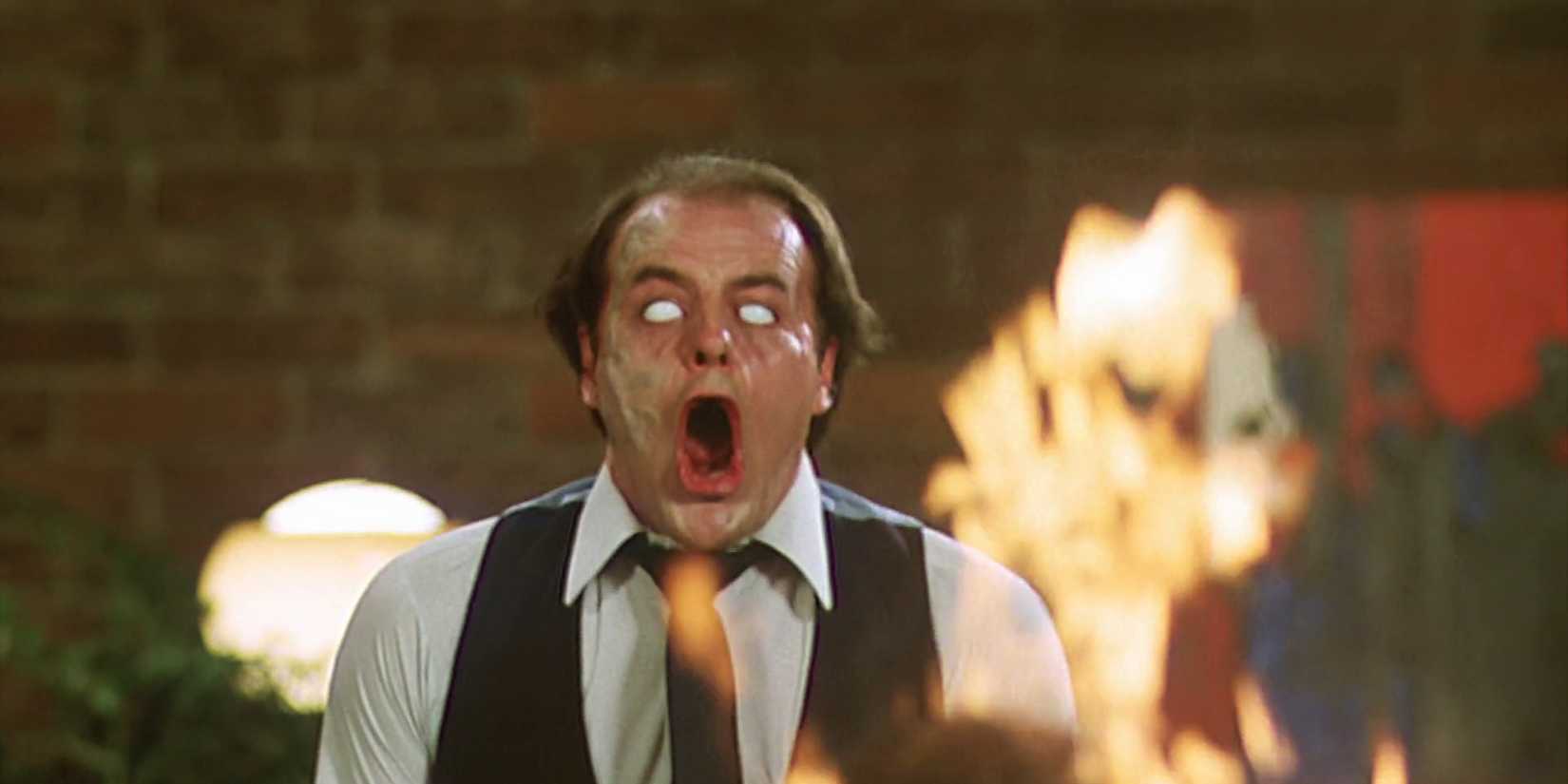
Darryl Revok, as played by Michael Ironside, near the end of ScannersImage via Manson International
David Cronenberg would go on to be remembered as the master of body horror, but Scanners would be celebrated as an early classic. Starring Michael Ironside, Scanners took place in a world where people possessed psychic abilities that could kill. Dubbed “scanners,” these people were so gifted that they could make anyone’s head explode. As with many sci-fi films of the time, Scanners used its narrative to point a finger at the dangers posed by massive corporations.
The villain of the film was the company ConSec, which sought to co-opt these psychic beings for profit. Ironside’s character Darryl was a Scanner who set out to destroy the company that was using these psychics for weaponry. The film initially didn’t impress at the box office but made a name for Cronenberg and eventually became a cult classic.
1982: Ridley Scott Released the Cult Classic Blade Runner

Rachael (Sean Young) holding a cigarette in Blade Runner.Image via Warner Bros.
Ridley Scott followed up Alien with another sci-fi classic — Blade Runner. Adapted from the Philip K. Dick story, Do Androids Dream of Electric Sheep, the film took a sharp turn away from the source material. While not a faithful adaptation, Blade Runner was a perfect sci-fi noir, set in a world where robots known as Replicants were used as slave labor. Harrison Ford starred as Deckard, a titular Blade Runner sent to decommission rebel Replicants who had escaped their torturous labor.
Blade Runner also had a pointed commentary on corporate abuses, as the replicants were not treated as people. But as beings that had formed memories and personalities, they had become sentient. Throughout the film, Deckard began to understand the perspective of these non-humans, especially after falling in love with one. Rachael was a femme fatale character, one who was tragic in her creation. The true ending of Blade Runner is an achievement, proven by its cult classic status.
1983: Return of the Jedi Concluded the Original Trilogy
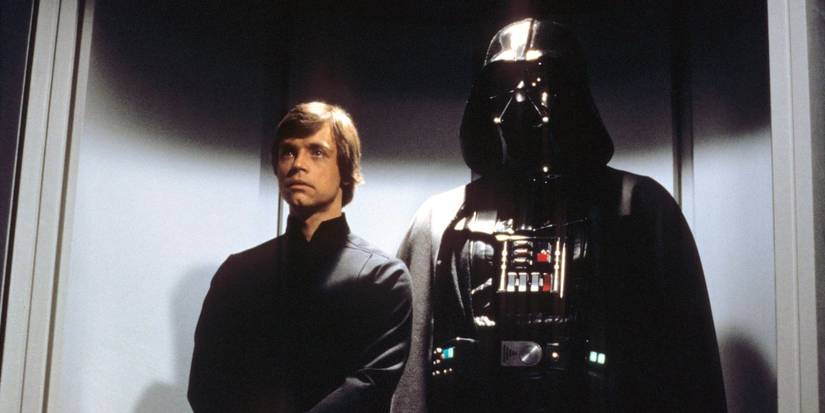
Image via 20th Century Studios
The climactic conclusion to the Star Wars trilogy ended on a high note as Luke Skywalker finally triumphed against the Galactic Empire. Compared to the first two films in the trilogy, Return of the Jedi doesn’t always win affection from the fans, but that is an oversight. Return of the Jedi is a celebratory end to a trilogy about fascism in space. Luke confronted his destiny and faced the Emperor, only to defy the darkness in his lineage.
Luke’s inherent goodness inspired his father’s redemption, which ultimately led him to throw the Emperor to his death. Return of the Jedi proved that even people who seem too far gone can be redeemed. Darth Vader returned to his true identity as Anakin, even though it cost him his life. With the Emperor’s death came the triumph of the rebel alliance, something that all fascist regimes fear. The perfect end to the ultimate sci-fi franchise, Return of the Jedi remains a classic.
1984: The Terminator Launched a Major Sci-Fi Franchise

Sarah Connor looks at Kyle Reese in The Terminator.Image via Orion Pictures
Before James Cameron broke world records with Titanic or reinvented cinema with Avatar, there was The Terminator. Equal parts action and romance, this film had something for everyone. Cameron harnessed fears of AI in a desolate future where mankind was all but wiped out by machines. The only hope was a small rebel force led by a fearless leader who was the only threat to the machines. To destroy him, the robots sent back a formidable Terminator to kill this leader before he was born.
The Terminator’s target was Sarah Connor, not yet pregnant with the great savior who would lead a rebel force against robots in the future. To help save her from this Terminator, the rebels sent back Kyle Reese, an effective soldier, to keep her out of harm’s way. Love, of course, blossomed from this union as well as heartache. Cameron’s special effects abilities with the film would lead to many more fruitful additions to the franchise and the creation of a sci-fi female icon.
1985: Back to the Future Was an Instant Sci-Fi Classic
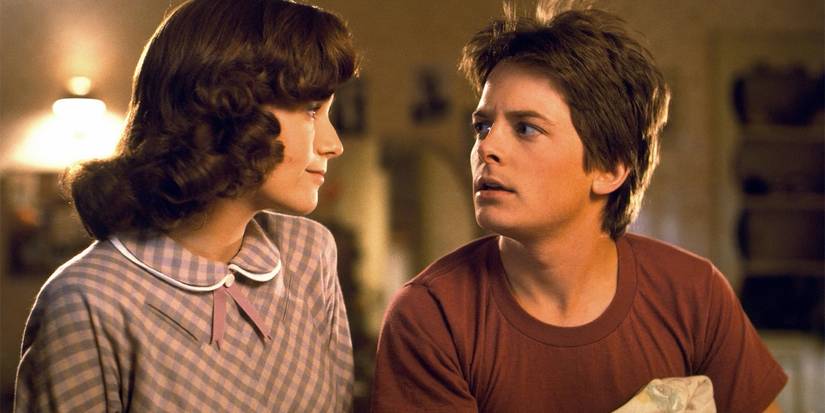
Image via Universal Pictures
Time travel became a hot topic in many sci-fi films of the time, but none came close to the cultural impact of Back to the Future. Robert Zemeckis’ comedic sci-fi film followed 17-year-old Marty McFly, whose homelife was less than ideal. He would get away by befriending the wizened and eccentric scientist, Doc Brown, who incidentally invented a time machine out of a DeLorean.
After a tragedy, Marty sped away in the car, reaching 88 miles per hour, which sent him back to 1955. His entire aim was to return to his own time by reconnecting with Doc Brown in his youth, who was the only person who could send him back. Full of heart and humor, Back to the Future became an instant classic, spawning a near-perfect trilogy of sci-fi films.
1986: James Cameron’s Aliens Was a New Take on Alien
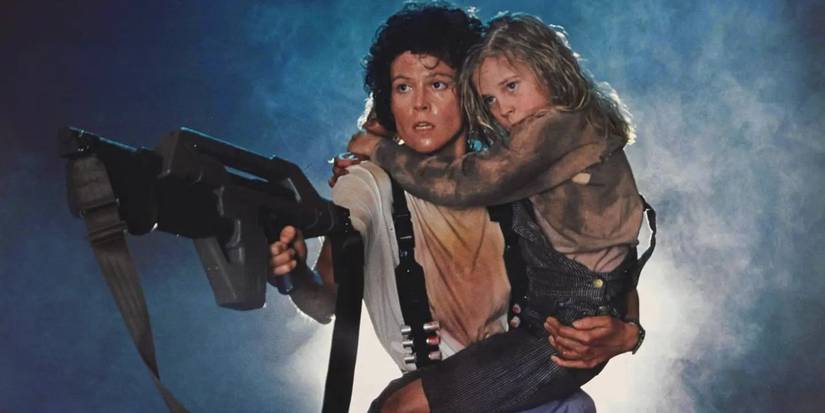
Sigourney Weaver as Ellen Ripley and Carrie Henn as Rebecca “Newt” Jorden from Aliens (1986)Image via 20th Century Studios
Close to a decade after Ridley Scott blew audiences away with Alien, James Cameron followed up the film with a sequel. After Ripley freed herself from the scourge of one Xenomorph, she encountered a colonized planet that had more than she bargained for. Tasked with aiding a group of Marines to combat a Xenomorph Queen and her hive of alien spawn, Ripley used her experience with the alien to survive.
Though it had an entirely different tone than the first Alien, the second film was equally well received in the sci-fi genre. Ripley became not just a feminist icon but an action star, wielding modified machine guns and a forklift. Cameron continued to add to the sci-fi genre in the ’80s, no matter what the film was.
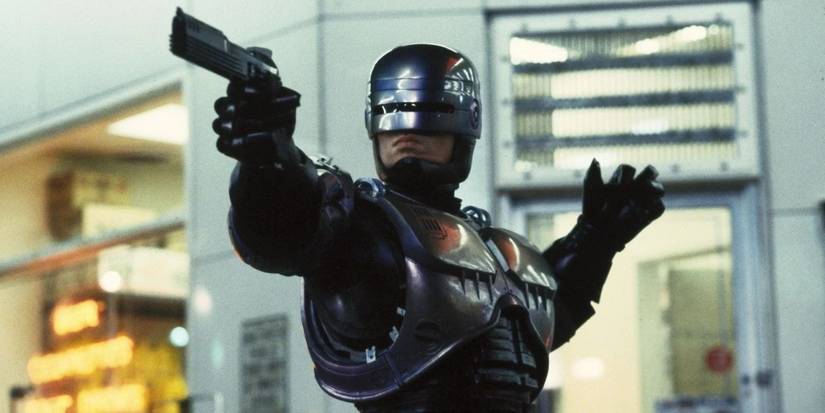
Peter Weller as Alex Murphy/RoboCop from the movie RoboCop (1987)Image via Orion Pictures
Paul Verhoeven does political commentary like no one else, particularly in the first RoboCop film. Set in Detroit in a particularly violent time, police officer Alex Murphy was killed in a brutal gun fight, only to be revived as a cyborg. RoboCop became part of an initiative to privatize the police force by any means necessary. Though at first the robot followed all commands, he slowly began to regain his memories and learned of the company’s nefarious intentions.
RoboCop envisioned a future that isn’t so far off. Corporations run everything and do not view human life as particularly significant. The extreme violence was visceral but necessary to explore the film’s stakes. Verhoeven predicted a world that is frighteningly close to reality in a film that continues to be relevant.
1988: Akira Was a Rare Anime Success Among Western Audiences

Kaneda from Akira (1988) walks towards his bike.Image via Tokyo Movie Shinsha Co., Ltd.
Akira was the first anime to hit the American market with great success. The film was visually immersive and harrowing in many of its elements. Taking place in the far-off future of 2019 in Neo-Tokyo, Akira followed Tetsuo, who achieved psychic abilities after a motorcycle accident. During the accident, Tetsuo collided with a child who had ESP and was property of the government. What followed was a visually striking film with anti-government sentiments.
Considered one of the most beautifully animated films of all time, Akira introduced Anime to Western markets, which was unsurprising given the cult status the film would go on to achieve. Like any good sci-fi endeavor, Akira continues to be topical and even more relevant as the year 2019 came and went.
1989: The Abyss Is an Underrated James Cameron Sci-Fi Film

Man and a woman looking seriousImage via 20th Century Fox Film Corp.
One of James Cameron’s most underrated films was also the most beautiful. The Abyss followed an oil rig crew who were given the responsibility of finding a sunken ship before the Soviets did, with the help of a SEAL team. This setup led to a discovery that no one was prepared for. While Coffey, the SEAL team leader, got more erratic, the blue-collar workers discovered the existence of an unidentified submersible object.
The Abyss had all the hallmarks of a typical action-heavy Cameron film, but with a touching emotional throughline. After discovering that aliens were real, the SEAL team acted with violence while Lindsey, part of the oil team, insisted on opening their minds to something more benevolent. This was a touching and optimistic look at contact with an alien race done with mesmerizing practical effects.