
Rafael Manuel‘s debut feature “Filipinana” is making its pitch at the Tokyo Gap-Financing Market as the international co-production enters advanced post-production.
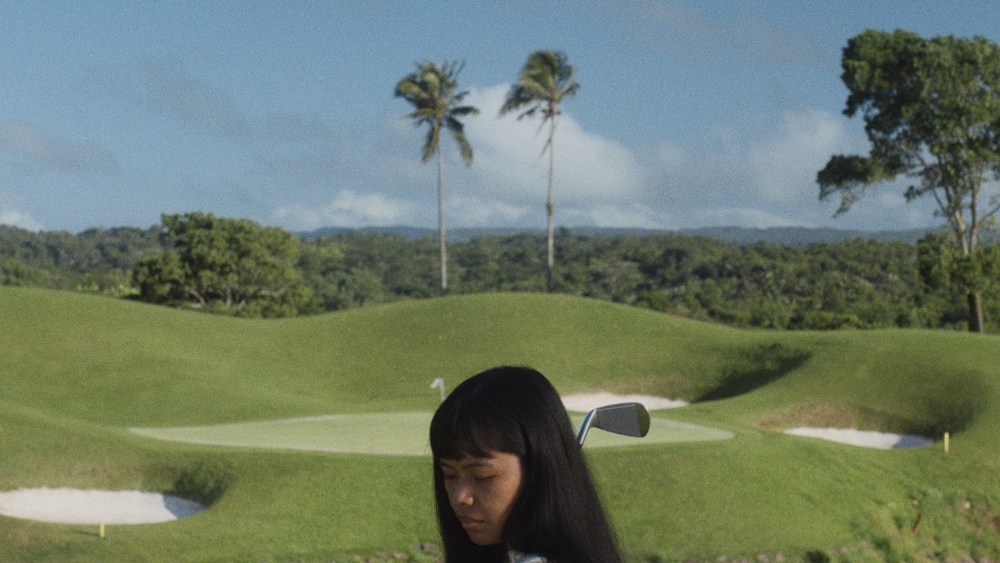
The film, which expands on Manuel’s Silver Bear Jury Prize-winning short of the same name from the Berlin Film Festival, follows Isabel, a tee-girl at Manila’s Alabang Golf & Country Club who spends her days teeing up golf balls mere inches from swinging clubs. When she encounters the club president, Dr. Palanca, asleep in some bushes on the course, a brief connection sets her on a journey deeper into the country club’s world – and into what Manuel describes as “a cosmos that reflects the inherent structural violence of the Philippines.”
“Yes, the film is set on a golf course in the Philippines, but it could be set anywhere really,” Manuel tells Variety. “What I’m trying to convey is that regardless of where we find ourselves in the hierarchy of any oppressive system, we all have our part to play in perpetuating it. And that when places are made beautiful, the violence that lays underneath becomes that much harder to see.”
The project has been six years in the making, with Manuel citing patience as the biggest challenge. “But this is because we aimed to be as intentioned as possible in searching for the right partners for the project,” he says, noting that Jia Zhangke came aboard as a mentor.
The film is structured as a four-country co-production between the U.K. (Film4/Ossian), Singapore (Potocol), the Philippines (Epicmedia Productions) and France (Easy Riders), with financing combining national funds, rebates, investment and presales.
“We are working on a pretty large scale for a first film,” says producer Jeremy Chua. “This definitely added to the complexity of legals and spending allocations.”
Shooting presented unique logistical hurdles, with different sequences filmed across multiple golf courses around Manila’s peripheries due to restrictions. Production designer Tatjana Honegger “formed a singular, absurdist, architectural universe” from the disparate locations, Chua says.
Producer Bianca Balbuena Liew notes that the production secured both development and production grants via rebate from the Film Development Council of the Philippines. She joined the project after filmmaker Lorna Tee and Chua both urged Epicmedia to come aboard.
“We all believed in Rafael’s vision and I guess that’s why six years felt like a breeze,” Balbuena Liew says.
At Tokyo, the team is seeking presale opportunities from Japanese and broader Asian distributors, potential P&A partners for an Asian release, and building programmer interest for a festival tour. “We also hope to deepen our understanding of the Japanese market,” Chua says, adding that a small financing gap may need closing pending final works requirements.
The film, which still has VFX and editing to complete, is being readied with sales agent Magnify for a world premiere next year.
“I believe the film is going to offer audiences a new sound and image of Southeast Asia cinema, made in an ambitious scale but with a handmade touch,” Chua says. “This film was designed for the big screen.”
Manuel is currently developing several projects, including a colonial period piece set in the Philippines.