
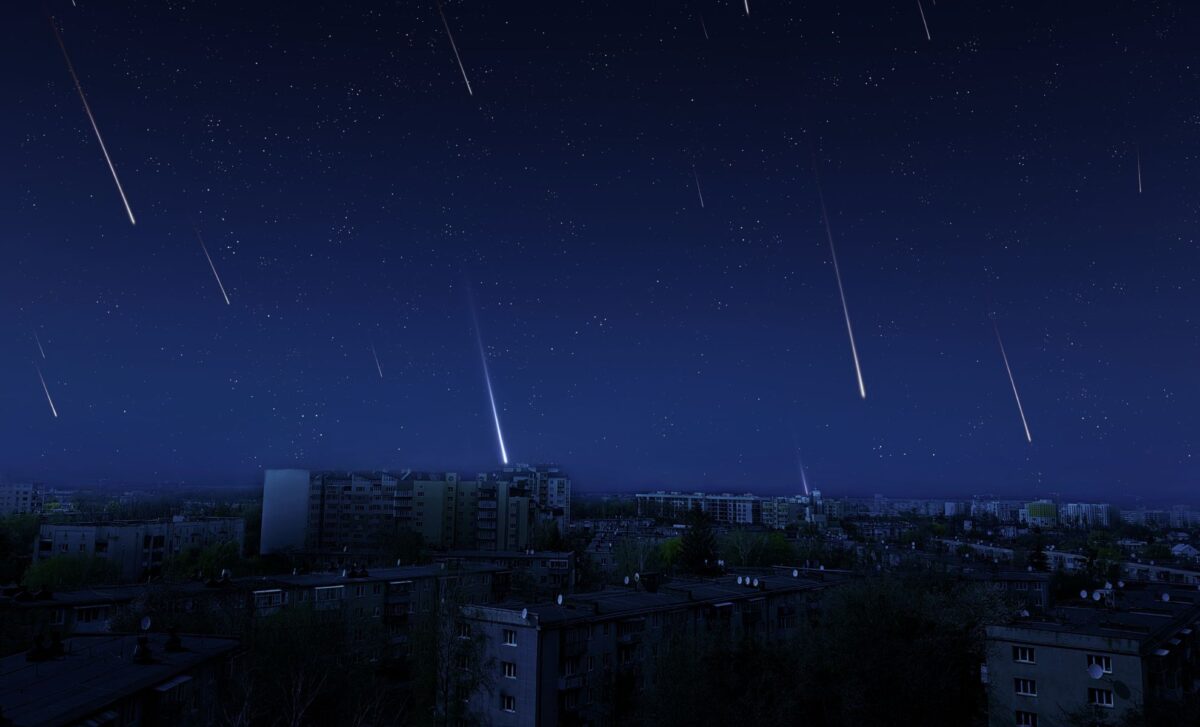
The Leonid meteor shower returns this November, promising a display of swift, bright celestial body for stargazers across the Northern Hemisphere. The annual event peaks on November 17, when up to 15 meteors per hour may be visible under clear, dark skies.
Although 2025 won’t bring a meteor storm like the famous 1966 event, the Leonids remain one of the year’s most anticipated showers due to their history and timing. Their appearance coincides with the peak of the Taurid meteor showers, creating a rare window where multiple streams may be visible in a single night.
The Leonids are known for their speed and sharp brilliance, entering the Earth’s atmosphere at high velocity. While the average hourly count is modest, the shower’s historical reputation and the fact that it occurs in the cool, cloud-prone weeks of late autumn, gives it a special status among amateur astronomers.
What Falling Stars Are Really Made Of
The Leonids originate from the comet 55P/Tempel-Tuttle, which orbits the sun every 33 years. As Earth crosses the trail of dust and ice left by this comet, particles enter the atmosphere and burn up, producing what many call shooting stars. These fragments, or “comet crumbs,” strike at such high speeds that they often produce bright, short-lived streaks visible to the naked eye.
According to EarthSky.com, the Leonids run from November 3 to December 2, with the most intense activity expected before dawn on November 17. While some years bring enhanced activity when Earth crosses denser parts of the debris stream, 2025 is not forecast to include such conditions.
The shower’s name comes from the Leo constellation, the apparent origin point of the shooting stars when viewed from Earth. But unlike the comet that causes them, the Leonids return annually, offering predictable, if sometimes faint, activity for night sky observers.
How 15 Minutes In 1966 Made History
Though the Leonids are now a modest display, their legacy includes one of the most dramatic meteor events ever recorded. On November 17, 1966, thousands of meteors per minute were reported over North America, during what EarthSky.com described as “one of the greatest meteor storms in living memory.”
That moment was a product of unusually dense comet debris intersecting with Earth’s orbit. Modern showers, by contrast, rarely exceed 15 meteors per hour, making the 1966 storm an outlier in the record books.
Interest in the Leonids often spikes near the 33-year mark of the comet’s orbit, but not every cycle brings a storm. The 2025 edition is not aligned with any recent return of Tempel-Tuttle, and no storm-level event is expected. Even so, the shower continues to attract attention due to its historical prestige and fast-moving celestial bodies.
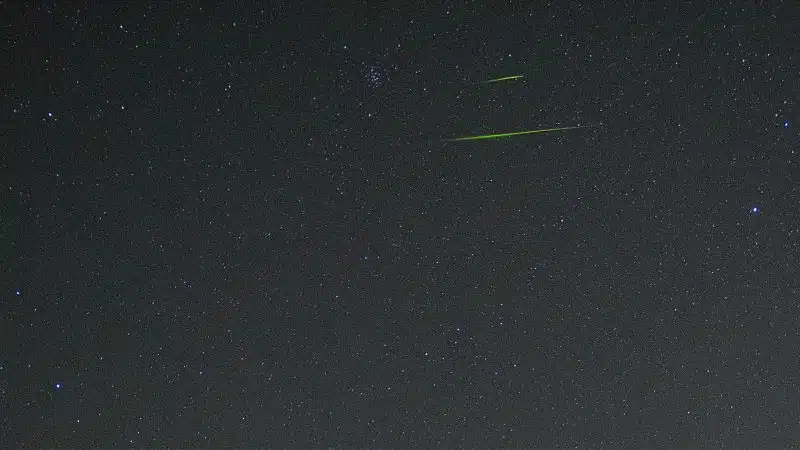 Eliot Herman, based in Tucson, Arizona, captured this double Leonid meteor image just two days before the shower’s peak in 2018. Credit: Eliot Herman
When And How To Observe The Leonids
Observing the Leonids requires no equipment, but location and timing matter. Space.com recommends heading to the darkest spot possible, ideally away from city lights, and allowing at least 30 minutes for your eyes to adjust to the night. Telescopes or binoculars are not necessary and may even reduce visibility, as space rocks move rapidly across wide patches of sky.
The American Meteor Society reports that the northern and southern Taurids are active during the same period, peaking between November 3 and 12. Though different in origin, they may overlap with the Leonids, creating a blended fireball display for those willing to brave the cold.
Stargazers should plan for early morning hours before dawn, ideally on or near November 17. Moonlight interference is expected to be minimal this year, creating a favorable window for those hoping to catch a glimpse of the Leonids in action.
Have you ever seen an Earthgrazer? 🌠
The Leonid meteor shower arrives November 6-30, and will peak overnight November 16-17! Known for fast fireballs and rare Earthgrazers that glide along the atmosphere, the Leonids deliver a cosmic show powered by debris from Comet… pic.twitter.com/ARLbdzekK9
— Museum of Science (@museumofscience) November 2, 2025