
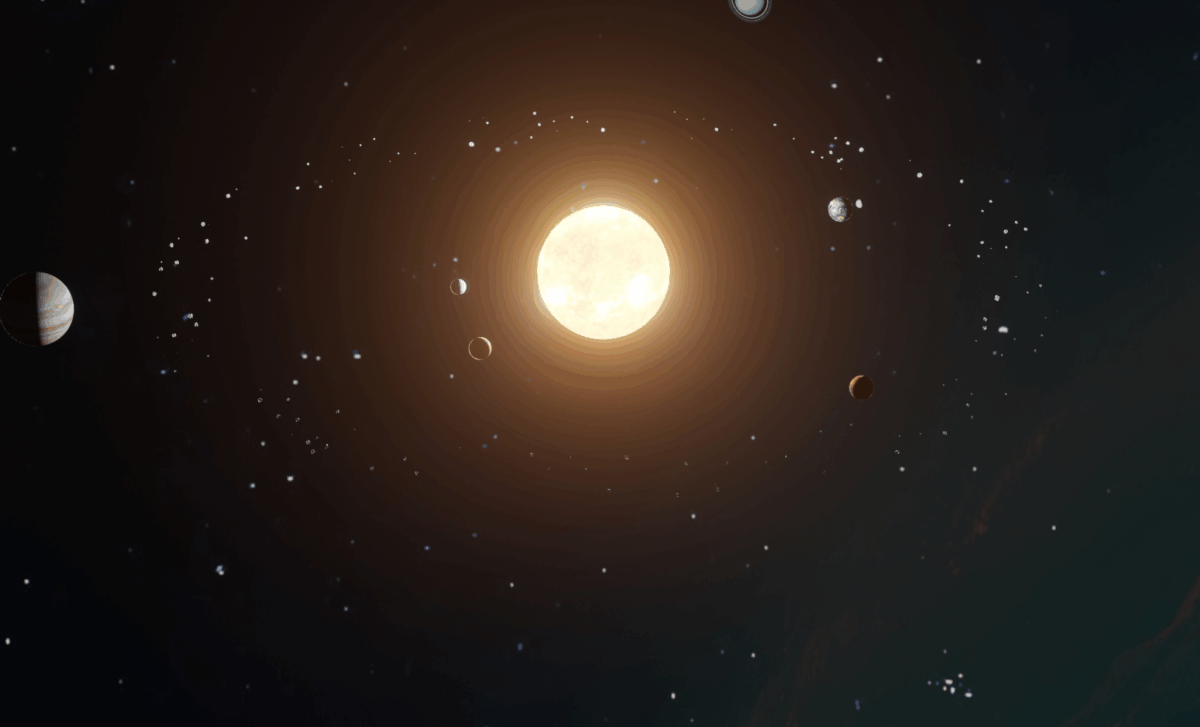
As the nights grow longer across the Northern Hemisphere, November offers a dynamic stage for planet watchers. From elusive glimpses of Mercury to the ever-bright Jupiter, the celestial rhythm unfolds steadily across the early morning and evening skies. Observing conditions vary by latitude, and certain targets may require binoculars or a telescope. A recent guide by Space.com details how, when, and where to catch the best planetary displays this month.
A Skywatcher’s Companion: How Planets Align This November
Planetary visibility is never static — it evolves week by week, horizon by horizon. Space.com‘s comprehensive guide for November lays out the roadmap for spotting each of the naked-eye planets, focusing on their optimal appearances and movements. The two smallest planets, Mercury and Mars, make brief but noteworthy appearances near the southwestern horizon in early evenings. But these sightings are fleeting and mostly restricted to observers south of 30°N latitude, where binoculars become essential.
Meanwhile, Venus is a subtle presence in the pre-dawn skies. Early in the month, it rises 90 minutes before the sun, glowing near Spica, a 1st-magnitude star. By late November, Venus sinks deeper into the twilight, becoming harder to isolate with the naked eye — especially without optical aid. Telescopic highlights belong largely to Saturn and Jupiter, both offering prolonged nighttime visibility. Saturn, resting in Aquarius, displays a thinning ring system as its tilt narrows to just 0.4° by month’s end. Jupiter, now in Gemini, brightens from magnitude -2.3 to -2.5, commanding the night as it reaches peak altitude before dawn. Its proximity to the star Pollux and conjunctions with the Moon offer attractive alignment opportunities for both photographers and seasoned observers.
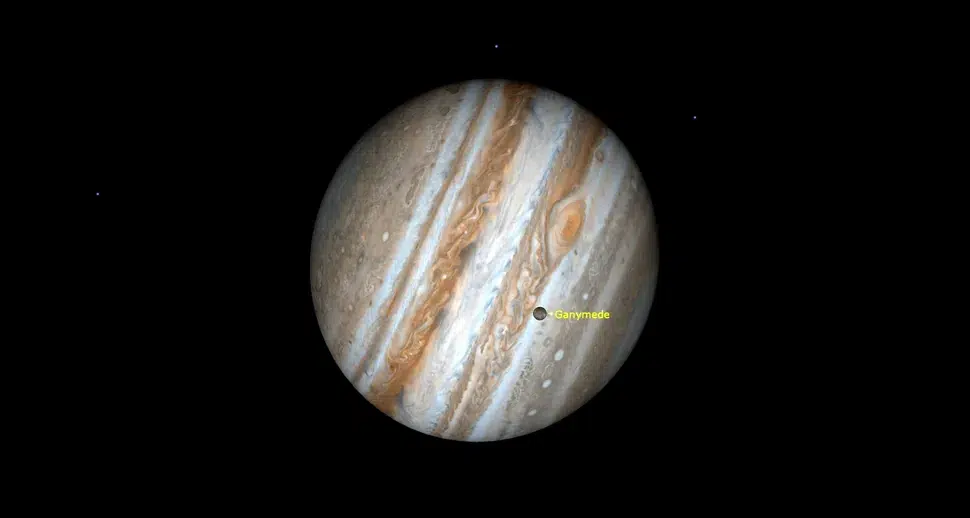 Jupiter will have a couple of shadows from its moon go across its surface (Image credit: Chris Vaughan/Starry Night)
The Morning Jewel: Venus And Its Twilight Struggle
Often dubbed the “morning star,” Venus never fails to impress when high in the sky. But this November, its performance is a more delicate affair. Early risers on November 3 can catch it just south of due east, glowing close to Spica — though the contrast between their brightness is stark: Venus outshines Spica by nearly 85 times. The spectacle fades quickly as the planet drifts lower in the sky each day.
By mid-month, Venus is rising less than an hour before sunrise, making it difficult to distinguish from the brightening sky. A highlight occurs on November 18, when a sliver-thin crescent moon (3% illuminated) floats just above Venus in the east-southeast horizon. This pairing, delicate and fleeting, rewards observers with clear skies and binoculars — a reminder of the poetic symmetry often found in planetary alignments. Even for casual stargazers, these close conjunctions are a reason to wake up early.
Saturn’s Slimming Rings And Changing Face
Saturn continues its slow retreat toward the western horizon this month, but remains visible during early evening hours. Sitting at a magnitude of +0.9, it is still brighter than most surrounding stars — although the famous Circlet of Pisces forms a faint backdrop. More captivating than its brightness, however, is the changing orientation of its rings. By November 30, the tilt of the rings narrows to a mere 0.4°, giving them the appearance of a thin silver line across the disk.
This visual transformation is part of a longer cycle that observers have been tracking since mid-summer. Two lunar conjunctions — on November 1 and again on November 29 — provide excellent framing opportunities. On both dates, Saturn appears about 5° from the Moon, making identification easier for those scanning the southeastern sky after dusk. With a telescope magnifying 30x or more, Saturn’s subtle ring changes and its retinue of moons come into crisp focus, offering a rewarding target for amateur astronomers.
Jupiter At Its Brightest: A Giant In Gemini
Dominating the November sky is Jupiter, the gas giant that demands attention even without any optical equipment. Rising earlier each night — from 10:40 p.m. at the start of the month to 7:40 p.m. by month’s end — it provides a nightly anchor in the constellation Gemini. The planet’s brightness intensifies as it transitions from magnitude -2.3 to -2.5, and its slow eastward drift pauses on November 11 when it halts direct motion, staying locked in position near Pollux.
Those awake during the overnight hours of November 9-10 can witness a visual treat as a waning gibbous Moon slides nearly midway between Jupiter and Pollux. Through a telescope, Jupiter offers even more: shifting cloud bands, transiting shadows from its moons, and occasionally, simultaneous phenomena like the Great Red Spot appearing with multiple satellite shadows. For observers in mid-northern latitudes, Jupiter peaks around dawn, rising to about 20° below the zenith — an excellent altitude for telescopic clarity and atmospheric stability.
Mercury And Mars: Low, Elusive, But Briefly Aligned
The two smallest terrestrial planets — Mercury and Mars — offer a rare early-month conjunction. Appearing just over 1° apart in the southwest sky, both are difficult to see due to their proximity to the Sun. Observers located in the southern United States or other regions below 30°N may catch them about 25 minutes after sunset, hovering just above the horizon.
Mercury, shining at magnitude +1.2, passes close to the +1.4 magnitude red planet, but by midmonth, both disappear from the evening sky. Mercury then moves into inferior conjunction on November 29, swinging into the morning sky and becoming observable in the east-southeast about 1.5 hours before sunrise. This transition marks the beginning of a more favorable observing window for Mercury in early December, offering hope for better visibility to close the year.