

Until 7 o’clock on Tuesday morning, a narrative was starting to develop that Britain’s labour market was stabilising after the shock of last year’s budget. Employment had been hit by the announcement by Rachel Reeves in October last year of an aggressive rise in employers’ national insurance contributions. It was hit further in April, when the measure took effect, alongside a big increase in the minimum wage, the national living wage.
Over the summer, however, it appeared the shock was abating. A month ago, the Office for National Statistics reported that payroll numbers rose by 10,000 in August and, while provisional figures suggested that they had slipped by a similar amount in September, this was smaller than had been typical.
Along with official data showing that job vacancies were starting to level off, business surveys also pointed to an improved, stabilising employment picture.
The Bank of England, in its quarterly monetary policy report, published last week, said that underlying growth in employment “remains close to zero”, rather than falling. But it said, citing evidence from its regional agents, that much of the adjustment in jobs to April’s increases in employer national insurance and the minimum wage — the national living wage — was now complete.
This narrative was dealt a savage blow by those Tuesday morning figures. With all the health warnings to be attached to official labour market data, some from the Office for National Statistics itself, this was a very gloomy set of numbers.
The headline bad news was the rise in the unemployment rate from 4.8 to 5 per cent, its highest outside the pandemic since 2016. There was also a renewed fall in employment, on all measures. Payroll jobs, having been provisionally estimated as falling by 10,000 in September, were now thought to have dropped by 32,000, followed by another 32,000 decline in October.
Even the labour force survey, which has been suffering measurement issues and defying gravity, showed a 22,000 fall in July to September. Construction jobs, essential for the rebuilding of Britain and the government’s housebuilding target, are falling. At just more than 2 million, they have dropped by a fifth since 2016.
Hopes of stabilisation have given way, it seems, to renewed decline, and it is not hard to see why. Fears have grown about Reeves’s budget and the inevitability of significant tax rises. This backdrop means many businesses think this is no time to be increasing headcounts.
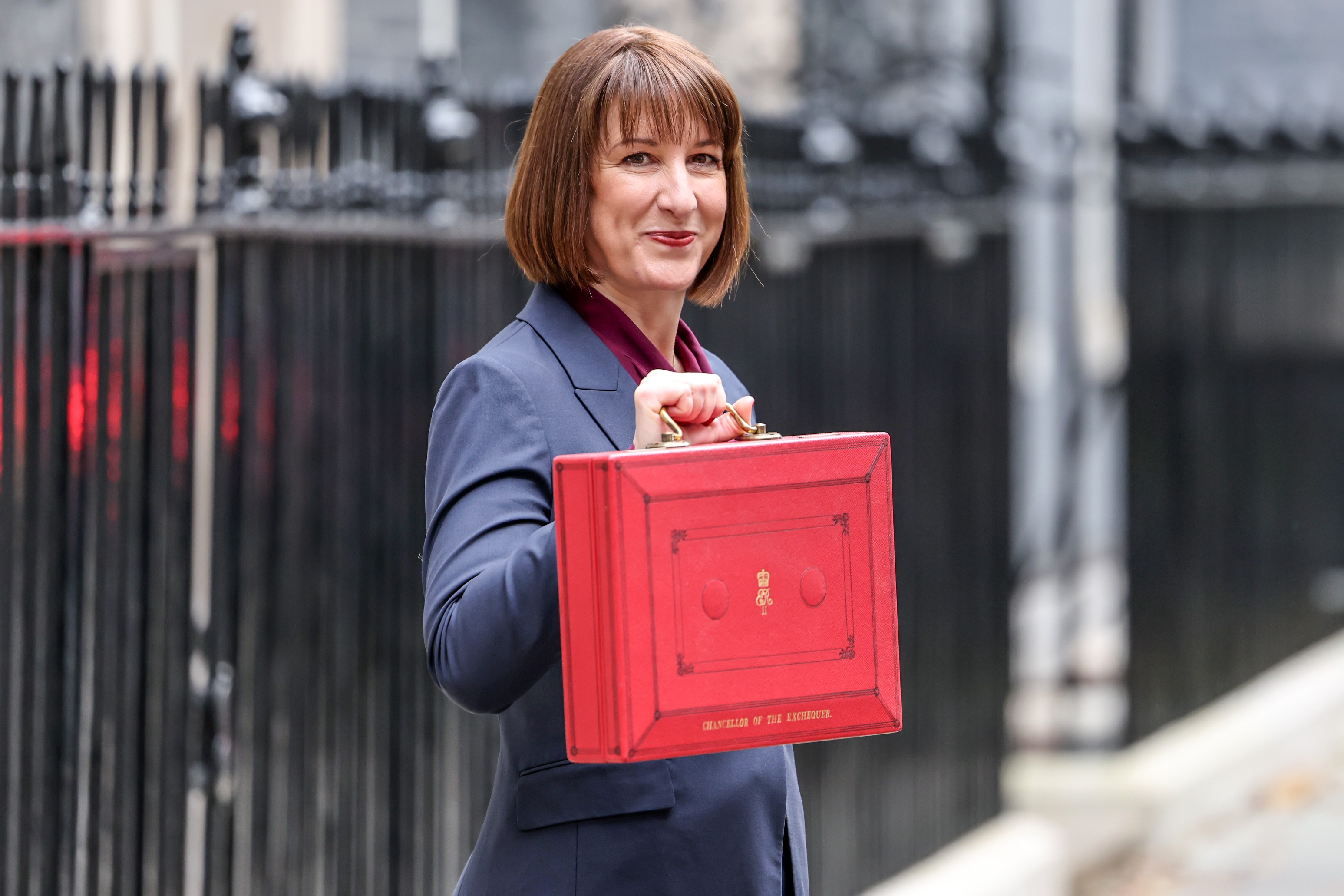
Rachel Reeves will deliver the budget on November 26
TIMES PHOTOGRAPHER RICHARD POHLE
Are there any glimmers of light? One is that the long fall in job vacancies appears to have come to an end, as hinted at a month ago, with a tiny rise of 2,000 (to 723,000) in the August to October period.
The rise in the unemployment rate, which has accelerated in recent months, should probably be set against a fall in the economic inactivity rate. As the unemployment rate has risen from 4.3 to 5 per cent between July and September last year and this, so the inactivity rate has also dropped, from 21.6 to 21 per cent.
The terminology is confusing. People who are inactive, more than 9 million, can become economically active but unemployed if they make themselves available for work, and this has been happening. The number of economically inactive people because of long-term ill health looks to be stuck at 2.8 million, compared with 2 million before the pandemic. But inactivity for other reasons has declined marginally. Encouragingly, 2.1 million economically inactive people say they want a job, up by 300,000 over the past two years.
Some economists have also detected signs of life in non-official surveys. Allan Monks of JP Morgan, while conceding that the official labour market report was weak, sees “some green shoots on job growth” in such surveys, though probably not strong enough to prevent a further rise in unemployment.
• Will the Bank now play Santa with a December rate cut?
Nobody likes to see such a rise, but the timing of the latest labour market figures was probably helpful, and not just because — along with slower growth in private sector pay — it makes it highly likely that there will be a cut in interest rates next month.
Not only that, but the fragility of the labour market is a red flag for the government. It shows that if the chancellor is to keep more of her “working people” in work, she must avoid tax-raising measures which bear down heavily on employment. Last year’s budget did so. This month the dose should not be repeated.
Indeed, there was an implicit warning from the Bank on this in last week’s report. “Any further weakening in labour demand could result in more pronounced increases in unemployment as factors like weaker cash positions of small and medium-sized enterprises and higher employment costs make it harder for some companies to maintain current employment levels,” it said.
If the lesson has been learnt, and we must hope that it has, there is another one that needs to be. Two Labour-friendly think tanks, influential within this government, the Resolution Foundation and the Tony Blair Institute, have called for a softening of some aspects of Labour’s flagship Employment Rights Bill, if it is not to have damaging effects on jobs.
They warn that giving people “day one” protection against unfair dismissal could seriously curb companies’ willingness to hire. What the Resolution Foundation calls “day one frights” could be very damaging. Currently people need to have been employed for two years to have such protection.
The Employment Rights Bill, if unamended, will take Britain from one extreme to the other. Other countries have a qualifying period before these rights kick in: three months in the case of Denmark, Sweden, Germany and Norway and six months for others.
Reducing the qualifying period makes sense. Cutting it to zero does not and risks a much bigger rise in unemployment. So far calls for change have been rebuffed. If that continues, the government will only have itself to blame for soaring unemployment.
David Smith is the economics editor of The Sunday Times