
Sitcoms have long been a beloved genre, and few other shows are as beloved as The Simpsons. Homer, Marge, Bart, Lisa, and Maggie’s life in Springfield has long been the object of fascination for viewers, the perfect satire of the American Dream and what it really means. With a mix of running gags, one-liners, absurd dialogues, and clever animated sequences, The Simpsons has carved a place for itself in the comedy world that nobody else can take.
While The Simpsons has made audiences laugh for decades, it has survived for as long as it has because of its characters. Flawed, funny, yet ultimately likable, the Simpson family and their neighbors make the show what it is. In 1995, the animated sitcom tried something different, but it connected even further with audiences than they had expected. This Maggie-centric episode stole hearts, despite not making audiences laugh out loud.
The Simpsons Took a Turn With “And Maggie Makes Three”
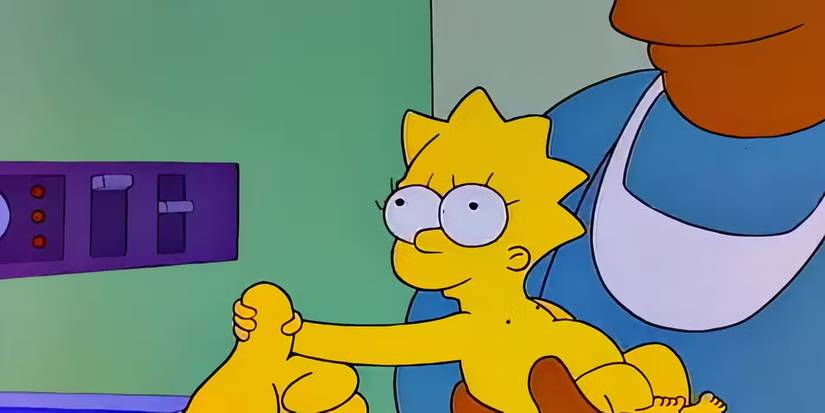
Image via 20th Century Television
Written by Jennifer Crittenden, the 13th episode of Season 6 of the long-running series, “And Maggie Makes Three,” flashes back to the origins of the Simpson family, primarily Maggie Simpson’s birth. As always, the episode begins with a unique couch gag where Homer is James Bond, and then immediately picks up again at the couch, where Homer, Lisa, and Bart are watching Knight Boat, a parody of the action series Knight Rider. Marge interrupts their television time, demanding that they instead spend time together as a family, which results in the family album being taken out for another viewing. This is where Bart and Lisa realize something: there are no pictures of baby Maggie in the album.
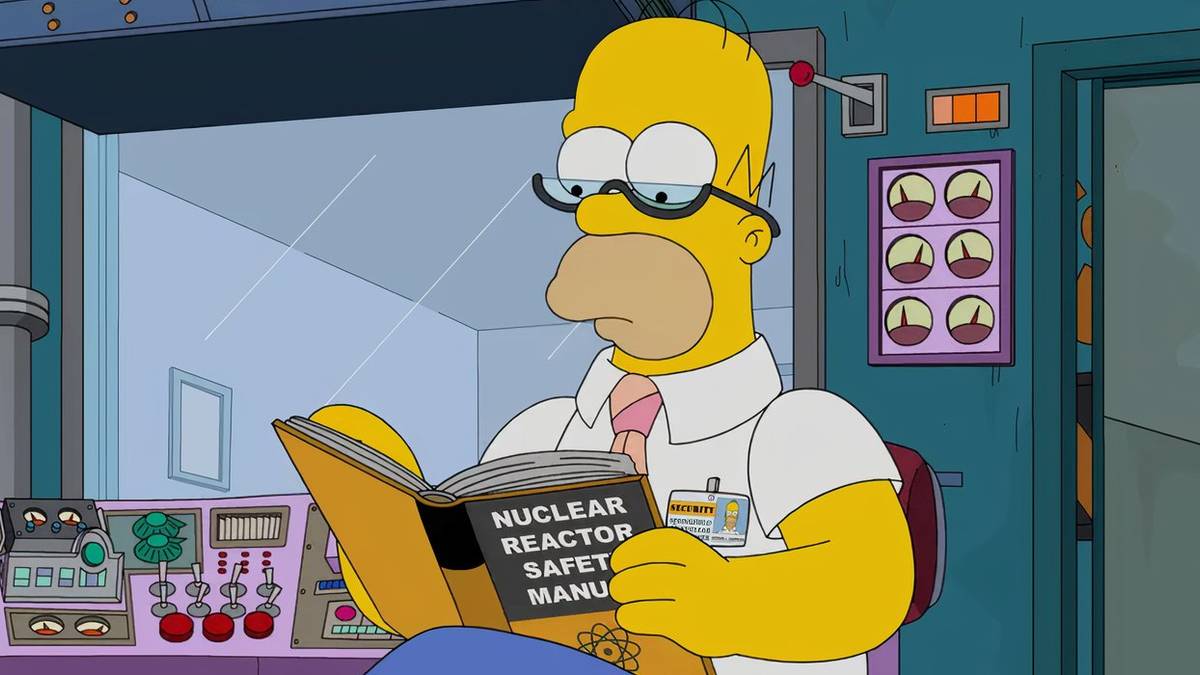
Thus begins a hilarious retelling of Maggie’s birth in 1993, where things were a little different with the family. When Bart and Lisa were the only children in the family, Homer was still working at the Springfield Nuclear Power Plant, but he had different plans. When he got his monthly paycheck, the last that would take him out of debt, Homer decided to quit his job. In a comically over-the-top sequence, Homer was seen turning Burns’ head into a drum, parading him around the office, and finally, quite literally, burning the bridge between him and the Nuclear Power Plant as he left.
Homer Simpson had a plan that involved the intelligence he had shown when he was a kid. He had, in a move that was so opposed to who he was as a character, calculated to the last number how much money he would need to sustain the four Simpsons until Bart and Lisa were of college age. According to his estimate, he would be able to make a living by working his dream job at the bowling alley owned by Barney’s uncle. For a few weeks, Homer was seen actually applying himself and enjoying the work at the bowling alley, proving that this was indeed his dream job, but life had other plans for him. When Homer and Marge had sex to celebrate his new life of freedom, Marge got pregnant, but she didn’t have the heart to tell her husband that his dream was coming to an end. While Selma and Patty spread the word around Springfield, Homer didn’t get the message, even when people congratulated him directly. At Marge’s baby shower, Homer finally understood: he would have another mouth to feed, and the bowling alley job might not cut it.
Unlike other episodes of The Simpsons, “And Maggie Makes Three” was fairly straightforward, but it didn’t lose all of its comic edge. The flashback got a flashback at this point, where Homer was seen reacting by pulling out his full head of hair when he heard that Marge was pregnant with Bart, and then finally tearing out the last of it when Marge got pregnant with Lisa. When Marge suggested that Homer ask Al for a raise, the bowling alley owner told him to try to increase revenue at the alley. In a bizarre move, Homer was seen shooting a gun in front of the entrance to it, and the sudden plot twist was so weird that Lisa and Bart asked Marge to tell the story properly. Unfortunately, this unhinged move was exactly what Homer had done to draw cops and firefighters to the bowling alley, but it brought no business. Marge gave birth to Maggie, whom Homer had initially dreaded, but he fell in love with his daughter as soon as he held her in the delivery room, making Maggie’s birth one of her most shocking episodes.
The Last Scene Is the Most Heartwarming Moment In The Simpsons
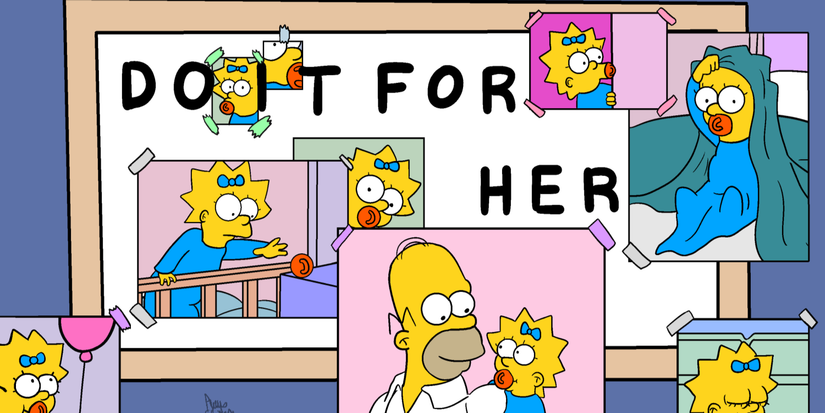
Image via 20th Century Television
“And Maggie Makes Three” may have provided a sweet and often absurd backstory to Maggie’s birth, but that didn’t answer why the youngest Simpson’s photos weren’t in the family album. Homer eventually had to return to Mr. Burns for employment because only he would be able to provide him with the kind of paycheck that would keep his growing family afloat. The return was humiliating because Burns made Homer crawl and beg (literally) for his job, and when he returned to his seat, he affixed a rather depressing plaque to his desk. The plaque read “Don’t Forget: You’re Here Forever”, a sobering reminder that Homer was tied to the Nuclear Power Plant because he had a family. The final scene of this episode showed viewers, and the kids, where Maggie’s photographs really were: they had found a home in the power plant, where Homer had covered the walls with Maggie’s snapshots. More heartwarmingly, he had arranged them around Burns’ plaque in such a way that the text now read “Do It For Her.”
The Simpsons is known for comedy, not sentimentality, but this time, it worked beautifully. For the rest of the 21-odd minutes of the installment, viewers may have found the story to be a little static and staid, but this last scene tied it all together. Homer may have reacted poorly to the pregnancy, and his dream job may have been taken away from him, but he was not a heartless man. He drank, ate donuts, messed with his children, and made some pretty silly mistakes, but his love for his children could not be questioned. This episode traded jokes for heart, and it was the right break that the show needed. The warmth and tenderness shared by the family was the punctuation to a rollercoaster of hilarious gags and smart jokes in The Simpsons, and it actually validated Homer’s antics from earlier.
“And Maggie Makes Three” also depicted an unfortunate reality of the world: people were trapped in cycles of misery because of capitalism. Something like the birth of a child or a medical emergency, which were joyful events, could completely bankrupt a person. The only way to stay afloat for Homer was to work in an office that he hated, doing work that did not fulfill him. The Simpsons showed a very specific kind of pain: the one that comes from the failure of the best laid plans. He had mapped out a happier life for himself and his children, but an unplanned pregnancy changed everything. This was what happened to Homer, and the joy of Maggie’s birth was dotted with the pain of dedicating his life to a job he hated.
It was a rare look into a more realistic aspect of family life, which usually leads to some funny episodes, but “And Maggie Makes Three” showed the more emotional side of it. Homer’s situation in this episode echoed the pain faced by countless people in the world, but the fact that Homer found a reason to go on despite the setback was heartening. By keeping this episode grounded in family and affection, The Simpsons actually rounded off the show in a way that hadn’t been done before. Through her masterful writing, Jennifer Crittenden proved that sentimentality could be just as subversive as comedy, and even more so when it was paired with the right gags and references.
Ultimately, even a sitcom like The Simpsons needs a different approach now and then, and this change in direction was critically acclaimed almost universally. Homer was known for being callous, and seeing his softer side was what this episode needed to be memorable. Despite all the jokes and couch gags in the previous episode, there is a reason why “And Maggie Makes Three” is the one that has stuck around in audience memory. It is a masterclass in the use of pathos in the right measure, and at the right time, and the formula worked.
Release Date
December 17, 1989
Network
FOX

Dan Castellaneta
Homer Simpson / Abe Simpson / Barney Gumble / Krusty (voice)

Julie Kavner
Marge Simpson / Patty Bouvier / Selma Bouvier (voice)