
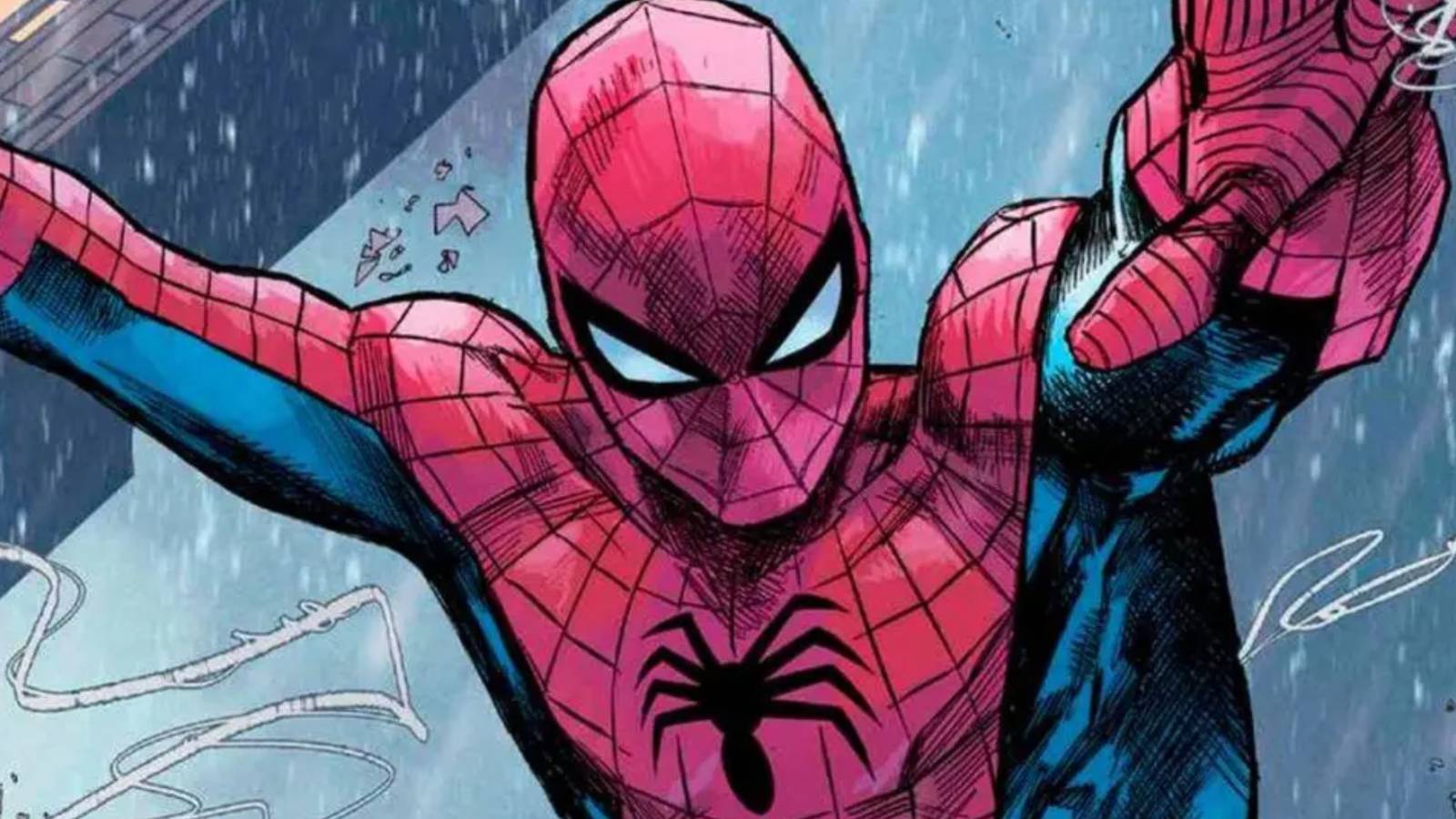
Spider-Man may have some of the greatest villains in the history of comics, but they can’t all be winners. For every Green Goblin, there’s a Gibbon–a character who tried to make a lasting impression but who was ultimately forgotten by both Spider-Man and comic book readers alike. Ultimately, they couldn’t make a big enough mark for writers to keep them around for any substantial period of time.
Some underwhelming villains had gimmicks that simply weren’t built for more than a few appearances. Others had great potential, only to buckle under the weight of storylines that stunted their development. Whatever the cause, these villains all failed to make any lasting impression in Spider-Man’s comic books.
Stegron Was Never More Than a Lizard Knockoff
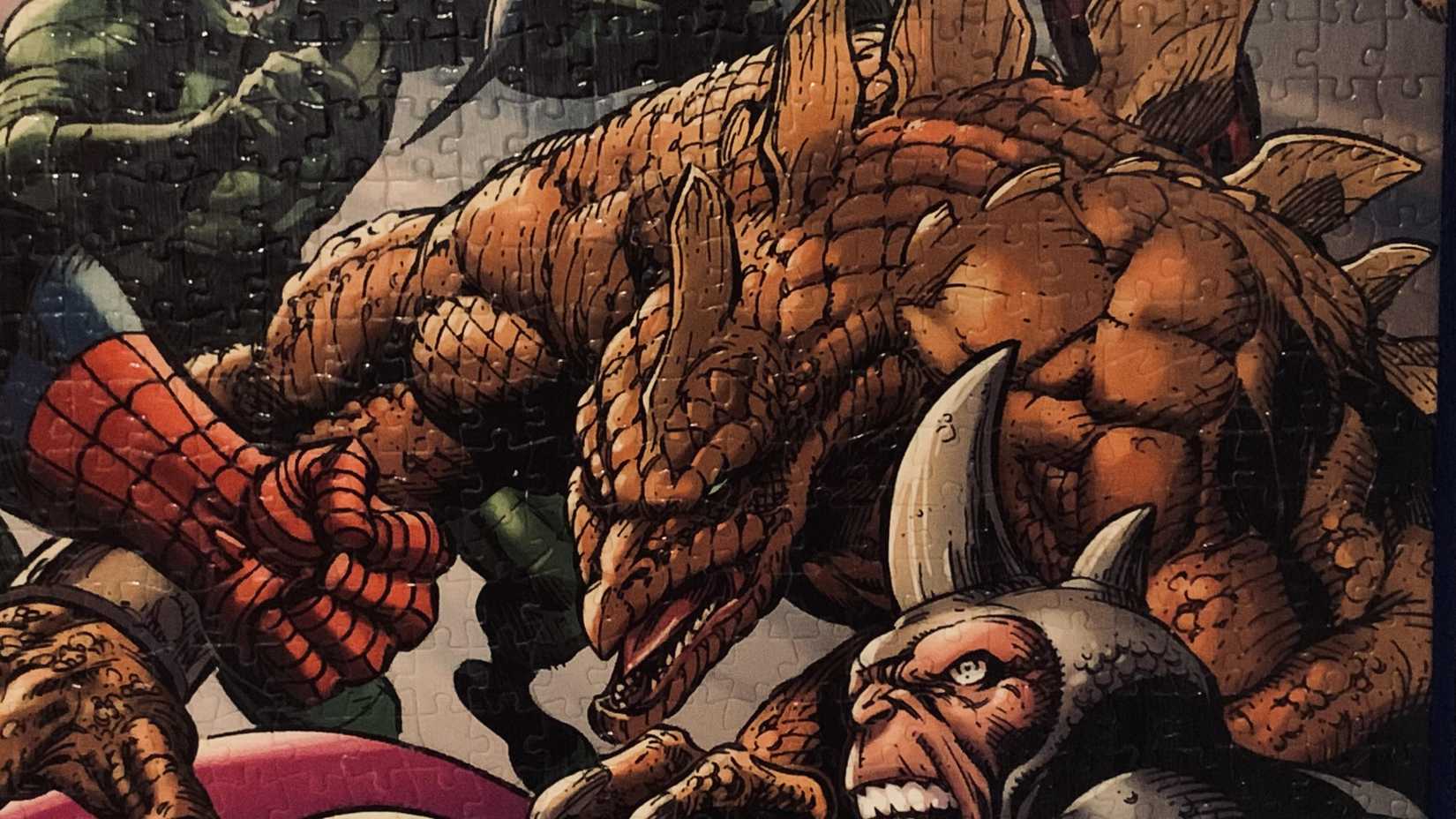
Stegron fights Spider-Man in Marvel ComicsImage via Marvel Comics
Vincent Stegron is a former associate of Dr. Curt Connors, having worked with him on a S.H.I.E.L.D. project analyzing dinosaur DNA. After stealing the DNA samples and injecting himself with them, Stegron transforms into a giant dinosaur man (as seen in Marvel Team-Up #19). This new form gives him enhanced abilities and leads him to embark on a mission to turn more people into dinosaurs.
While the idea for Stegron is interesting, the character is surprisingly one-dimensional. Ultimately, there is little more to his character than a madman who wants to see humans transformed into prehistoric lizard people like himself. Stegron never graduated beyond a knockoff of the Lizard, who will always be a more complex and iconic character.
The Kangaroo Had a Laughably Short Tenure
Some supervillains are designed for only one or two appearances. This was never more plain than when the Kangaroo made his debut in The Amazing Spider-Man #81. In true campy 1960s fashion, the Kangaroo’s primary power is his ability to jump. He clearly wasn’t ready to take on a powerful hero like Spider-Man and perished in their first encounter.
Although Kangaroo has been revived since his death, the character has always been more of a joke villain than a legitimate threat. He rarely ever pops up in issues of The Amazing Spider-Man, and, if he does, he is still treated as a lower class of villain who doesn’t stand a chance against the web-slinging hero.
Typeface Was Too Silly to be Taken Seriously
Typeface is, as his name would imply, a villain distinguished by the large letters printed over his face. A former signsmith who feels outcast by the world, Gordon Thomas becomes the villainous Typeface in Peter Parker: Spider-Man vol. 2 #23. He often switches out the letters on his head to denote different messages (e.g., “A” for “Annihilation” or “R” for “Retribution). Typeface has no superpowers to speak of, but is a trained soldier and is therefore quite skilled with any weapon.
Although his backstory is surprisingly bleak, Typeface’s appearance is a bit too silly for readers to take him seriously. The letters plastered over his head are a bit on the nose (pardon the pun) and don’t do much to make him more intimidating. Ultimately, the character has been relegated to background appearances since his debut.
Slyde Has an Interesting Gimmick That Doesn’t Stick
In The Amazing Spider-Man #272, Jalome Bleacher designs a non-stick coating that defies friction. Using this coating to develop his own supervillain suit, he becomes Slyde. The suit allows Slyde to travel at superhuman speeds, but his abilities are far beyond those of a typical speedster. Nothing can hold onto Slyde for long, including Spider-Man’s webbing, making him incredibly difficult to catch.
Slyde has an interesting gimmick that helps him stand out ever so slightly, but still fails to be as iconic as other Spider-Man villains. Part of this comes down to his uninspired suit design, which is especially generic when compared to Spider-Man’s other, more colorful villains. While Slyde does show up from time to time, he has never been more than a third-rate character.
Carrion Struggled Because of the Clone Saga
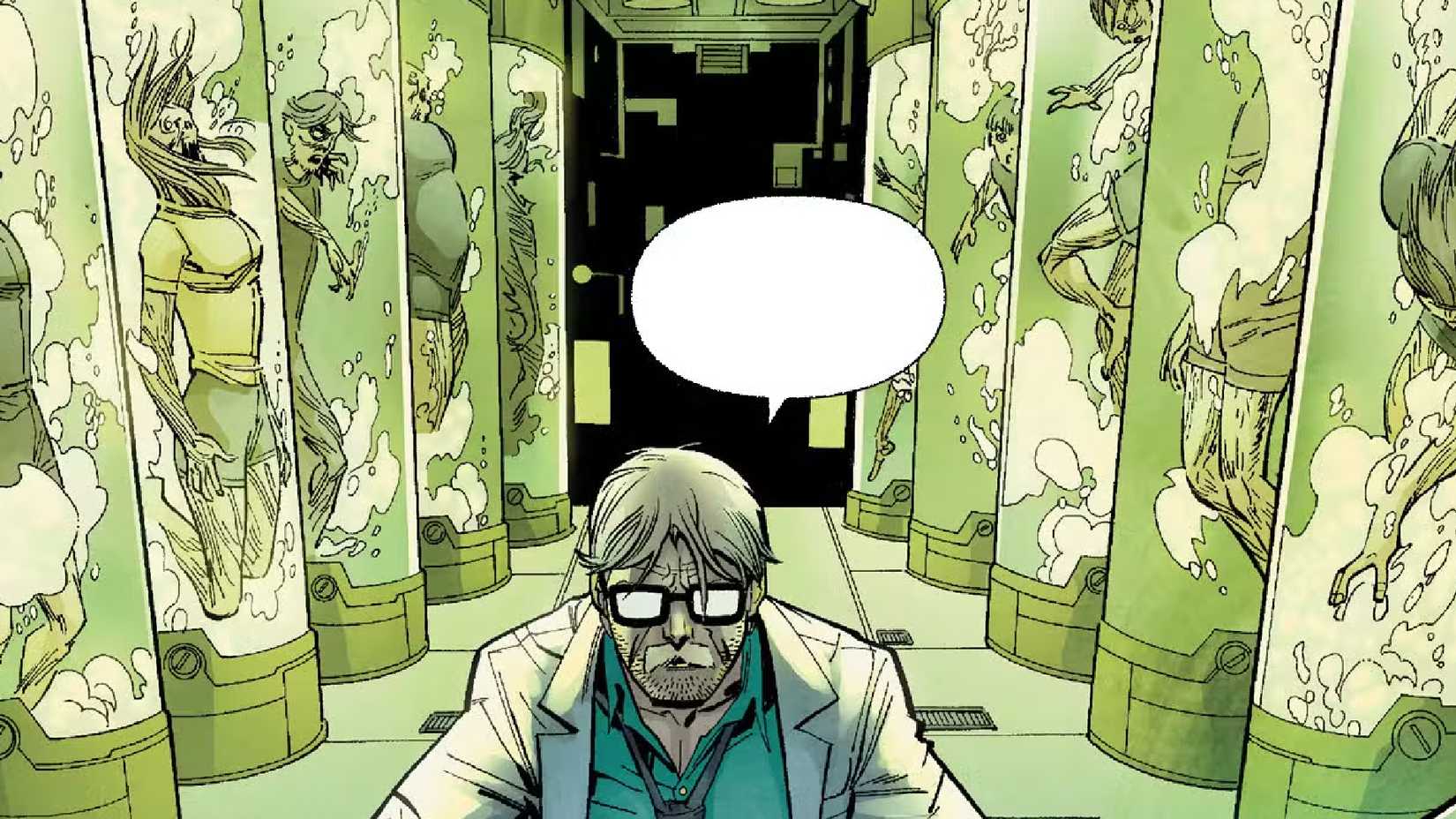
Miles Warren works in his lab in Marvel ComicsImage via Marvel Comics
Carrion is one Spider-Man villain who had potential, but was instead slowly phased out of the comics. First appearing in Spectacular Spider-Man #25, Carrion is introduced as a ghostly figure whose very touch can prove lethal. He also possessed myriad other abilities, including telepathy and levitation. In his early appearances, Carrion proved to be one of the more frightening Spider-Man villains, but this wouldn’t last for long.
Carrion was unfortunately weighed down by the infamous Clone Saga. After it was revealed that Carrion was a clone of the evil Professor Miles Warren, it became difficult to separate him from the countless other clones running around causing havoc in Peter Parker’s life. When the Clone Saga ended, Carrion slowly disappeared from Spider-Man’s life until he was almost forgotten. Different versions of Carrion have emerged since, but none have been quite as impactful as other, more popular Spider-Man villains.
Molten Man Completely Disappeared
Mark Raxton became the Molten Man in The Amazing Spider-Man #28 when a lab experiment covered his entire body in a liquid-metal alloy. Now able to generate and sustain incredible heat and high levels of radiation, the Molten Man was one of Spider-Man’s recurring foes in the ’60s and ’70s. He also had a surprising connection to Peter Parker’s personal life, as it is later revealed that Mark Raxton is also Liz Allan’s stepbrother.
Unlike other Spider-Man villains whose impact was limited by a lack of popularity, Molten Man had a strong start in the comics. Unfortunately, writers slowly forgot about the character over time. Eventually, Liz finds a way to cure Mark’s condition and ends his time as Molten Man. The character has been almost entirely forgotten by Marvel Comics, making only sporadic appearances in the time since.
Lightmaster Was Never More Than a C-list Villain
Edward Lansky, a.k.a. Lightmaster, makes his first appearance in Peter Parker: The Spectacular Spider-Man #3 in 1977. Lansky is the vice-chancellor at Empire State University, but moonlights as a supervillain who can manipulate light thanks to his specially made power suit. As Lightmaster, Lansky tangles with Spider-Man several times, but never graduates beyond the C-list of the hero’s rogues’ gallery.
Lightmaster ultimately shares too many traits with other, more popular Spider-Man villains. While his powers are not electricity-based, Lightmaster’s abilities are visually quite similar to those of Electro, who is far better-known and much more dangerous. Lansky is also a teacher at Peter Parker’s college who is revealed to be a supervillain, but this same storyline is done much better with Professor Miles Warren/Jackal. Ultimately, Lightmaster is just another generic villain who hasn’t made much of an impact on the Marvel Universe.
Grim Hunter Couldn’t Live Up to His Father’s Legacy
After Kraven the Hunter’s death, Spider-Man comics struggled for decades to introduce a worthy successor. Spider-Man #47 marks the debut of the Grim Hunter, Kraven’s son, who attempts to take up his father’s mantle. However, both in-universe and in the real world, the Grim Hunter proved to be a disappointment to Kraven the Hunter’s legacy. Eventually, a resurrected Kraven hunted and killed his own son to reclaim his title.
The Grim Hunter is now merely a footnote in the list of Marvel’s attempts to fill Kraven’s shoes. As it turns out, the only proper Kraven replacement is Kraven himself. In current Spider-Man comics, Kraven the Hunter is a clone of the original raised as his son. The Grim Hunter’s legacy disappears in the wake of the far more worthy Kraven the Hunter.
The Rose Will Always Live in the Shadow of His Father
The Rose makes his debut as an intriguing new street-level villain in The Amazing Spider-Man #83. Sporting a mask and promising to shake up New York’s criminal underworld, the Rose immediately generated excitement from readers who couldn’t wait to find out his true identity. Eventually, the Rose is revealed to be none other than Richard Fisk, the son of Wilson Fisk/the Kingpin and self-proclaimed inheritor of his father’s throne.
The Rose’s early comic book storylines present him as a diabolical character worthy of his surname, but this didn’t last long. After weaving in and out of prominence for many years, the Rose eventually becomes a rather low-rate gang leader. He buckles almost immediately when challenged by Tombstone in the lead-up to “Gang War” and is essentially reduced to a petulant child who must be reprimanded by his father. Ultimately, his presence hasn’t been nearly as impactful as the build-up to his introduction.
Gibbon Never Made an Impact on the Marvel Universe
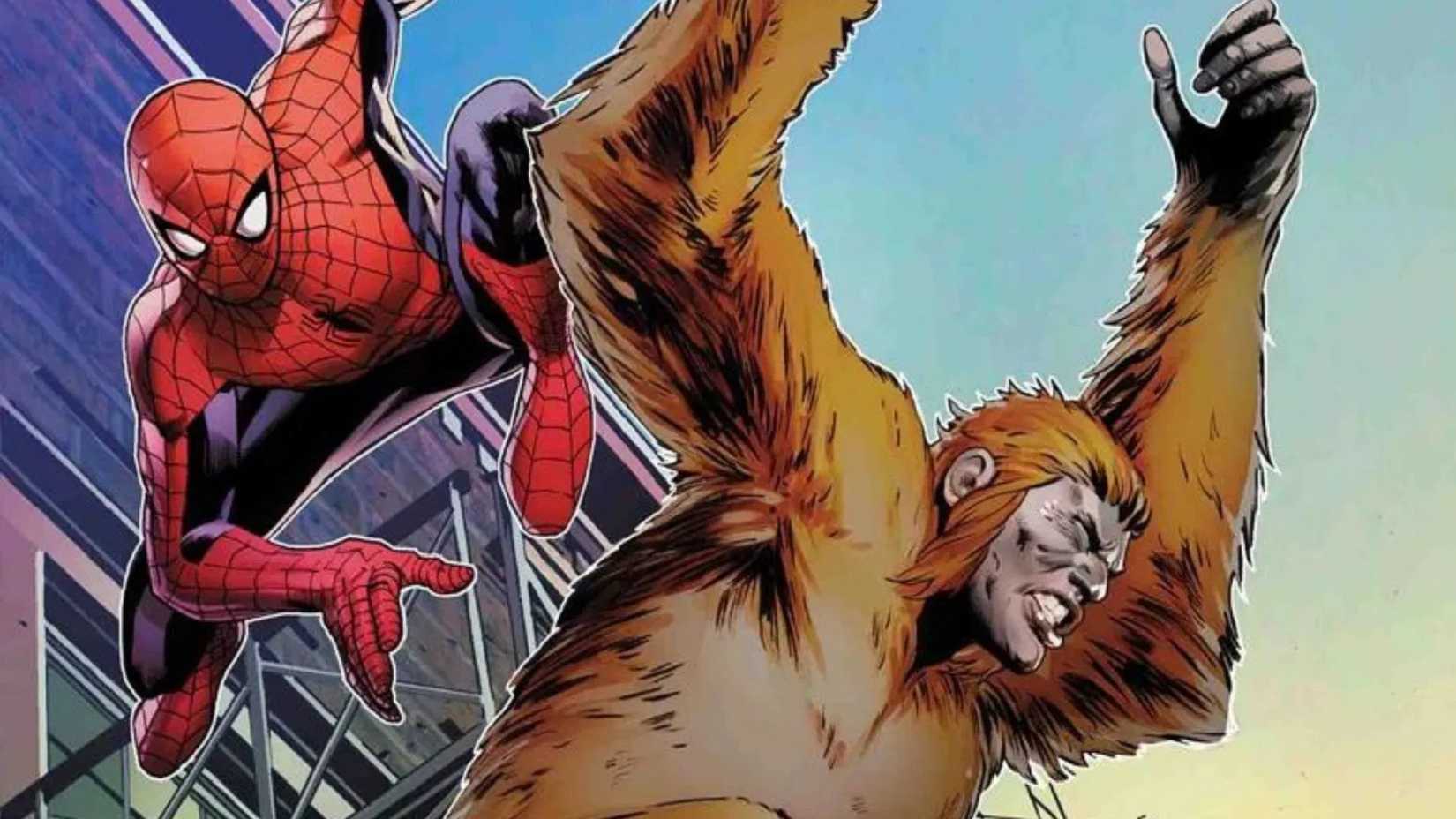
Gibbon and Spider-Man team up in Marvel ComicsImage via Marvel Comics
Martin Blank was a young man who was born with an unusual condition that left him with a peculiar appearance resembling that of a gibbon monkey. After enduring endless teasing by his peers in school, Blank found solace only in the likes of Spider-Man, whom he deemed to be proof that freaks like him could be someone someday. However, Spider-Man laughed off Gibbon’s attempts at becoming his sidekick in The Amazing Spider-Man #110, pushing him to embrace a life of villainy.
Although Gibbon has a solid origin story, the character never really took off like Marvel might have hoped he would. Over the years, he has made sporadic appearances, sometimes playing the villain and other times acting as a hero. Tragically, the moment that readers might best remember of Gibbon is his gruesome death during the Hunted storyline, wherein Spider-Man failed the troubled young man once again.