
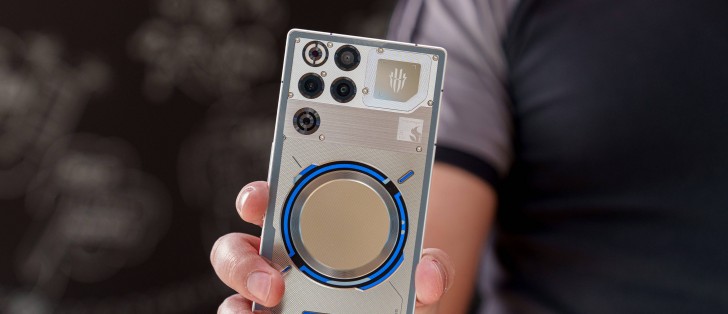
Massive, full-screen 144Hz OLED display
The RedMagic 11 Pro borrows the RedMagic 10 Pro and 10S Pro’s display. That means 1,216 x 2,688px resolution in a 6.85-inch diagonal. The OLED panel supports a refresh rate of up to 144Hz, but there’s no word on HDR support. Still, the phone will play HDR content on YouTube.
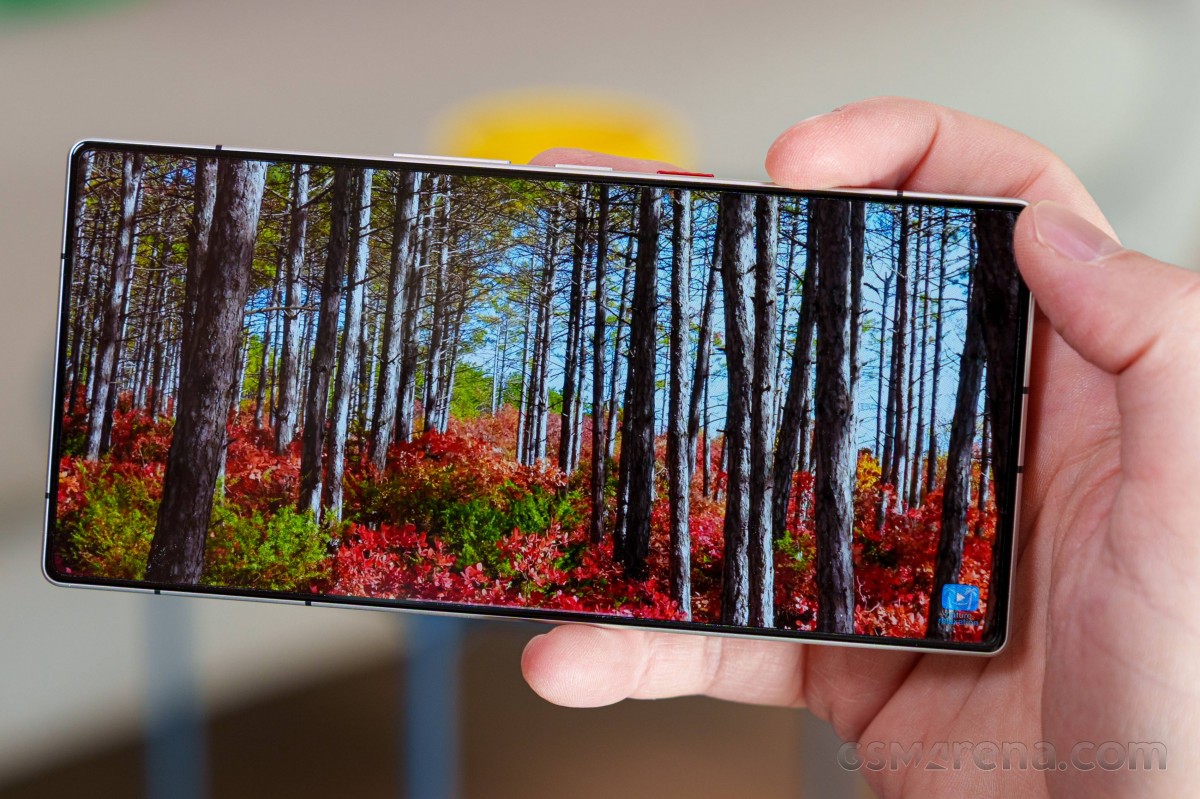
The bezels around the phone are really thin and symmetrical, measuring 1.25mm in thickness. The absence of a cutout for the selfie camera looks great on the RedMagic 11 Pro, allowing a proper full-screen experience. Speaking of, the under-display camera remains unchanged, and it’s completely unnoticeable.
nubia RedMagic 11 Pro
Performance-wise, the display doesn’t disappoint. The panel boosted up to 1,569 nits in auto mode on a 75% fill and reached 1,946 nits on a smaller 10% white patch. On the other hand, the peak brightness on the 10% patch isn’t particularly impressive. In manual mode, you will get standard 622 nits on a 75% white surface.
Refresh rate
The refresh rate options are as follows – 60Hz, 90Hz, 120Hz, 144Hz and Intelligent adjustment (Auto). The latter is the default option, switching between 60Hz and 120Hz, depending on the scenario. For instance, on YouTube and Netflix, it will dial down to 60Hz or when the screen is not in use.
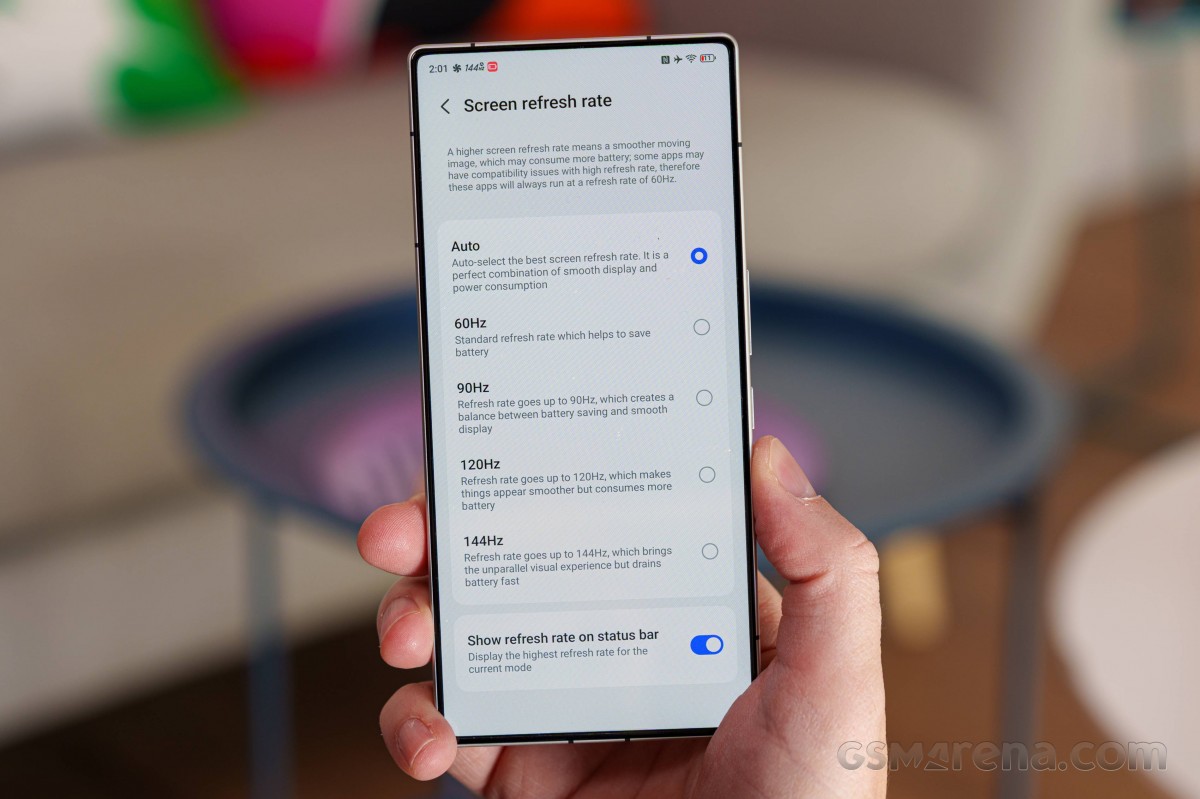
The 144Hz option acts as the auto mode but boosts the refresh rate up to 144Hz instead of 120Hz. So, if you are looking for the smoothest possible experience, you should use the 144Hz mode, as it seems efficient enough.
Battery life
The RedMagic 11 Pro houses a huge 7,500 mAh battery, no matter the market, and employs a Snapdragon 8 Elite Gen 5 chipset. Expectedly, the battery life is solid. The Active Use Score of 20:02h is impressive, with long web browsing and video playback runtimes. The gaming and call scores could be a tad better, though, given the battery capacity.
Against competitors, the RedMagic 11 Pro seems to be doing just fine, but it does fall short of the OnePlus 15, for example, which sports similar hardware and a slightly smaller battery.
Charging speed
The handset offers 80W wired and 80W fast wireless charging. We tested the wired charging using the charger included in the box and achieved 55 minutes from 1% to Full charge. Considering the big 7,500 mAh cell, it’s not too shabby, but it does fall behind some competitors offering similarly big batteries. They are faster at the 15-minute and 30-minute marks and to full charge. Still, you get plenty of juice in the first 30 minutes of charging – 71%.
Nubia provides a couple of charging settings that would potentially extend the battery’s life cycle. For instance, you can set a charging limit or disable the fast charging altogether. More importantly, the phone supports bypass charging, meaning you can use your phone and it would just take enough to keep going without charging the battery, which lowers the heat buildup from the charging process (a potential dealbreaker for gaming performance).
Speakers
The nubia RedMagic 11 Pro features a hybrid stereo speaker setup with a full-fledged speaker at the bottom paired with a smaller speaker that acts as an earpiece at the top. Naturally, the bottom one is louder than the hybrid speaker at the top.
Interestingly, the 11 Pro’s speakers are quieter than the previous generation, despite what nubia claims in its press materials. The handset achieved a “Good” -26.5 LUFS loudness score, which is considerably below the average for the class.
What has improved over the last generation, however, is sound quality. Unfortunately, it’s still not great. The vocals and highs feel a bit suppressed in favor of the bass, which isn’t as prominent as one would expect.
Use the Playback controls to listen to the phone sample recordings (best use headphones). We measure the average loudness of the speakers in LUFS. A lower absolute value means a louder sound. A look at the frequency response chart will tell you how far off the ideal “0db” flat line is the reproduction of the bass, treble, and mid frequencies. You can add more phones to compare how they differ. The scores and ratings are not comparable with our older loudspeaker test. Learn more about how we test here.