
Getty
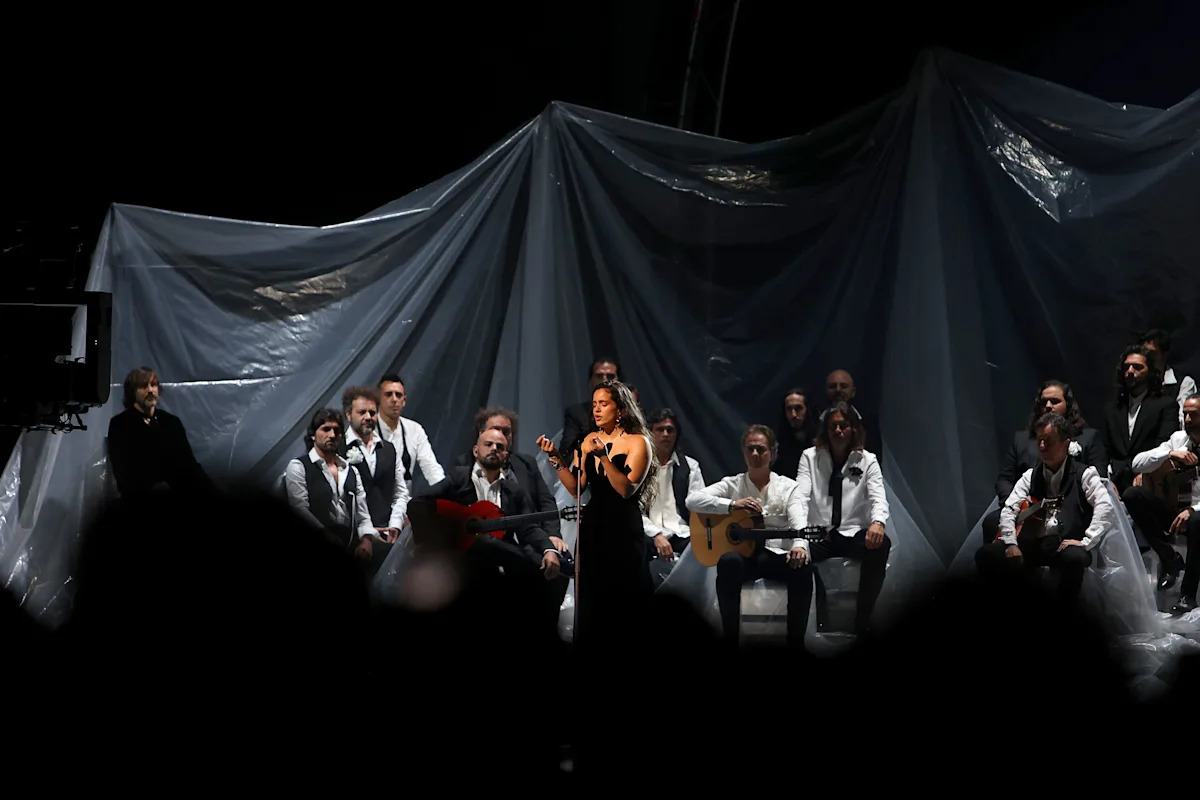
With lyrics in 13 languages across 18 tracks and nods to musical traditions spanning everything from flamenco to opera, Spanish pop star Rosalía’s new album, ‘Lux,’ is an aural feast. Since its November 7 release, critics and reviewers have debated: Is it a pop album? A contemporary classical album? Both? Neither?
But what everyone can agree on is that its blend of global influences and reference points is unique, and arguably a major element of the album’s appeal, with ‘Lux’ currently sitting at the top of Spotify’s streaming charts. The team behind the project is notably international as well: Icelandic Björk and American Yves Tumor joined the album’s first single “Berghain” while Yahritza Y Su Esencia, known for making regional Mexican music out of Washington state, and fado singer Carminho, appear on “La Perla” and “Mémoria” respectively. The renowned London Symphony Orchestra creates the backbone of it all, with none other than Icelandic conductor and composer Daníel Bjarnason at their helm.
“It was a happy coincidence that I ended up working on this project,” says Bjarnason, whose classical background and past work with artists like Sigur Rós makes him well positioned to straddle the many genres of ‘Lux.’ “I come from classical music, but I’ve worked in pop and electronic music and even jazz, so it’s easy for me to move from one world to the next. I understood the vocabulary that she was drawing on, but also the way she was incorporating it into her own language.”
Nearly one year ago, Bjarnason flew out to London and recorded “this whole thing in about a week” with Rosalía and her collaborators in the studio every day. She was “very hands on,” he adds, “which is the most fun way to work with an artist.”
Below, we chat with Bjarnason about the global sounds that are referenced throughout the album, how this coterie of contributors guided its worldly result, and how to identify the Icelandic fingerprint he personally left on ‘Lux.’
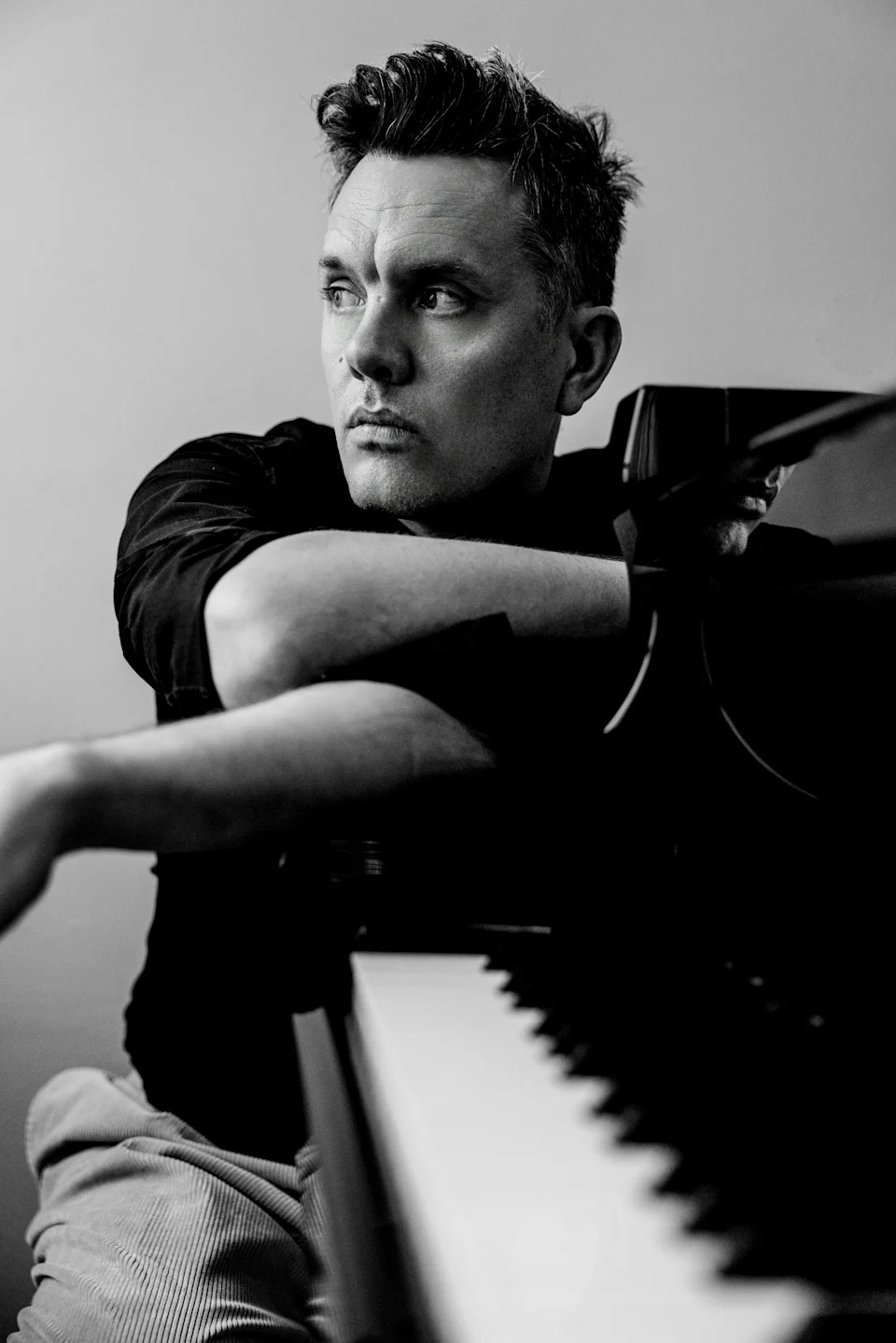
Daníel Bjarnason conducted the London Symphony Orchestra for Rosalía’s new album, ‘Lux.’
Anna Maggý
There’s a lot of chatter about the 13 languages on this album—Ukrainian, Sicilian, Arabic, Mandarin—but your work as the conductor relies on a very different type of communication. How do you “speak” to the orchestra?
What people see of composing—the hand gestures—is like a sign language. Certain movements have certain meanings, like when you beat down, that’s the downbeat. Depending on if the music is in two or three or four, there are different patterns that the conductor does. The first job of the conductor is to keep time in that way. But then there’s a whole interpretive aspect of it where you work with musicians, you talk about what you’re doing. You talk about the sound, how you want to shape it, how you want to phrase it. There is a sort of interpretive dance going on as well, because the conductor is interpreting what they want in the music through their movement. That is the goal. Conducting an orchestra is a complicated and interesting thing to do, because there is a lot happening at once.
Is it a universal language?
The physical thing is universal, like, downbeat is always down in every part of the world. There are certain ways of working that are different based on the culture. Orchestras may respond better to certain dynamics in certain parts of the whole. But, you know, just like the written sheet music is universal, the movements are also kind of universal as well.
You’ve worked across many genres. Can you tell us about global influences and musical traditions that appear on this album?
A large part of the album goes into traditional music from Portugal or Spain, like fado or flamenco, which is not where I come from. So I can’t speak to that with any authority, although I enjoyed taking part in it. There are other things that I think are more familiar to me, for example, in “Mio Cristo piange diamanti,” which is written as an aria. When you know Italian opera, you can really hear that this is an aria, in the way it’s written. The form is really interesting. It’s not like any pop song in the way it’s built, but much more like a scene in an opera. I think that’s maybe my favorite song on the album. It’s just so wonderful and so beautiful, both the lyrics and the way she sings it.
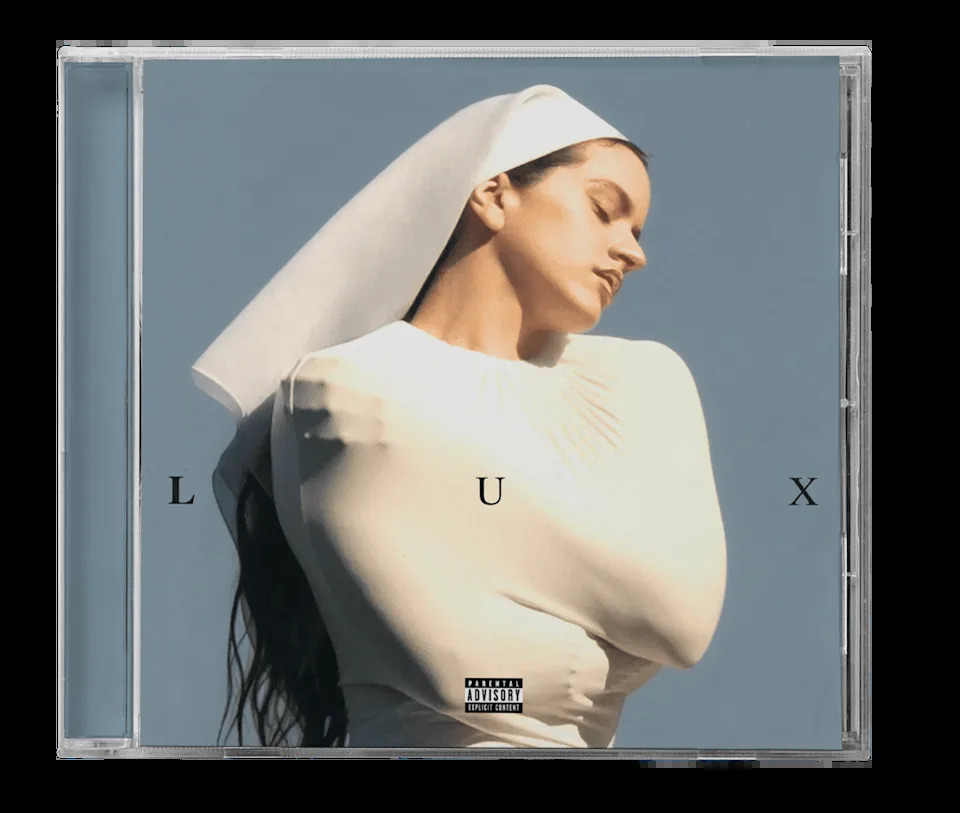
Rosalía’s ‘Lux’ was released November 7, 2025.
“Berghain” is reminiscent of Carl Orff’s [cantata composition] Carmina Burana, and these Baroque gestures almost sound like some kind of Vivaldi, with strings that are really in your face. Overall, there’s a sense of freedom with the form that is unusual for a pop album. The songs don’t feel like very strictly tied up in pop formats—like, verse, chorus, bridge, chorus, bridge, verse. It’s much more free-flowing, and she allows herself to move in different ways, and create different arcs for each each song that go in unexpected directions. It’s an approach that you would more likely find in contemporary classical music.
Being from Iceland, do you think that part of your background left its mark on ‘Lux’ at all?
It’s hard to define the Icelandic sound, but people think of bands like Sigur Rós, Björk, maybe even Johann Johansson. There’s a certain quality, which is often quite slow moving, quite ethereal, very roomy. But now I’m doing what I didn’t want to do, which is actually try to describe it—because really, when you hear it, you kind of know it.
I think there’s a little bit of that on this album. There’s a certain esthetic, or a certain approach to the orchestrating that makes me feel like, I know that sound, I know that esthetic. I think part of it is the attitude of being free to move from one musical world to another. There are not so many boundaries involved. A lot of musicians here in Iceland do different styles and move quite easily between classical music and rock and pop; it doesn’t feel like they need to be closed off in their own boxes. There’s an openness to incorporating a lot of different things. And in that way, this album has that a lot—embracing rather than reducing.
After exploring a range musical traditions in this album, are there other genres you hope to play with in the future?
I love collaborating with people. I’m quite interested now in working with people in electronic music. I’m gravitating toward quite hard techno music. I was in Detroit recently, and there’s a whole techno history there. I’d like to go back and explore that more. I’m just dipping my toes in this world though. I think I need a guide to take me around the world and show me what’s happening where.
Anything in particular that people should listen for on the album—a favorite sound or easter egg?
Listen for the contra bass clarinet. There’s a very prominent contra bass clarinet part [in the song] “Porcelana.” That’s not something you hear on every pop album. It’s a really big clarinet, which is this huge thing that creates a rumbling sound.
Originally Appeared on Condé Nast Traveler