
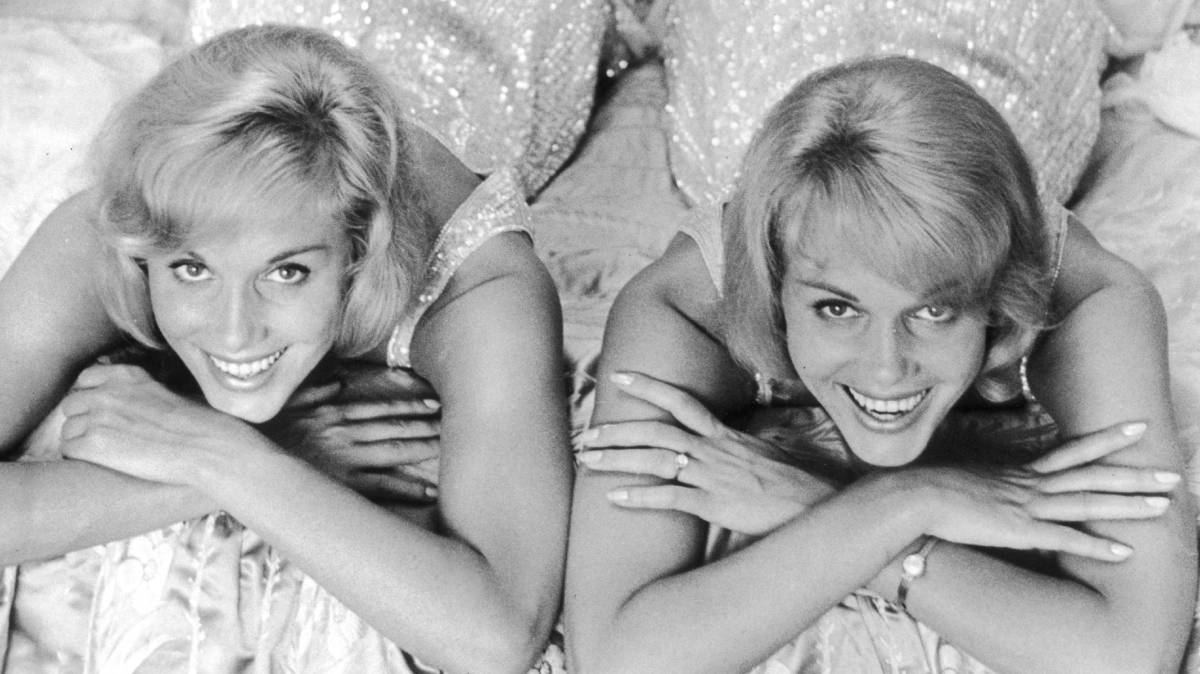
When Alice and Ellen Kessler learnt that their number in the 1959 Eurovision Song Contest in Cannes was to be Heute möcht’ ich bummeln (Today I’d like to stroll), they declared the title bland, unsuitable and incomprehensible. Instead, they decreed it should be Heute Abend woll’n wir tanzen geh’n (Tonight we want to go dancing).
The change made little difference. Their bouncy performance finished eighth out of eleven entrants, coming behind Teddy Scholten, who won for the Netherlands with Een beetje, the second Dutch win in the competition’s history. The British entry, Sing, Little Birdie, a perky number with a chirpy, upbeat tempo sung by Pearl Carr (obituary, February 18, 2020) and Teddy Johnson came second.
The Kessler Twins’ greatest success was in Italy, where their long legs, sparkling costumes and perfectly synchronised singing and dancing delighted audiences on shows such as Giardino d’inverno and Studio Uno, the latter adopting their number, Da-da-un-pa, as its theme tune. However, the pair claimed that every Friday three representatives from the Vatican sat in the studio inspecting their cleavage, underwear and script.

The pair in 1959, the year of their Eurovision performance
ARTHUR GRIMM/GETTY IMAGES

ARTHUR GRIMM/GETTY IMAGES
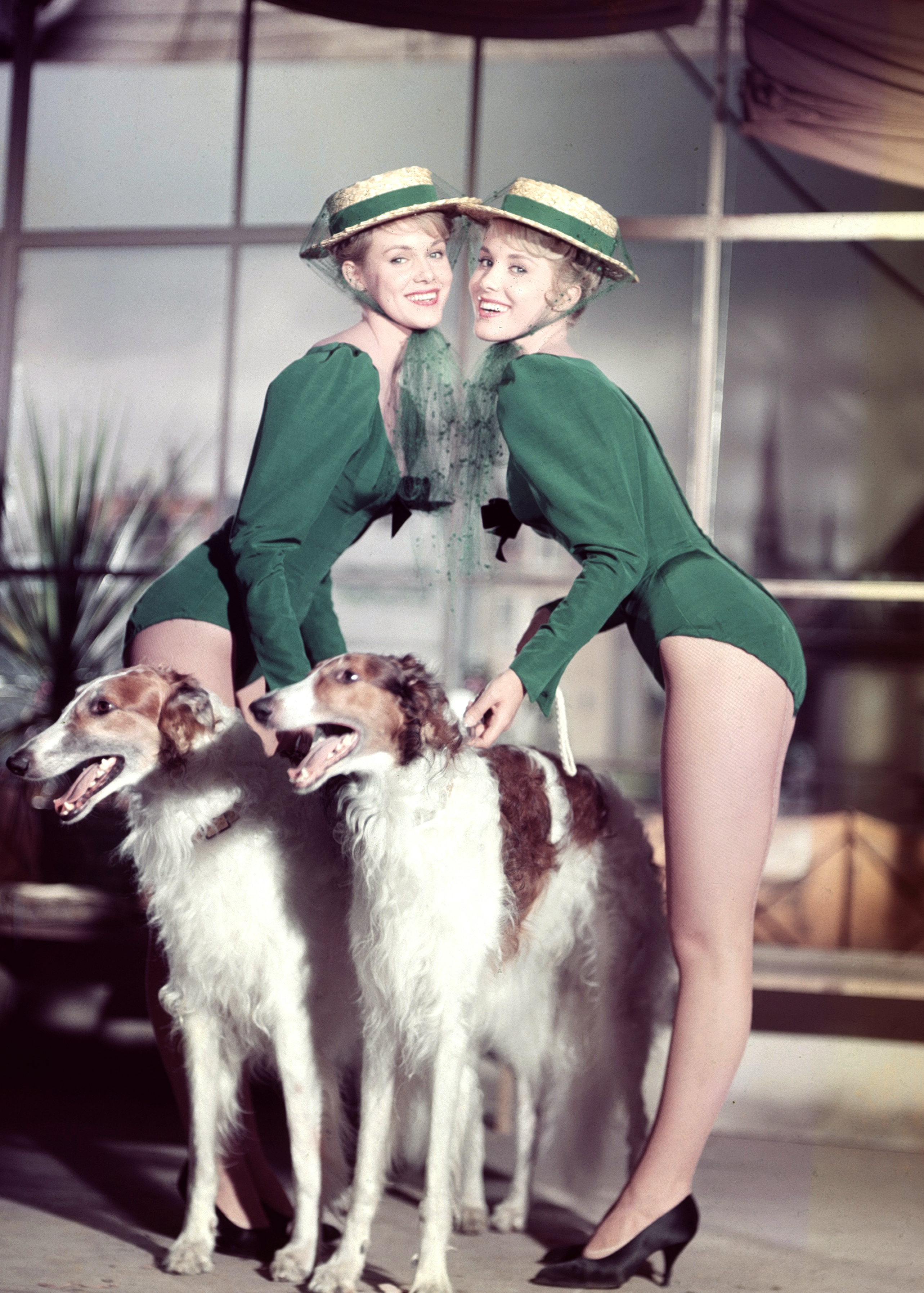
In 1957
ARTHUR GRIMM/GETTY IMAGES
Their popularity was boosted in 1976 by a cover feature in Italian Playboy magazine, which sold out within a matter of hours. “We managed it even with small breasts,” Alice declared triumphantly, noting that they were 40 at the time. However, they drew the line at appearing nude on stage, tearing up a contract to undress for a show in Las Vegas starring Rock Hudson. “We’re both in favour of sexy, glamorous roles,” Alice said. “But nudity is out for us.”

In Britain they were staples of light-entertainment television shows, appearing with Tommy Cooper, Bruce Forsyth and Les Dawson. Elsewhere they shared the stage with Frank Sinatra, Tony Curtis and Fred Astaire, who called them Lightning and Thunder because they grasped their dance steps so quickly. In the US they became household names thanks to a cover feature in Life magazine in February 1963 and appearances on The Ed Sullivan Show.
Early in their careers these two glamorous, 6ft blondes developed a strategy for dealing with unwanted male attention, of which there was plenty. “We were just ladylike, not easy to get, we kept our distance at first,” Ellen said. “We always gave them the ‘Don’t touch me’ look,” Alice added. “That helped immensely.”
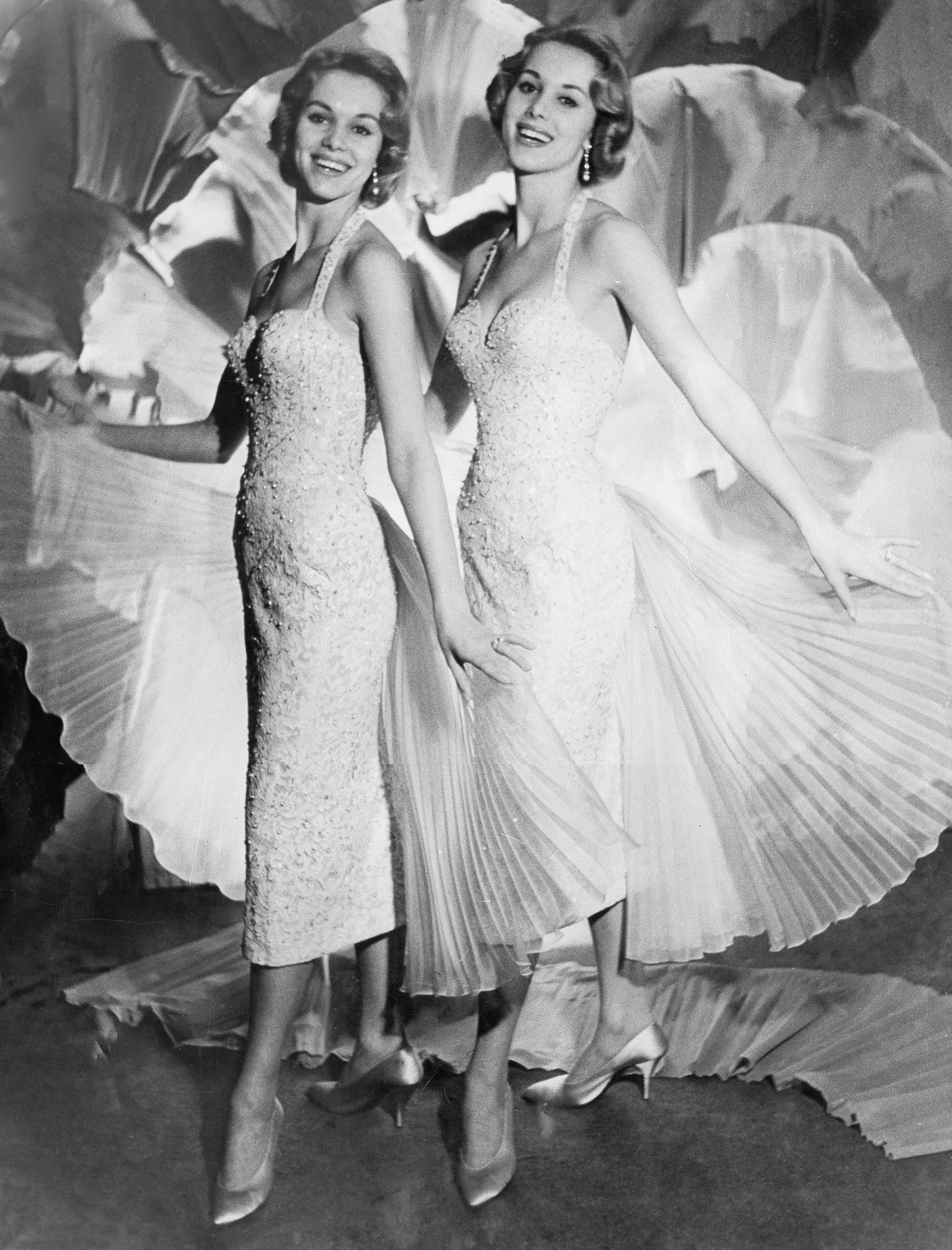
Their fame grew in the 1960s
ALAMY

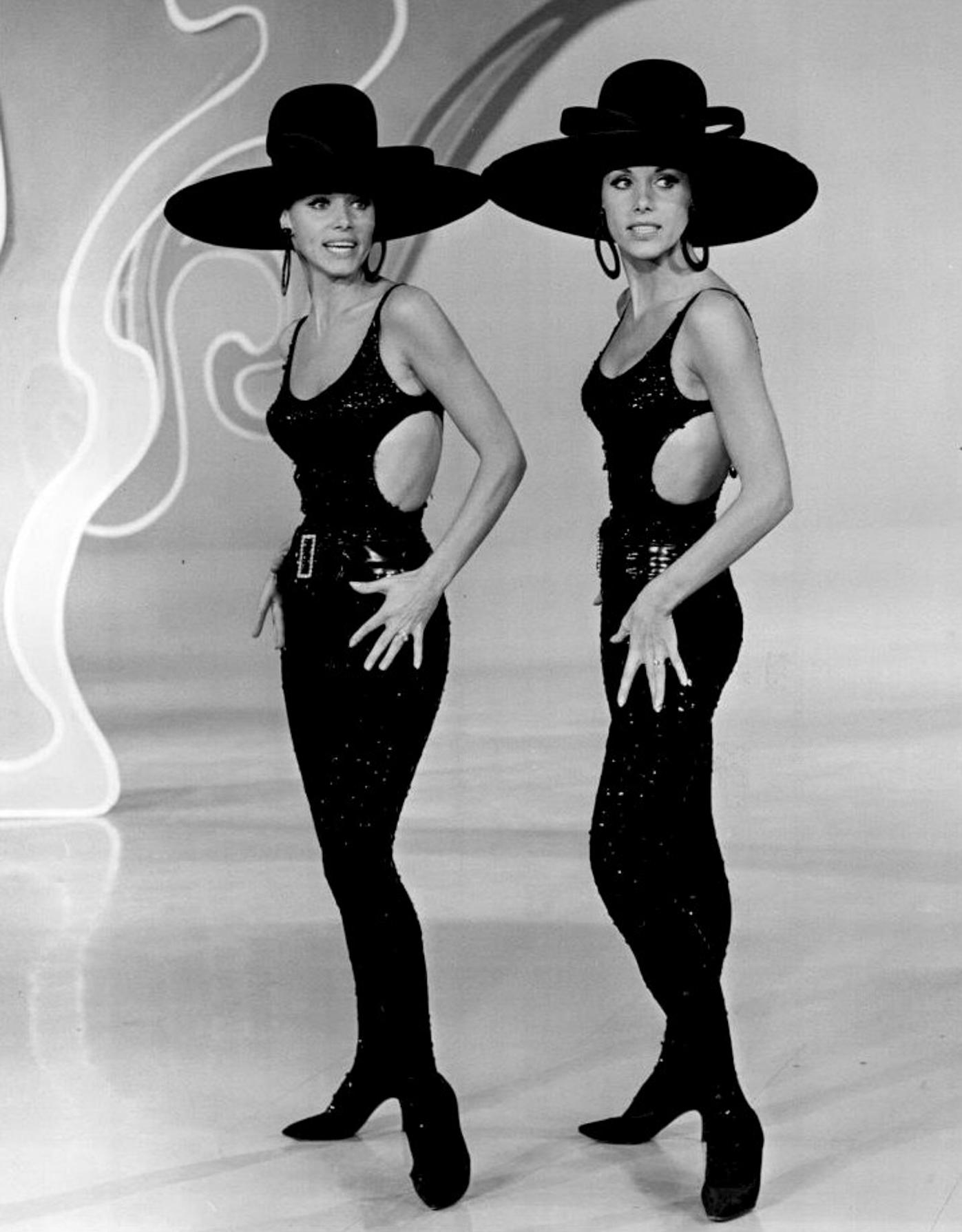
On one occasion they were propositioned by Elvis Presley, who was in Paris on leave from the US army. “I love your butts,” he exclaimed. “He and his rock’n’roll, that wasn’t our thing at all,” said Ellen. Alice explained why she was not drawn to good-looking men: “Imagine waking up in the morning and he looks much better than you.”
Their memoir Eins und eins ist eins (One Plus One Equals One, 1996) described rebuffing advances from Harry Belafonte and John Wayne. However, Ellen, the more extrovert of the twins, admitted succumbing to Burt Lancaster’s charms when she was 19. “I’d never been to bed with a statue before,” was her withering verdict of their one-night stand.
Alice and Ellen Kessler were born in Nerchau, near Leipzig in Saxony, in 1936. Alice was the elder by 30 minutes and 5mm taller. They were the identical twin daughters of Paul Kessler, a mechanical engineer, and his wife Elsa. Encouraged to join dance classes, by 1947 they were in the children’s ballet at Leipzig Opera. Three years later they passed the entrance exam for the company’s dance school.

Alice, left, and Ellen aged five. When they reached the age of eleven they were in the children’s ballet at Leipzig Opera
ALAMY
From an early age their credo was: “Smile, don’t let on, keep going.” That was especially so when their father drank heavily, beat their mother and showed off his daughters like circus animals. He dressed them identically, instructing them to do everything together — dancing, playing the accordion, performing cartwheels — whether in the pub or beneath the Christmas tree. As children they fantasised about escaping with their mother. “When we grew up, we would throw Dad down the stairs, take you by the hand and run away,” they said.
In 1952 the family were in West Germany on visitors’ permits when they decided to remain in the West. To support their parents the twins, now teenagers, began dancing at Düsseldorf Palladium, a revue theatre, though they were instructed never to speak. “For every word of Saxon dialect, the choreographer deducted ten pfennigs from us. So we kept quiet,” Ellen told Der Spiegel.

Mimicking a mirror in 1954
ULLSTEIN BILD/GETTY IMAGES
They were spotted by Pierre Louis Guérin, director of the Bluebell Girls troupe in Paris, who in 1955 hired them for his variety show at the Lido club on the Champs Élysées. Although the French public loved them, the rivalry was fierce. “You Germans are all murderers,” screamed one French dancer whose father had been murdered in a concentration camp. During the trial of Adolf Eichmann in 1961 they were mocked on American television as “Eichmann daughters”.
Meanwhile, they enjoyed a handful of hit songs including Zwei Blonde Senoritas (Two Blonde Ladies, 1958), Mondschein und Liebe (Moonlight and Love, 1960) and Hallo Blondie (1961). They also had a moderately successful film career, appearing in the Austrian film Four Girls from the Wachau (1957), about a legitimate and an illegitimate pair of twins who are exploited as a tourist attraction by the mayor of a resort town, though their television show Too Young to be Blonde, which won third prize at Montreux, was parodied by a German journalist as “Too Dumb to be Good”.
The Kessler Twins moved to Italy in 1962 while continuing to tour overseas, making their British cabaret debut at the Savoy Hotel in 1971. Their closeness made relationships difficult. “Our father wanted us to marry an academic,” one of them said. Neither did marry, though Ellen was engaged to Umberto Orsini, the Italian actor, for 20 years and Alice to Marcel Amont, the French singer, for seven.
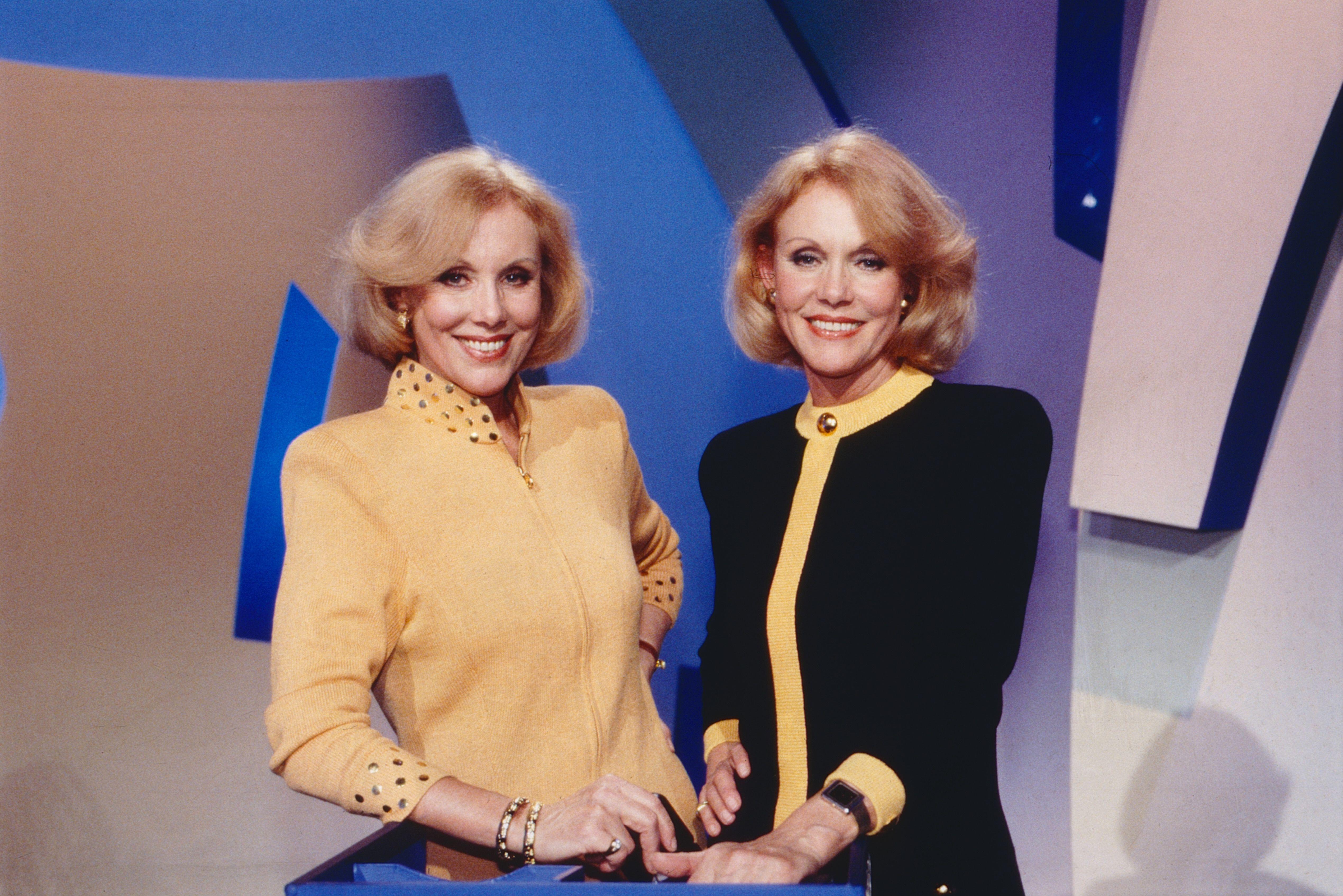
Back in Germany their identical looks proved useful when faced with all-too-frequent speeding tickets. They both refused to pay, arguing that it must have been the other sister at the wheel. In 1976, after one was clocked speeding through Munich at 98km/h (60mph) and the other ran a red light, the city’s police ordered them to keep a logbook of their journeys for a year.
The Kessler Twins were still performing at 80, appearing in Berlin, Munich and Vienna in Udo Jürgens’s musical Ich War Noch Niemals in New York (I’ve Never Been to New York). They remained fit and active, doing the splits and daily routines of barre work, though they did say: “Anyone who says they love their wrinkles is lying.” They had facelifts in 1998, describing the procedure on a television talk show. “Our motto has always been: You can live better with the truth,” Ellen said.

Performing in 2016
BODO SCHACKOW/ALAMY

Ellen and Alice at a theatre in Munich in April this year to see “Mord im Orientexpress” (Murder on the Orient Express)
GISELA SCHOBER/GETTY IMAGES
Alice and Ellen Kessler had moved back to Germany in 1986, sharing a house with their dog Yello in the upmarket Grünwald district of Munich, their quarters separated only by a sliding door that was rarely closed. The longest time they had been apart was six weeks, when Alice was on a world tour. Having been born together, lived together and worked together, after more than 70 years on stage they chose to die together.
The Kessler Twins (Alice and Ellen Kessler), singers and dancers, were born on August 20, 1936. They died by assisted suicide on November 17, 2025, aged 89