
UPDATE: The whale was euthanized around 3:00 p.m. Monday
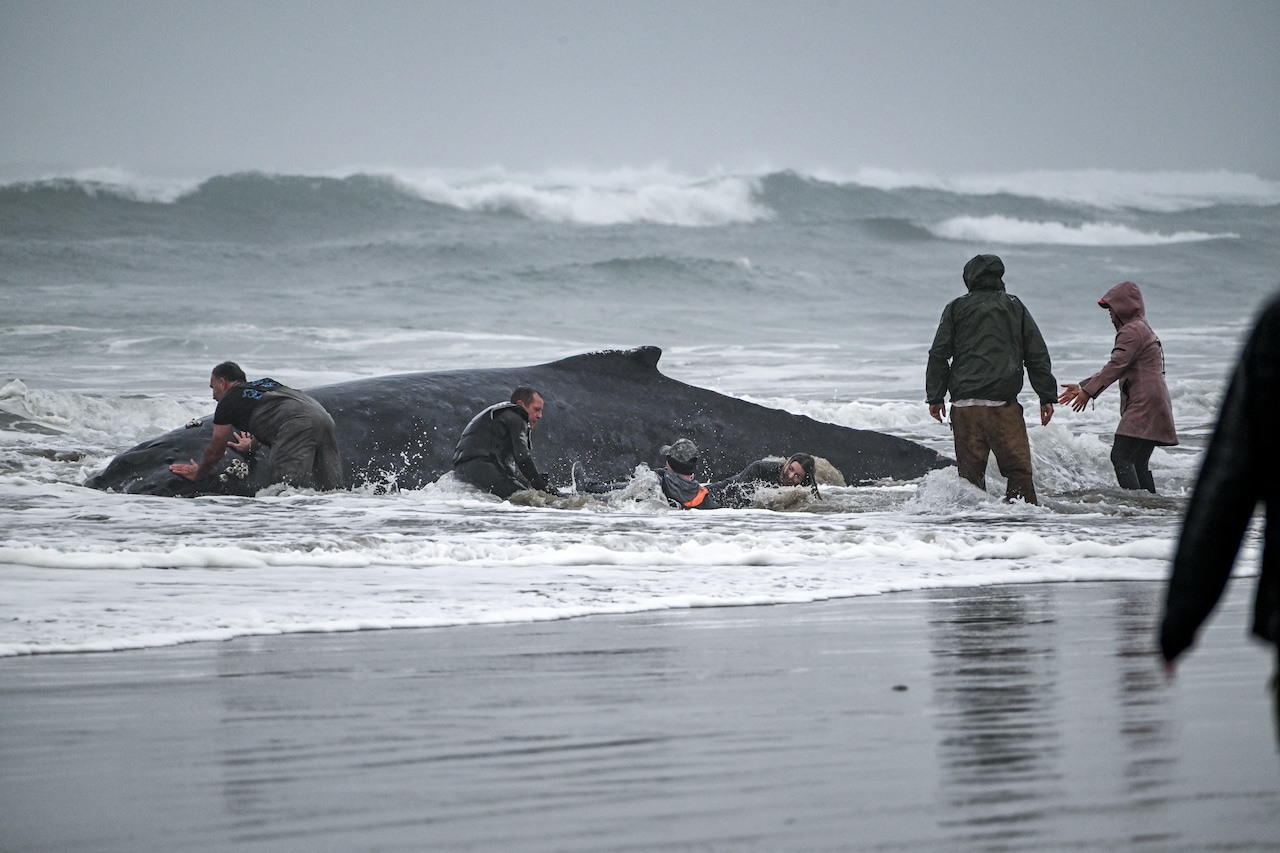
A young humpback whale stranded on the shore near Yachats, which captured the attention of many in Oregon and across the world, will be euthanized.
The process to put the whale to sleep was expected to begin on Monday afternoon, according to Jim Rice, program manager of the Oregon Marine Mammal Stranding Network.
“The first step is to sedate the whale so it’s unconscious,” Rice said. “The second step involves inserting a large needle into the heart of the whale.”
That needle is several feet long, Rice said.
Since the whale’s remains will likely either be left or buried at the beach, officials will use a substance that won’t introduce toxins into the environment, he added.
“It’s a very sad, tragic situation,” Lisa Ballance from the Marine Mammal Institute at Oregon State University told OPB Monday. “There’s no way to spin this positively. I know the general public is heartbroken.”
Over 5,000 people watched the tide come in live on Facebook Monday morning, hoping the waves would send the whale back out to sea.
The whale, a 3-year-old or younger male that is roughly 30 feet long and weighs tens of thousands of pounds, had been stranded on the beach since Saturday, after officials believe he was caught up in crab‑fishing equipment and lost his ability to navigate.
1/17
Live humpback whale stranded on Yachats beachMark Graves
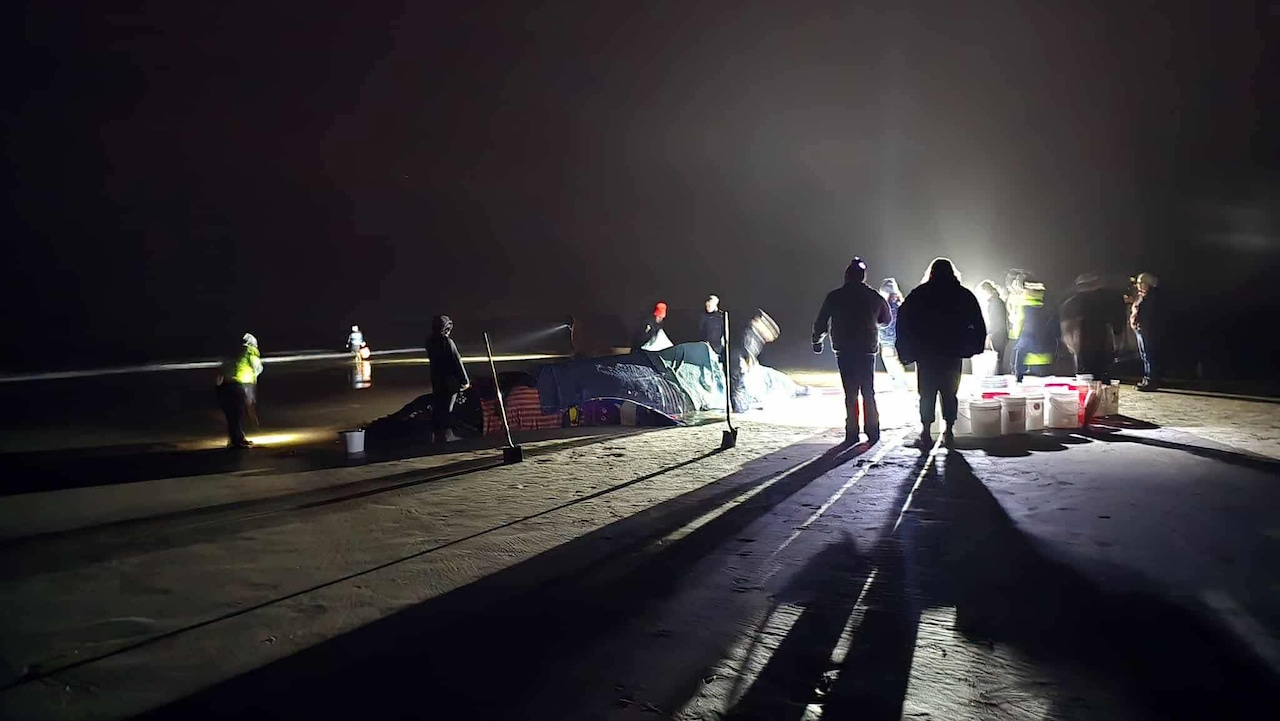
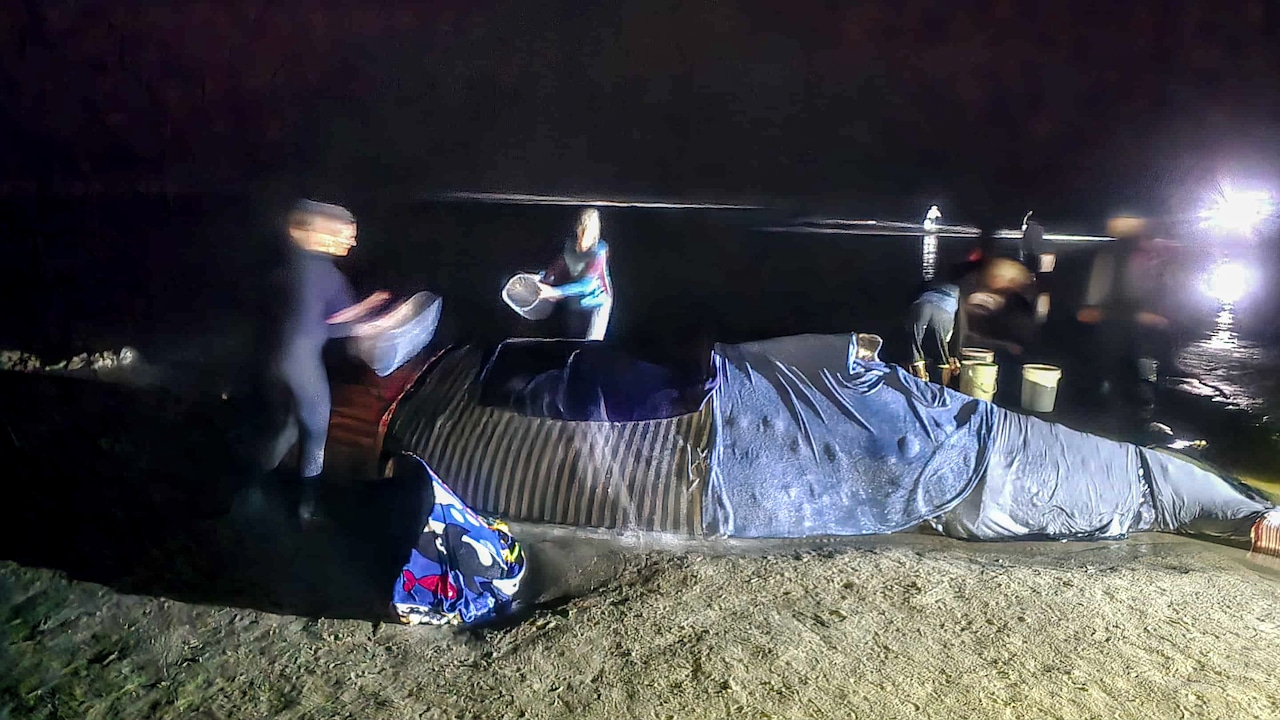
Carrie Newell, founder of Whale Research EcoExcursions, got to the scene on Sunday and said officials used a harness and pullies to attempt reposition the whale so is could more easily escape at high tide, but the whale couldn’t stay on the harness.
On Sunday night, the whale was given fluids and vitamins.
While Newell recognizes people want to push or pull the whale to safety, it isn’t that easy.
“You can’t pull it by its tail,” Newell said. “You’re going to rip its tail.”
On Monday, Newell said, authorities had hoped high tide would help the whale swim to safety, but that outcome was “doubtful.”
Humpback whales off the Oregon coast this time of year are moving south and snacking along the way. After spending spring and summer feeding in the cold, food-rich waters off Oregon, Washington and California, they mostly migrate in late fall to warm winter breeding areas off Mexico and Central America, where they mate and give birth.
Because of their long migration and feeding habits, humpback whales are the species most likely to get tangled in fishing and crab gear, according to data collected by NOAA Fisheries.
Live strandings of large whales on the Oregon Coast are rare. In September 2020, a 38-foot sei whale came ashore south of Bandon alive but died later that night. In August 2019, a juvenile humpback stranded alive on the beach north of Waldport and was euthanized the following day.
Learn more and get involved:
Cascadia Research Collective – Research group in Olympia, Wash., studying whales and dolphins in Hawaiʻi and the U.S. West Coast, and sharing findings with managers and the public.Oceana – West Coast whale-safe fisheries campaign – Ocean conservation nonprofit with a Pacific team working from California to Washington to cut whale entanglements in Dungeness crab and other trap fisheries. Oregon State University Marine Mammal Institute – OSU program in Newport that combines whale research, grad training and public outreach; accepts donations and runs public events/lectures.Oregon Sea Grant: Oregon State University Hatfield Marine Science Center Visitor Center – Has a visitor center in Newport with whale-themed events like “Whale Watch Week,” exhibits and family programs focused on gray whales and other marine life.ODFW Marine Resources Program: works with Oregon communities to sustain ocean and estuary resources for today and for future generations. Oregon Coast Aquarium – Nonprofit aquarium in Newport that does rehab and partners with the Oregon Marine Mammal Stranding Network; offers youth programs, volunteers, donations and whale-focused education.Seaside Aquarium – One of the oldest aquariums on the West Coast and the North Oregon Coast hub for the Marine Mammal Stranding Network; staff handle calls about stranded seals, sea lions and whales and run public education programs. American Cetacean Society – A nonprofit that works to protect whales, dolphins, porpoises, and their habitats through public education, research grants, and conservation actions.Pacific Whale Foundation – Maui-based nonprofit that funds whale research and conservation with ecotourism; offers naturalist-led trips, public talks and volunteer opportunities.NOAA Fisheries National Marine Mammal Stranding Response Network – Coordinates local partners around the U.S. to respond to stranded whales and dolphins; they often need trained volunteers and donationsWhale and Dolphin Conservation – International charity focused solely on whales and dolphins; does research, policy work and public education, with offices in the U.S., UK, Germany and Australia. Save the Whales – Education-heavy nonprofit that builds school programs and kids’ activities to get the next generation involved in whale and ocean protection. Laws and policies: Marine Mammal Protection Act Orca Conservancy – Nonprofit in Washington working on behalf of orcas (killer whales) and the habitats they depend on in the Salish Sea and beyond.Ocean Alliance – One of the early whale-protection groups; focuses on whale research, toxicology and ocean health. 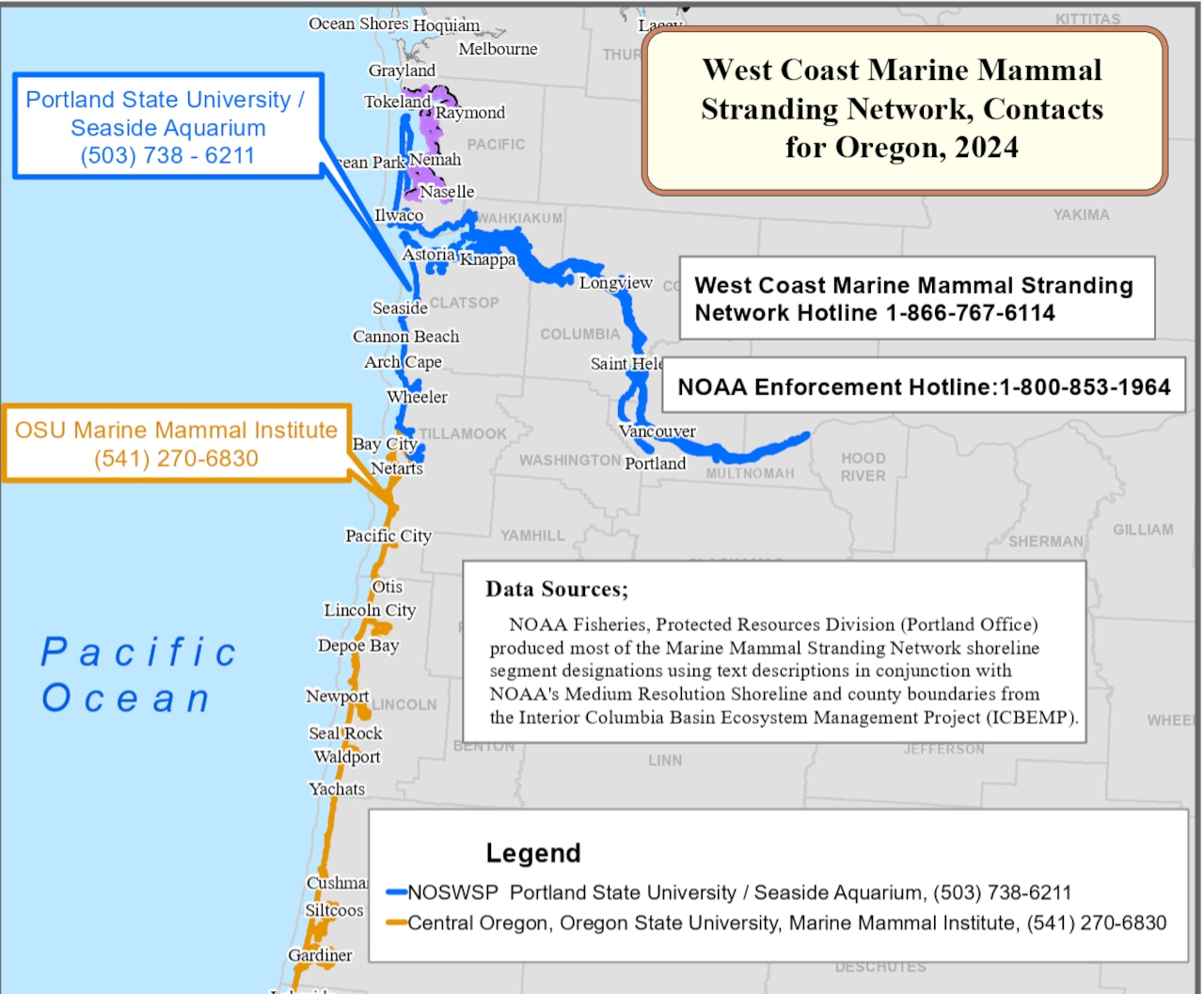 NOAA Fisheries
Past whale stories:
If you purchase a product or register for an account through a link on our site, we may receive compensation. By using this site, you consent to our User Agreement and agree that your clicks, interactions, and personal information may be collected, recorded, and/or stored by us and social media and other third-party partners in accordance with our Privacy Policy.