
Key takeaways:
Major international media outlets falsely portrayed a routine, internationally coordinated Gazan exit flight as a “mystery plane,” ignoring readily available facts.
The narrative blaming Israel relied on an impossible claim about passport stamps and was driven by activists and an NGO with a history of antisemitic rhetoric, not by evidence.
The only real chaos occurred due to South Africa’s own border mismanagement, while Israel’s role was strictly administrative, legal, and transparent.
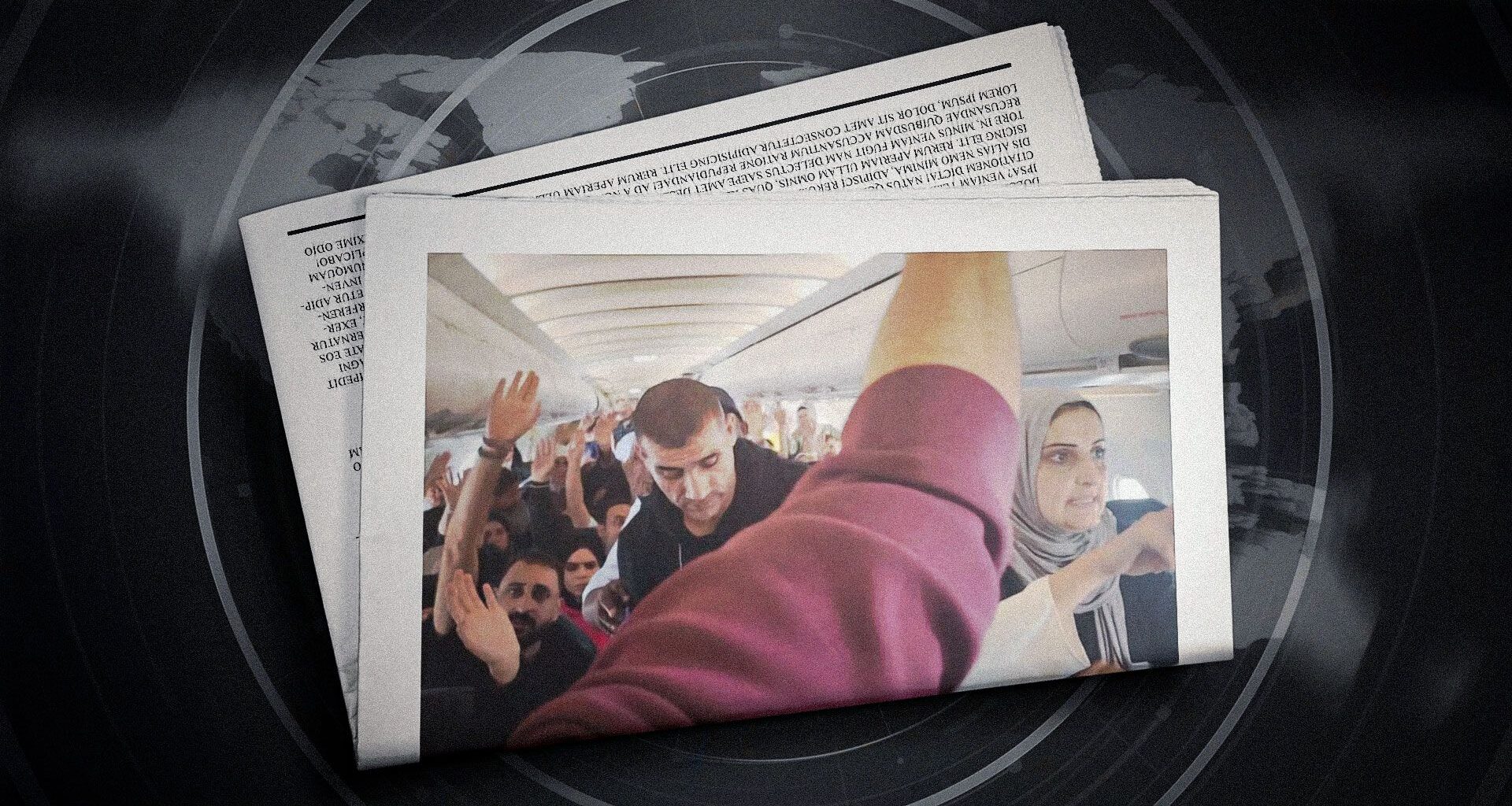
When a charter aircraft carrying just over 150 Gazans touched down at Johannesburg’s O.R. Tambo Airport in mid-November, the world’s major newsrooms reacted with the kind of breathlessness usually reserved for late-act plot twists. A “mystery plane,” screamed the headlines, as though the aircraft had descended from the clouds without a flight plan, without a passenger manifest, and essentially out of nowhere.
The New York Times wondered aloud how these “mystery flights” materialized on South African soil, treating the landing like an inexplicable apparition. The Guardian announced that Pretoria would “investigate” the “mysterious” arrival of passengers who had been kept on the plane for hours because they “did not have travel papers.” NBC News suggested South Africa’s president had been thrust into an unforeseen moral crisis when he declared his country “can’t turn back” the passengers allegedly foisted upon them. And the BBC, not to be outdone, insinuated that the travelers might be part of a sinister Israeli “cleansing agenda.”

The only thing in need of cleansing, it turned out, was the abysmal reporting.
Because the plane was not mysterious, the passengers were not abandoned, and nothing about this incident required a global manhunt for answers. The truth was available – immediately, publicly, and in multiple languages – yet journalists opted for the comforting glow of a narrative already assembled for them, rather than the tedious work of checking facts.
What actually happened is far less cinematic and far more revealing.
According to South African public relations and communications specialist Tim Flack, when the Global Aviation flight landed, South African immigration officials – caught off guard by the aircraft’s arrival – boarded the plane to verify identities in what was, admittedly, an unusual scene. Sensing an opportunity to capitalize on the confusion, activist circles in South Africa immediately supplied the storyline: Israel had refused to stamp the passengers’ passports, thereby “stranding” them on the runway.
Within hours, the claim had been repeated and, naturally, embellished. One man in particular propelled it into the bloodstream of government and media: Dr Imtiaz Sooliman, head of the NGO Gift of the Givers, who loudly declared that Israel had caused the crisis by failing to stamp the travelers’ passports.
There was just one problem. Israel hasn’t stamped anyone’s passport since 2013.
Every foreign visitor receives a standard electronic entry slip. Millions pass through Israeli borders this way every year, including tens of thousands of South Africans.
The allegation was not merely inaccurate, but impossible.
While South African commentators were busy constructing theories about Israeli ethnic cleansing, Arabic-language social media quietly documented the real story. Relatives and neighbors of the passengers explained that they were part of a longstanding, voluntary exit mechanism run through Al-Majd Europe, a civilian-facing organization that helps Gazans who wish to leave do so legally.
The process is orderly and entirely above board. Applicants seeking to exit the Palestinian territories register online, pay a fee, have their documents collected by intermediaries embedded in ordinary local institutions – civil affairs offices, administrative staff at Al-Aqsa Hospital – and wait while their names are submitted to Israel’s coordination office. Israel checks identities, conducts security vetting, and authorises movement through its controlled crossings. Only after approval do travelers proceed to Ramon Airport in southern Israel, from where they depart to onward destinations.
Far from a mystery, this was a routine international movement enabled by a ceasefire-related framework negotiated at Sharm el-Sheikh earlier in the year. The United States, Egypt, Qatar, Turkey, and over twenty other states were involved. Israel’s role was strictly operational and administrative: verify identities, approve travel, and facilitate safe passage. South Africa was not part of the framework, and the Palestinian Authority – despite being present at the summit – never communicated the mechanism to Pretoria.
Israel even publicly confirmed the process. On 13 November, COGAT announced that nearly 250 Gazans had exited via coordinated crossings, including Ramon Airport, as part of an ongoing, internationally supported system. Nothing about it was secretive or hurried, nor did it resemble the BBC’s fevered warnings about “cleansing agendas.”
The only confusion occurred in South Africa itself. Immigration officials kept the passengers on the aircraft for hours, in stifling heat, offering inconsistent instructions and operating without a coherent protocol. Children became distressed; a pregnant woman suffered. The chaos was entirely homegrown – the product of administrative disorganization in South Africa, not Israeli malice.
Yet even as the facts became publicly available, South African officials continued to parrot the false narrative. Gift of the Givers, having played no role whatsoever in arranging the exit, coordination, or transit, suddenly found itself at the center of policymaking. A single call from Sooliman appeared to induce a government-wide pivot: South Africa’s Department of International Relations & Cooperation (DIRCO), the Presidency, and various departmental spokespeople all aligned their messaging with his claims, despite them being verifiably false.
As Rolene Marks, spokesperson for the South African Zionist Federation (SAZF), put it in a sharply worded statement: “South Africa is governed by the rule of law, not by the demands of private organizations. No NGO, regardless of its humanitarian image, has veto power over border control or immigration statutes.”
The SAZF further noted that Sooliman’s rhetoric fits a familiar pattern. In 2024, he spoke of “Zionists” using “fear” and “money” to “run the world” – language steeped in centuries-old antisemitic conspiracy tropes. “When the same individual now leads the charge to blame Israel for South Africa’s immigration procedures, his agenda is unmistakable,” Marks added.
The final irony is that even the Palestinian Embassy added to the confusion, triumphantly celebrating a “waiver” of Israeli passport stamps – fully aware, of course, that Israel hasn’t issued such stamps in over ten years.
The truth of the so-called “mystery plane” is remarkably straightforward. These were ordinary Gazans who voluntarily exited Gaza through a lawful, internationally coordinated system. Their journey was enabled at every step by Israel, as per a pre-agreed framework. Their arrival in South Africa was muddled entirely by South African border mismanagement. The subsequent panic was fanned by an NGO, inflated by activists, and uncritically amplified by media outlets that preferred mystery to mundane reality.
If there is a mystery here, it is not the plane. It is how major global news organizations – complete with correspondents, editors, and fact-checkers – managed to miss facts that Gazan civilians were posting publicly in real time and which COGAT confirmed the very next day.
The incident exposed something far more familiar: how quickly misinformation becomes official policy when it flatters existing prejudices; how eagerly media outlets reach for narratives that paint Israel as a genocidal entity bent on “ethnic cleansing”; and how effortlessly an allegation can be elevated into international discourse when no one pauses to ask the most basic question:
Is this actually true?
In this case, the answer was available from the start. It simply wasn’t the story the media wanted to tell.
Liked this article? Follow HonestReporting on Twitter, Facebook, Instagram and TikTok to see even more posts and videos debunking news bias and smears, as well as other content explaining what’s really going on in Israel and the region. Get updates direct to your phone. Join our WhatsApp and Telegram channels!