
One of Europe’s most ambitious space start-ups is preparing a new funding round as it pushes for expansion in a race to build a European rival to Elon Musk’s SpaceX.
The Exploration Company, which is competing to develop Europe’s first reusable capsule to transport cargo to the International Space Station, is planning a significantly larger capital raise than its $160mn round last year, said Hélène Huby, the Franco-German group’s founder and chief executive.
Huby’s ambitions for the company she founded in 2021 are driven by a desire to enhance Europe’s independence in space. “We want to master the whole chain of space transportation,” she told the Financial Times. “We will start with the cargo capsule, but we want to do crew one day and then we have the Moon.” TEC is working on a lunar lander with the United Arab Emirates, aiming to land on the Moon before 2035.
Cargo capsules are used to bring supplies and equipment to astronauts on the ISS. Launched on a rocket, they are released into orbit, where they use thrusters to manoeuvre over to their destination.

In 2023 the European Space Agency launched a challenge for companies to develop capsules able to offer cargo services to low Earth orbit by 2029, and capable of evolving later to carry crew. In that competition, TEC is up against Thales Alenia Space, the legacy space company jointly owned by France’s Thales and Italy’s Leonardo.
Space agency ministers this week will decide on funding to take at least one company’s capsule to a full-scale demonstration mission — expected to be a €250mn. However, after a recent deal with the US’s Nasa to exchange cargo services for European astronaut flights to the ISS, there may be some funds for the second, one person close to the discussions said.
But, given budget constraints, many countries may be reluctant to give more than the bare minimum, said another person involved.
Some in the industry believe TEC has the edge. As a start-up, it is viewed as more agile than legacy rivals and has advanced from concept to a small scale demonstrator in just four years.
While last year’s capital raising was for the capsule, the group now wants to invest in a reusable high-thrust rocket engine project. The round, planned for next year, was to “combine private and public funding to really accelerate on this big engine”, she said.
In an environment where European space sector start-ups struggle to raise capital, investors in the company are open to a bigger round. “There is money trying to get in as we speak,” said one. “The capital we raise will be about expanding the business to be more aggressive.”
Rising defence interest in space has helped attract capital to TEC, which was valued at about $500mn, according to data firm PitchBook.

“It became clear that a capsule has much more depth and capability than pure [space] transport,” said Khaled Helioui, partner at venture capital group Plural, which invested in TEC last year. For instance, the technology that allows a capsule to dock at a space station travelling at 28,000 kilometres an hour without crashing could one day be used to inspect or disable enemy satellites.
First, however, TEC must prove it can deliver on the ESA challenge. Earlier this year it flew a demonstrator one-third the size of its planned Nyx capsule, meeting 50 per cent of the mission’s targets.
TEC plans to invest about $450mn to develop its cargo capsule, at least 40 per cent from its own funds with the balance expected from public financing, Huby said.
There is also hope that the company, which began funding its capsule ambitions with private investment, could catalyse change in Europe’s approach to space. “TEC started working on a cargo vehicle before Europe decided to fully embrace investment in cargo,” said Matija Renčelj of the European Space Policy Institute. “They have their own vision and are not waiting for governments.”
One European official said: “They are building up a huge capability that could be a new prime in Europe — a European SpaceX that operates with a different mindset.”
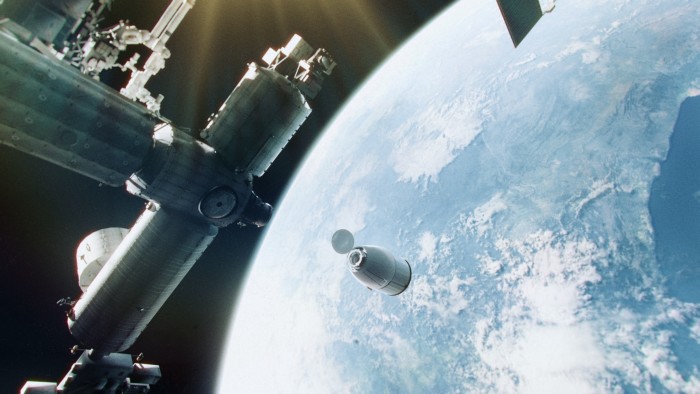
 A rendering shows the Nyx spacecraft approaching the International Space Station © The Exploration Company
But Thales Alenia Space argues that its design will be lower risk. Its capsule will benefit from the company’s decades of experience building pressurised modules, including 50 per cent of those used on the ISS and all those used by Northrop Grumman on the Cygnus cargo transporter, executives say. “We are flight-proven,” said Roberto Angelini, the company’s director of exploration. “We can really bring added value in knowing the environment.”
TEC and Thales Alenia are counting on the European Space Agency to provide anchor contracts for cargo services while they pursue commercial customers. TEC says it can conduct missions for about $150mn each once it has expanded production, and would need just one contract a year to be profitable. Thales Alenia is less open on pricing but insists its capsule will be cheaper and more capable.
Yet, even with ESA support, questions remain over the size of the commercial transport market the companies are targeting. TEC estimates the current accessible market for “exploration transportation” at $10bn, rising to $35bn over the next decade.
A significant share of this increase hangs on demand from the new commercial space stations that Nasa hopes will replace the ISS by decade’s end. But some analysts warn this may fall short.
“Nasa is shrinking its requirement and its ambition,” said Maxime Puteaux of consultancy Novaspace. “The business model of the space stations doesn’t [work] without Nasa.”
Europe’s desire for sovereign capability might not be enough to guarantee success, said Renčelj of ESPI. “You are dependent on the business case of the destination. If the destination folds, you don’t have a customer any longer.”
Meanwhile SpaceX’s giant Starship rocket is also mooted as an eventual space station, and Musk’s company will not need anyone else’s cargo services.

Given the uncertainties, projections of a rapid rise in the space transport market are too optimistic, said Laura Forczyk, founder of consultancy Astralytical. “The market will grow — just not as fast as many believe. It will be decades-long, unpredictable growth.”
Big technological challenges must also still be overcome before either capsule proves successful. “The first step is reliable and effective transport,” said Helioui.
TEC and Thales Alenia say they will continue regardless of ESA’s choice. And with the scale of Huby’s ambition, next year’s fundraising is unlikely to be the last. An initial public offering is almost certainly on the cards — but only after TEC has delivered cargo to a space station.
“We want to build TEC as a global company,” Huby said. “If Europe wants to stay a space leader, it must bet on companies with the potential to become the European SpaceX. There is no other way.”