
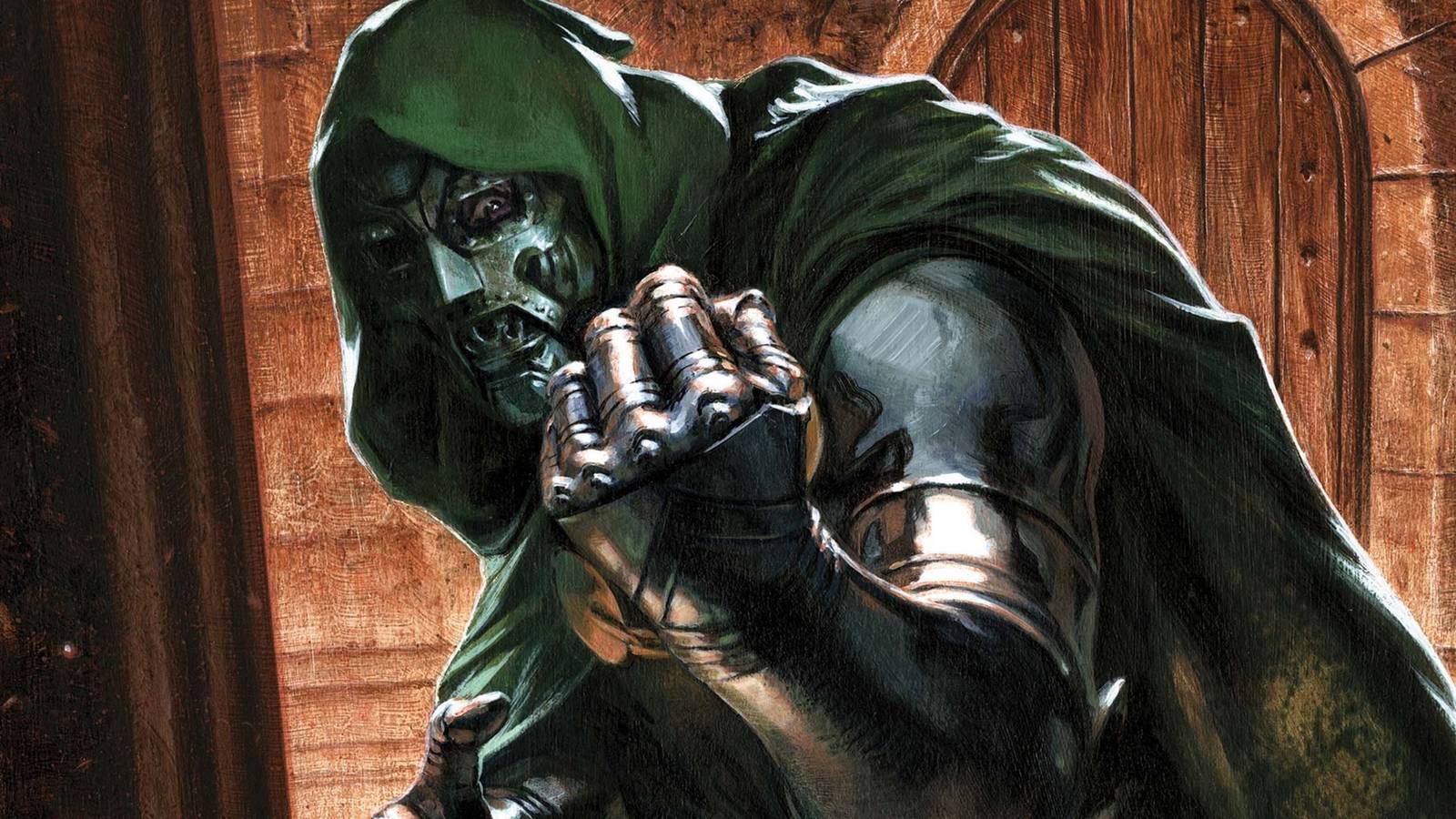
Spoilers ahead for One World Under Doom #9
Cronin Theory of Comics is a collection of various “rules” and theories that I’ve noticed over the years that I think are worth sharing. It’s basically the same thing as Comic Book Dictionary, where I occasionally define terms having to do with comic books. Today, we look at how comic book events should probably have, you know, endings.
Marvel recently ended its long-running crossover event, One World Under Doom. The event was very well handled, and writer Ryan North did an excellent job with it. However, I was struck by the ending of the series (by North, artist R.B. Silva, colorist David Curiel, and letterer Travis Lanham). After Doom managed to bring Valeria Richards back to life, the final issue (and the crossover itself) ends with….basically a big ol’ “Okay, read The Will of Doom #1 now.”
Doctor Doom sacrificed his powers to bring Valeria back, and now, once his reign is over, he visits Reed Richards in Reed’s laboratory, and reveals he is also dying. Reed, of course, assumes this is some sort of trick (and, come on, it probably WILL be in the long run, but that’s the long run). However, Doom then officially dies in front of him, but that forces Reed to be his executor, as his now-empty mask contains his will. That’s not an ending, that’s clearly the BEGINNING of a story.
What is the problem with the ending of “big events?”
This is a weird one, in that before I get into the “rule” I am going to discuss, I want to first point out a notable concept that runs COUNTER to my point. In other words, I want to make it clear that I completely understand where comic book companies are coming from when it comes to NOT wanting to do the very thing I am going to say that they SHOULD do.
In one of my very earliest “Cronin Theory of Comics,” (which, not to make anyone feel old, I posted over 20 years ago), I noted that, when you look back at the “classic” storylines, you are likely to remember the “Big Event.” Heck, for years, DC Comics, in its trade paperback department, acted like they did not have any comics published after 1970 and before 1994, and yet they still had trades for both “The Great Darkness Saga” and “The Judas Contract,” because those were both “Big Events.”
The problem with “Big Events,” though, is that if you spend all your time leading up to a particular story, that story might be excellent, and you may always be remembered for it…but once that story is over, there really isn’t anywhere else to go.
For instance, after Elektra was killed in Daredevil #181, Daredevil was still an excellent comic book. However, when you reread the run, Frank Miller is clearly just treading water after #181, as he HAD his ending…but the book still kept going.
John Byrne avoided this by not HAVING any one “big event” during his Fantastic Four run. There were memorable issues, to be sure, but no one overarching story. And as a result, there was never any letdown.
Marv Wolfman remarkably had TWO instances of a “big event” derailing his book, when the “Judas Contract” storyline’s ending was so dramatic that it made the issues after seem like they were missing a lot of drama in comparison. And then, more notably, when “Titans Hunt” lasted for so long, its conclusion led to some aimless years for the group.
So therefore, obviously, that means you want to AVOID giving your readers a “jump off” point. However, I think that simply has to be contrasted with going too far the other way.
Events should have an actual ending
Before One World Under Doom, the previous major Marvel crossover was Blood Hunt, which I wrote about recently here. Written by Jed MacKay, drawn by Pepe Larraz and Marte Gracia, with letters by Cory Petit, the story involved a vampire invasion of Earth. Through the use of Darkforce, Varnae, the first vampire, possesses Blade, and effectively conquers the planet, killing many people, and turning a number of characters into vampires.
The Earth’s heroes were able to stop the invasion and bring back the sun. Most “turned” people reverted to normal. However, the fifth issue also involved Doctor Doom becoming the Sorcerer Supreme, as Doctor Strange was taken out of commission early in the story, so he had to turn to Doom for help while in his Astral form.
In other words, Blood Hunt, a crossover event, led directly into One World Under Doom, a NEW crossover event, and One World Under Doom ended with The Will of Doom.
I have absolutely no problem with comic book companies wanting (heck, NEEDING) to keep the story going. But you can do that and still have a true ending to your comic book event. Infinity Gauntlet and Age of Apocalypse are two examples of iconic storylines that have definitive endings.
And both of those events had new stories that spun out of them, but they were done as distinctive events. I have absolutely zero problem with “The Will of Doom” being a storyline to follow this event. I have a problem, though, when it feels like there isn’t even a “true” ending to this story.
“End credit” teasers are fine
And honestly, I’m even fine with stuff like the very end of One World Under Doom, where it teases the fact that Scarlet Witch is now the new Sorcerer Supreme. That’s fine, as that’s obviously a side point. That’s not directly tied to the end of this story.
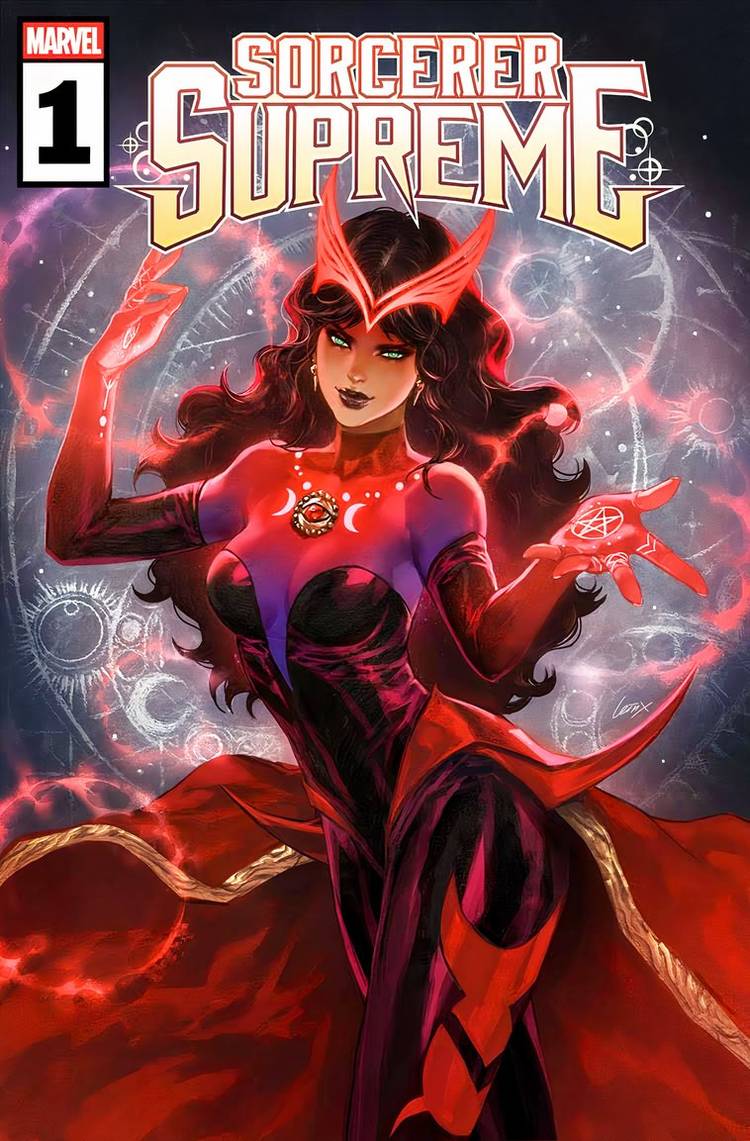
Image via Marvel Comics
That truly is an “end credit” teaser like they have in so many Marvel Cinematic Universe movies. For instance, Hercules showing up at the end of Thor: Love and Thunder, is just teasing a future story; It has nothing to do with the actual end of Thor: Love and Thunder. Doom’s death directly kicking off a NEW story, though, very much DOES have to do with the end of the story, just like how Doom becoming Sorcerer Supreme left Blood Hunt feeling like it didn’t have a “true” ending.
These events are all feeling like they are ending with ellipses instead of periods. You can still start a new sentence after a period, but just end the initial sentence for a change. We know it’s all an illusion of an “ending,” but at least actually provide the illusion.