
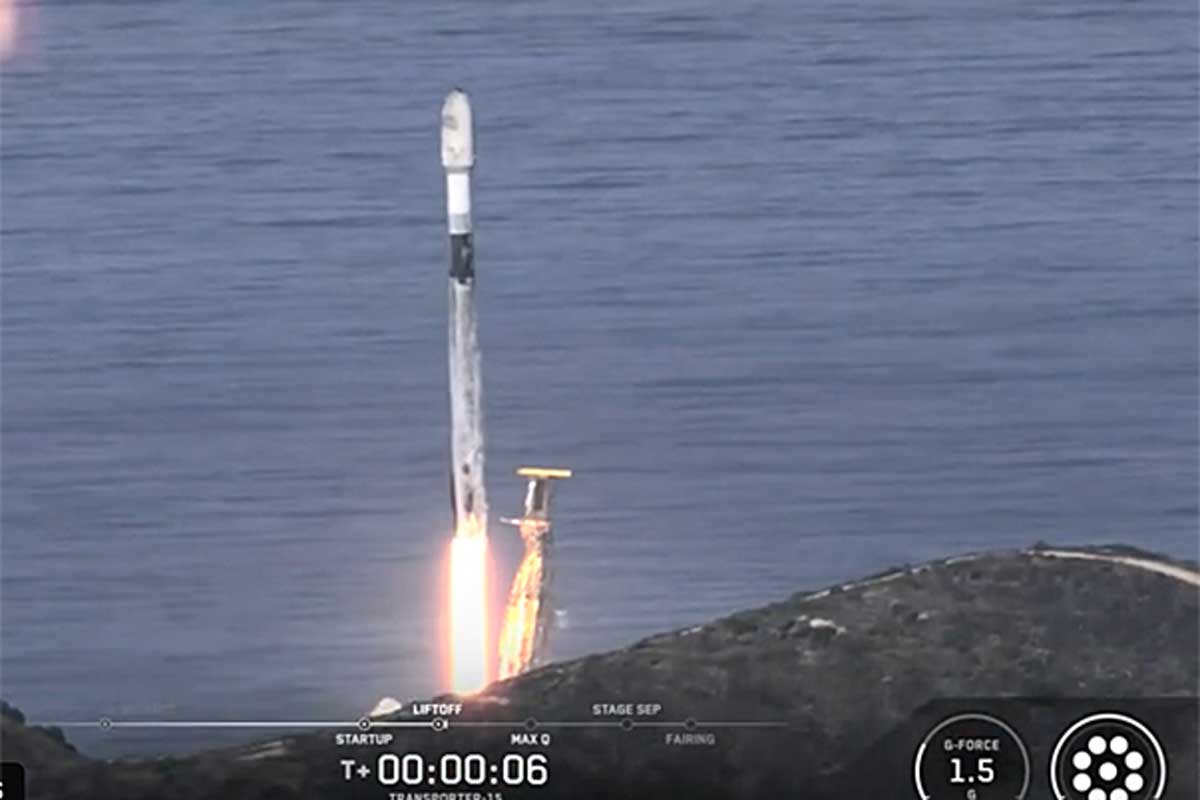
A hodgepodge of satellites, many manufactured around the globe and one built a relatively short distance away, finally traveled to orbit Friday morning when a Falcon 9 rocket blasted off from Vandenberg Space Force Base.
After three prior delays, the two-stage rocket manufactured by SpaceX lifted off at 10:44 a.m. from Space Launch Complex-4. The team had to scrub the most recent prior launch attempt due to a ground system issue.
The Transporter-15 mission involved a whopping 140 payloads, including CubeSats, microsats, hosted payloads, and orbital transfer vehicles carrying 13 of those spacecraft to be deployed at a later time.
Separation of the satellites began 54 minutes after liftoff and finished two hours later, according to SpaceX.
“There are all types of spacecraft on these missions, everything from payloads for the U.S. government to constellation deployments to technology demonstrators to re-entry vehicles,” said Tyler Lionquist from SpaceX. “And we’ve also seen several countries launch their first spacecraft ever on board Transporter missions, tons of student efforts and even a father-daughter CubeSat project.”
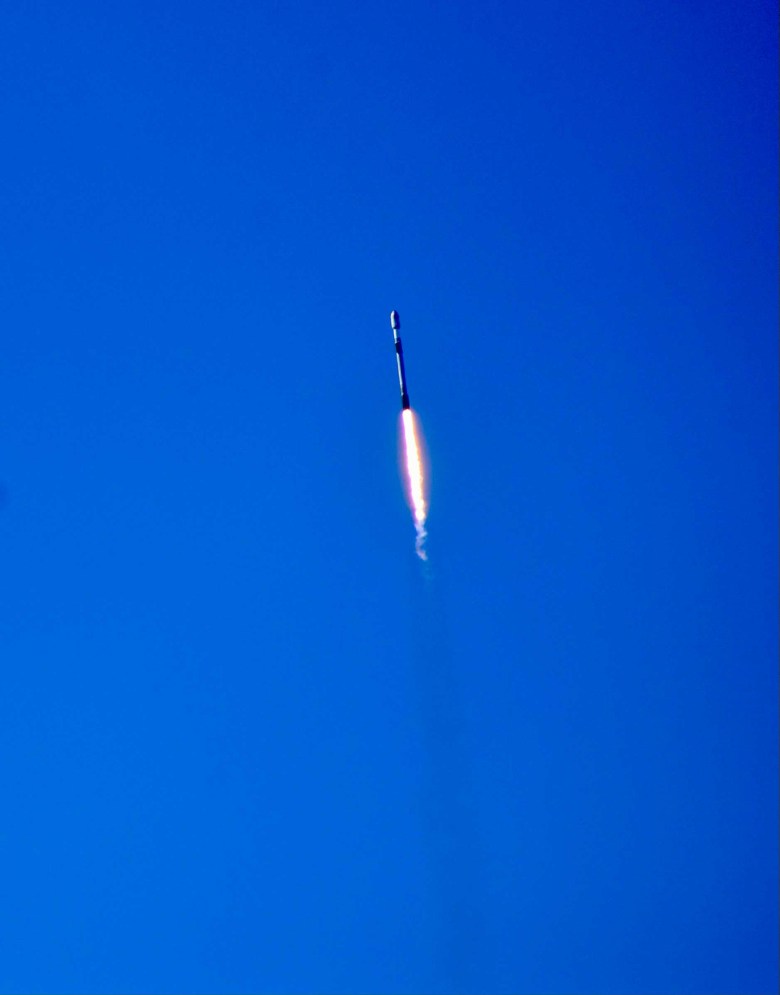
A Falcon 9 rocket blasts off from Vandenberg Space Force Base on Friday morning to carry the Transporter-15 mission made up of 140 payloads. Credit: Nora Wallace photo
Employees of a Santa Barbara-based Umbra had one satellite aboard Transporter-15 mission.
Umbra-11, a synthetic aperture radar spacecraft, deployed as expected less than 90 minutes after liftoff with a team calling out, “Umbra 11. Separation confirmed.”
While Umbra has roots close to the launch site, many of the payloads have international links.
Formosat-8, for Taiwan, boasts being the country’s first domestically developed, optical remote-sensing satellite constellation. The Earth-observation spacecraft will provide data used for Taiwan’s homeland security, agriculture and environmental monitoring.
Exolaunch accounted for a number of payloads for customers in the United States, the United Kingdom, Germany, France, Finland, Lithuania, Belgium, Italy, Spain, Greece, Poland, South Korea, Taiwan, Turkey, Bulgaria, and the United Arab Emirates.
Based in Germany, Exolaunch provides mission management, satellite integration and deployment services. The firm has placed spacecraft on every previous Transporter mission, but Friday’s involved their largest so far with 58 payloads for commercial, institutional and government customers from 16 countries.
This marked 30th launch and landing for the first-stage booster which successfully touched down upon the droneship positioned in the Pacific Ocean.
This was only the second mission for SpaceX to fly a first-stage booster 30 times, a representative said.
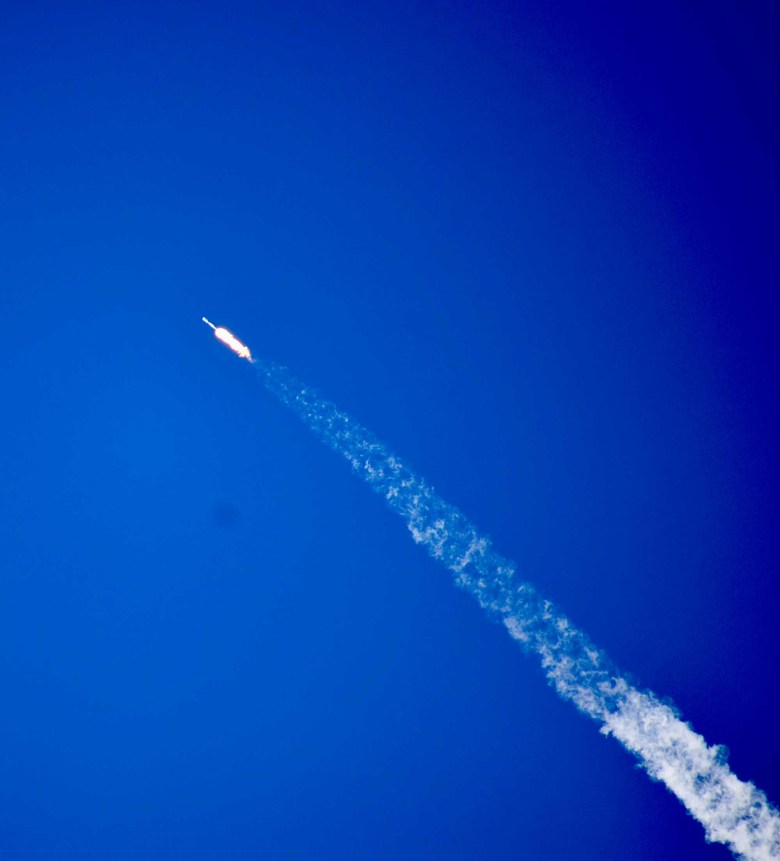 A Falcon 9 rocket blasts off from Vandenberg Space Force Base on Friday morning to carry the Transporter-15 mission made up of 140 payloads. Credit: Nora Wallace photo
The booster previously launched four other dedicated rideshare flights, three of which were Transporter missions.
The most recent two-day delay for the Transporter-15 mission has led to a 24-hour slip for the next SpaceX launch from the West Coast.
That Falcon 9 rocket with 27 Starlink satellites now is scheduled to launch between 6:10 and 10:10 p.m. Monday with another droneship landing.
Friday’s liftoff signaled the 64th rocket launch and missile test of the year from Vandenberg.