
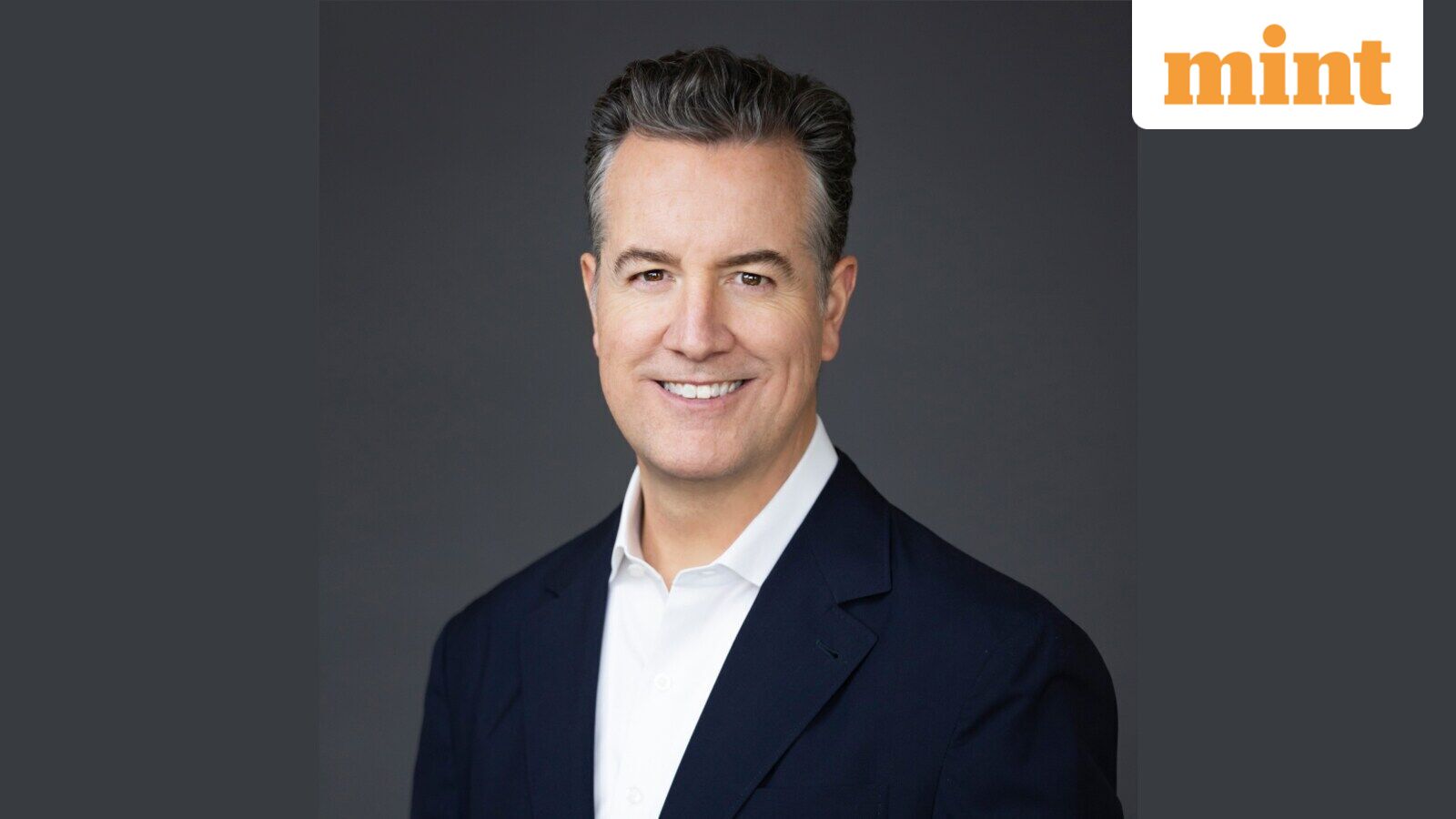
Coursera CEO and President Greg Hart has some advice for fresh graduates seeking jobs in the age of artificial intelligence, including his own sons — only a degree is no longer enough, opt for “micro credentials” to boost your portfolio and stand out.
Speaking to CNBC Make It, the executive shared tips on how graduates can navigate the competitive job market and AI taking away jobs.
Notably, in the United States alone, employers announced almost 9,50,000 job cuts in the January-September period, according to placement firm Challenger, Gray & Christmas. Sectors with highest impact were government, tech and retail roles.
Also Read | Amazon AWS CEO advises his children to develop soft skills for success in AI ageWhat advice does Greg Hart have for sons?
Telling the channel that he shares this advice with his own sons, Hart said he believes only have a college degree is no longer enough. “The advice that I give to my sons… is one of the best things that you can do is to augment your university degree with micro credentials specifically,” he said.
What are micro credentials? According to Hart, these are the short courses on platforms such as Coursera that provide skill specific or knowledge specific certifications.
Also Read | Palantir CEO feels college degrees overrated amid AI, learn ‘something specific’Why does Greg Hart believe ‘micro credentials’ are important?
He further said that these credentials take far less time to complete compared to a traditional college degree or diploma. “It’s become increasingly important to supplement degrees with additional certifications, as graduate jobs are at risk of being replaced by AI.”
“They [micro credentials] demonstrate to employers that not only did you get whatever university degree you’re studying, but you augmented that with something that is generally much more workforce focused,” he added.
Also Read | No takers for 6-figure salaries? Ford CEO flags lack of skilled workers in USJobs in the AI age: ‘Interviews should highlights personality, character’
Giving new graduates more tips on landing their dream jobs, Hart highlighted interview skills as an important factor. He said that given the lack of experience a fresh graduate has, personality will be the primary factor of consideration.
“Say you’re a young person in university right now, you are generally going to get hired into your first job based primarily on the traits that they see in you. They’re going to be assessing your mindset and your traits as a human being more than your experience, because by definition, you really don’t have much experience and so they’re not really hiring you for your experience, they’re hiring you for your… personality traits,” he said.
On which key traits are most sought after by employers, Hart said that an employee should demonstrate they are “proactive, hardworking, take initiative, and who prove to be ready, learners.”
“The best way to show these traits is having micro credentials alongside your degree, especially ones that are tailored to your field,” he added. Hart also told CNBC that he encouraged his son, a finance major to take an additional course on AI for finance to boost his prospects.
Also Read | IndiGo, Air India confirm no flight cancellations due to Airbus software updateWho is Greg Hart?
According to the Coursera website, Greg Hart joined Coursera as President, CEO, and a member of the Board in February 2025. He has more than 25 years of leadership in technology-driven innovation and operations.
Prior to Coursera, Hart’s big role was 23 years at Amazon as Technical Advisor to Jeff Bezos and led the development of Amazon Alexa / Echo from inception to launch and further development. He also oversaw Prime Video’s global expansion, leading its foray into live sports and implementing live streaming technology on the platform.
Between 2020-2023, Greg was Chief Product Officer and later as Chief Operating Officer at US-based real estate brokerage Compass, where he helped the company go public and led development of its technology platform.
In December 2024, he joined the Bose Corporation Board. Greg holds a Bachelor of Arts from Williams College and is an inventor or co-inventor on 71 US patents.
Also Read | Money rule changes from Dec 1: Fuel prices, banks and loan rates, what changes?What do other executives think about AI impact on jobs?
Hart is not alone in his opinions. Earlier, Amazon Web Services (AWS) CEO, Matt Garman also told CNBC in October, he strongly believes in the need to develop more soft skills in the AI era— advice he also gives his children.
“Develop your critical thinking skills in college, no matter what subject you study. I think part of going to college is building [your] critical thinking. It’s less about the development of skills, and it really is [about] how do you become a critical thinker? In some ways, I think that’s actually going to be the most important skill going forward,” he strongly emphasised.
“You’re going to want to be creative. You’re going to want to be [good at] critical thinking. And you’re going to want to be flexible. I think the ability to learn new things and adapt is going to be just as important as any particular skill that you learn,” he added, noting that the goal is to excel at tasks that AI cannot replicate or overtake humans in.
Besides critical thinking, Garman highlighted two other important soft skills — adaptability and communication. “(Soft skills) are important today. I think they’ll be just as important, if not more important (in the future). Most customers still want to talk to a person and get personal insights and attention from a human being. Those people skills are going to continue to be super important for a long time.”
In September, Ramprakash Ramamoorthy, Director of AI Research at Zoho Corp, echoed similar views. He felt that the human edge in critical thinking and reasoning will continue to be vital in the age of AI and large language models.
“Job roles will evolve, and it is important for everybody to make use of AI, the same way they did when the internet came in. That said, human strengths in reasoning and critical thinking will remain essential, even in the age of AI and LLMs,” Ramamoorthy told PTI in an interview.