
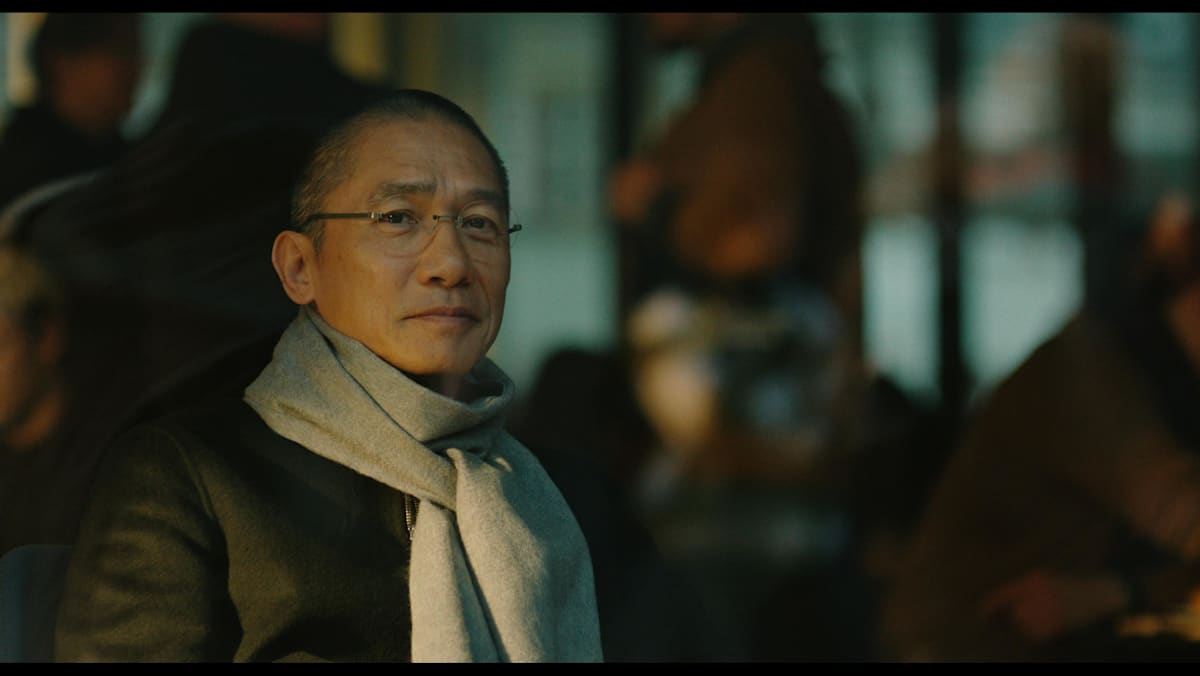
Ildiko, why did you choose the ginkgo biloba tree as the focus?
Ildiko Enyedi: Its origins and history were important to me.
The film is set in a botanical garden, not the wilderness, so all these plants are brought there by humans. They are strangers (to the environment); they are outsiders.
For our main plant hero, I was looking for one that is a stranger even among those strangers of a botanical garden. (In the film), the ginkgo tree stands among the plants that caused its near extinction.
Most plants today that cover the whole globe are flowering plants, while the ginkgo is of another system that once covered the globe but nearly went extinct millions of years ago.
Nowadays, however, you can find a ginkgo plant (almost) everywhere, because it’s practically undestroyable. It doesn’t care about smog. It is a very resilient tree. It was the ideal stranger.
And if you look at the three human heroes of this film, they are outsiders as well. They (need to) survive in an environment that is not familiar to them. I wanted real outsiders, because I think outsiders see more. They have more chances to discover something, and they are able to think more out of the box.
Somehow, a scientist is someone outside of a system. With this sort of very genuine, childish curiosity, but a very trained and powerful mindset, they can look at questions with fresh eyes and they have a chance lead us to new paths.
To be a scientist is very much similar to being a ginkgo.
Like plants surviving in an unfamiliar environment, Tony, what do you think is the best way to thrive in loneliness or a similar circumstance?
Tony Leung: I actually enjoy being alone very much. I can give you one example. When I was working on a movie (Europe Raiders) in the South of Italy near the seaside, it was off-season and there were almost no tourists. I lived on top of a hill and there were only three restaurants.
So every day, I’d ride my bike to the beach, do some stretching and meditation on the beach, and then ride to those restaurants to have lunch by myself. Then I’d go back, practise some mountain biking techniques, read a book or just sit outside my house. I don’t feel lonely.
I love to go to cities where I don’t speak the language. I enjoy that kind of lost-in-translation experience. Nowadays, you have Google Translate. If you want to communicate, you will find a way.
How did this film change your relationship with plants?
Tony Leung: In the past, whenever I went running in nature, I’d look at trees as “just” plants. But after reading books on plants for this role, I realised they have intelligence. They don’t have a brain, but they have it in a different form.
So when I go for a run now, I can sense these trees and plants around me are not just living beings, but sentient beings. It’s like I have company with me.
Of course, I can’t be certain that every tree has a soul or mind. But I believe some definitely have, especially those that are very old.
Once you develop a sense of respect and awareness towards plants… you stop having the mentality that you’re better than them. You’ll believe every living being is equal, and you’ll start to consider how your actions might affect plants and nature.
The biggest change to my life from this movie is that it changed my perspective about the world.
The Singapore International Film Festival is ongoing, and will run until Dec 7. More information can be found on its website.