
These young scientists, engineers and entrepreneurs are working to build a better world at every scale imaginable. By Alex Knapp, Kate Gammon and Jesse Steinmetz
Astronauts are among the most highly trained people in the world. Most of them have advanced degrees, not to mention years of experience in highly demanding military or technical fields. Sending them to the International Space Station is expensive–it costs around $130,000 an hour to keep its crew in orbit.
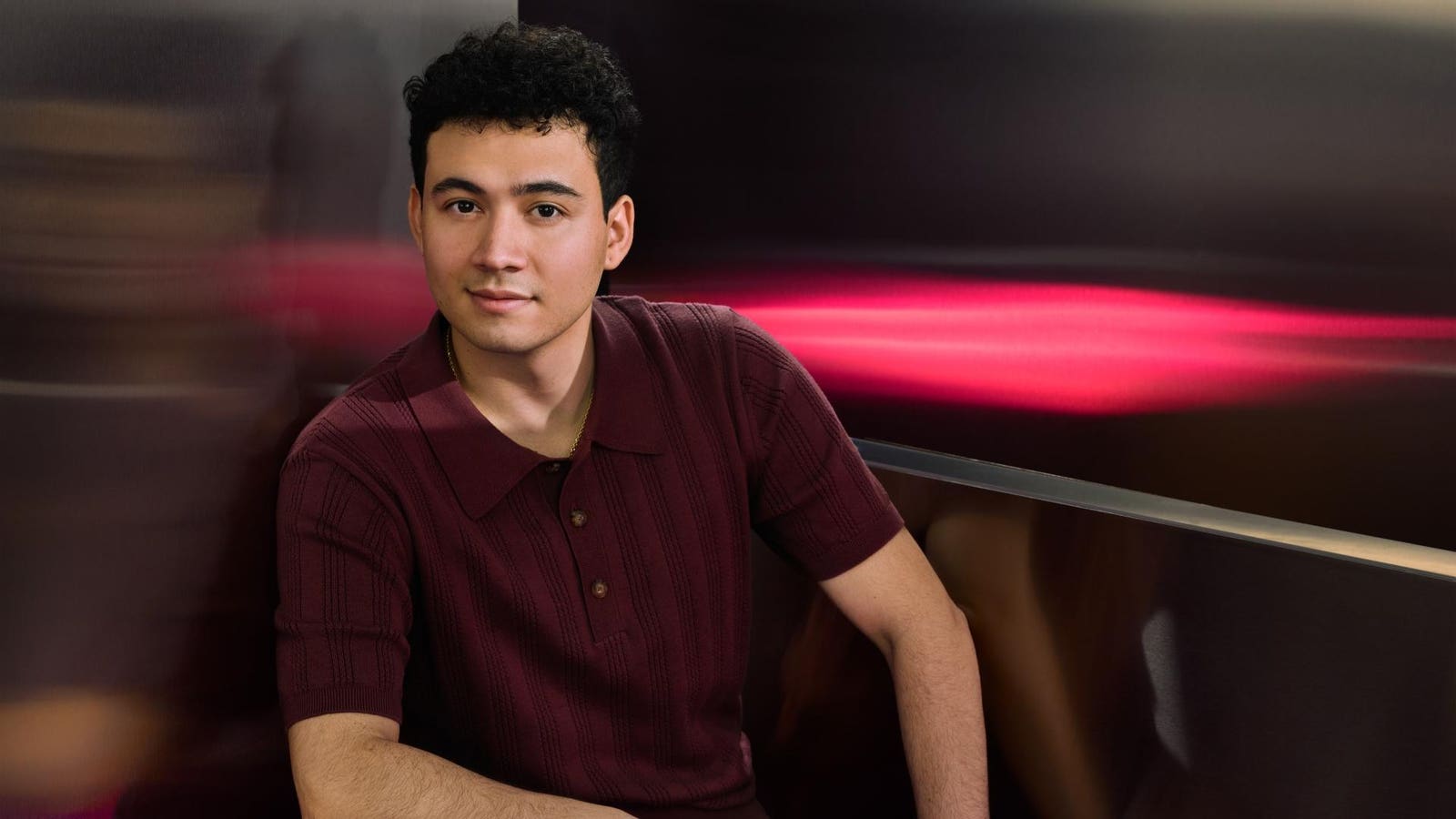
But despite all this expertise and expense, astronauts spend a great deal of time doing menial, tedious work such as routine maintenance or moving and organizing cargo. Ethan Barajas, 22, and Jamie Palmer, 25, want to fix that. Their company, Icarus Robotics, is developing robots that can do the grunt work so that the station crew “can focus on the groundbreaking discoveries that only astronauts can do,” he says.
Sebastian Nevols for Forbes
Barajas and Palmer are just two of the innovators on this year’s 30 Under 30 Science list. For more than a decade, Forbes has highlighted young scientists, engineers and entrepreneurs with the help of nominations from the public. Of those named to the final list, 37% are women, 47% identify as people of color, and 53% are founders.
To be considered for this year’s list, all candidates had to be under the age of 30 as of December 31, 2025, and never before named to a 30 Under 30 North America, Europe or Asia list.
The candidates were evaluated by a panel of judges featuring Nicole Gaudelli, life sciences entrepreneur-in-residence at GV; Brian Greene, director of the Center for Theoretical Physics at Columbia University; and Nina Tandon, CEO of EpiBone.
Barajas and Palmer aren’t the only listmakers with their eyes on the stars. There’s also Shaurya Luthra, 29, whose company Northwood Space is building a ground network that more efficiently captures satellite data. Jessica Fry, 28, is helping to lead the hunt for the universe’s elusive dark matter. Meanwhile, Emily Pass, 29, is using AI models to help find life on other planets.
Pass isn’t alone in using AI, which has become a major tool for Under 30 listmakers to advance science. Joseph Krause, 29, cofounded Radical AI, which has raised $65 million to develop its automated research and development platform. Alice Tang, 29, is using AI tools to understand and diagnose complex diseases like Alzheimer’s. Then there’s Navvye Anand, 19, and Tyler Rose, 18, who are using AI to design better pesticides at their company, Bindwell.
Building better materials is also a big focus for many listmakers this year. There’s Dana Biechele-Speziale, 28, whose company Atomics is designing computer data storage that can fit on small molecules. Atum Works, cofounded by Lucas Pabarcius, 21, Malcolm Tisdale, 25, and Matteo Kimura, 26, is designing a 3D-printer that can handle nanoscale levels of design for next-generation microchips. And Nicholas Boynton, 28, is building next-generation plastics that are infinitely recyclable.
These are only a few of the incredible scientists and entrepreneurs on this year’s Forbes 30 Under 30 Science list. Be sure to read up on all of them, plus all of the other 30 Under 30 2026 categories.
This year’s list was edited by Alex Knapp, Katharine Gammon and Jesse Steinmetz. For a link to our complete Under 30 Science list, click here, and for full 30 Under 30 coverage, click here.
30 UNDER 30 RELATED ARTICLES