
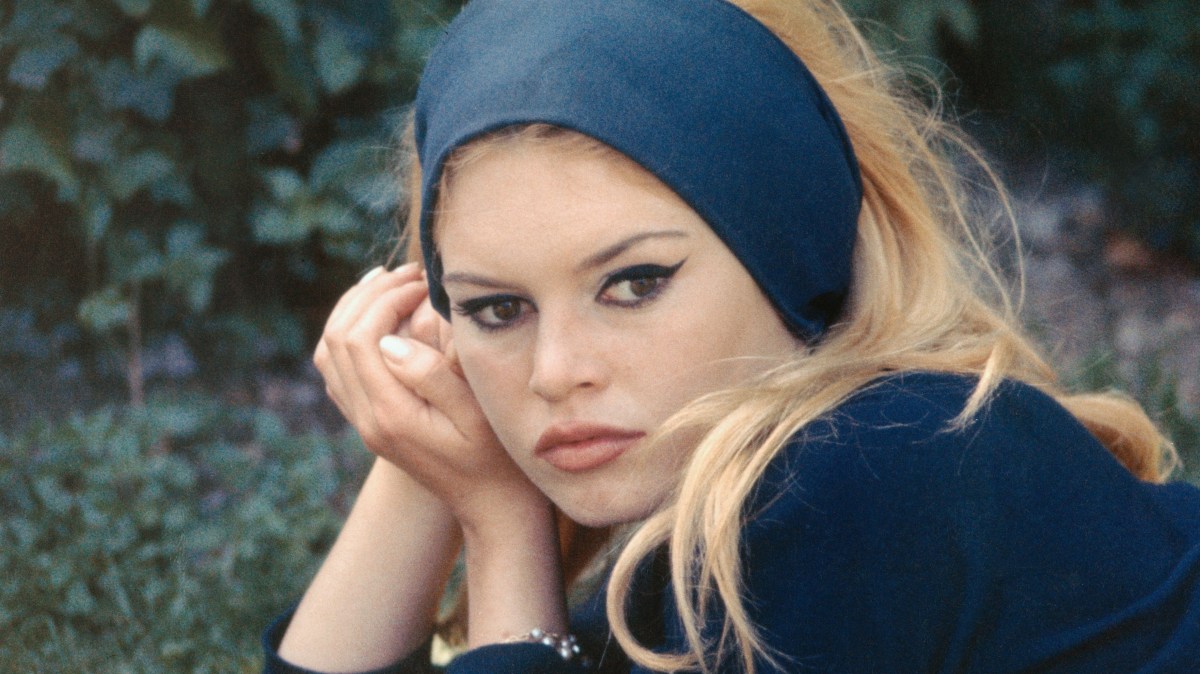
By the age of 38, Brigitte Bardot had had enough of the global stardom that had turned her into prey for the paparazzi. She could take no more of the long lenses, the inability to go out without being hunted or chased down the street. Her movie career was over, she announced in 1972to the astonishment of film critics and magazine editors around the world.
Now 91, France’s highest-profile postwar celebrity is back on the big screen — or at least her voice is. Breaking with decades of hostility towards the film industry, Bardot has agreed to recount her life story for a feature-length documentary, Bardot, by the French directors Alain Berliner and Elora Thevenet, released in French cinemas this week. Why? Partly a percentage of box office receipts the receipts will go to her animal rescue charity, La Fondation Brigitte Bardot, and partly because Bardot is an admirer of Thevenet’s animal rights films.
Her diction is not quite as clear as it was in her youth, and the scampish tone has largely disappeared too. But the abiding impression is of a woman who remains true to herself and to the cause she has espoused since quitting cinema. Bardot continues to distrust humanity, or at least the male half of it, but for all other creatures — dogs, cats, birds, seals and fishes — she has nothing but boundless love.
Bardot traces the rise of the actress so famous that she became known just by her initials. It shows the influence BB wielded on a society that had to wait until the end of the 1960s to embrace the sexual revolution, at which she had hinted a decade earlier.
• Brigitte Bardot: I tried to kill myself many times. A miracle saved me
The rejected daughter of strict Parisian parents, Bardot had rebelled against the conservative values of 1950s France, and earned the freedom offered to few women in those days. Lovers fell at her feet, from Alain Delon to Serge Gainsbourg, money flowed into her bank account and directors wrote — and changed — scripts at her behest.
In interviews at the time, Bardot consistently challenged the orthodoxy of the time. Did she want to stay with the same man for the whole of her life, she was asked, aged about 30? “Oh no,” she replied. “It’s good to change partners as you [grow older], because you need different things.”
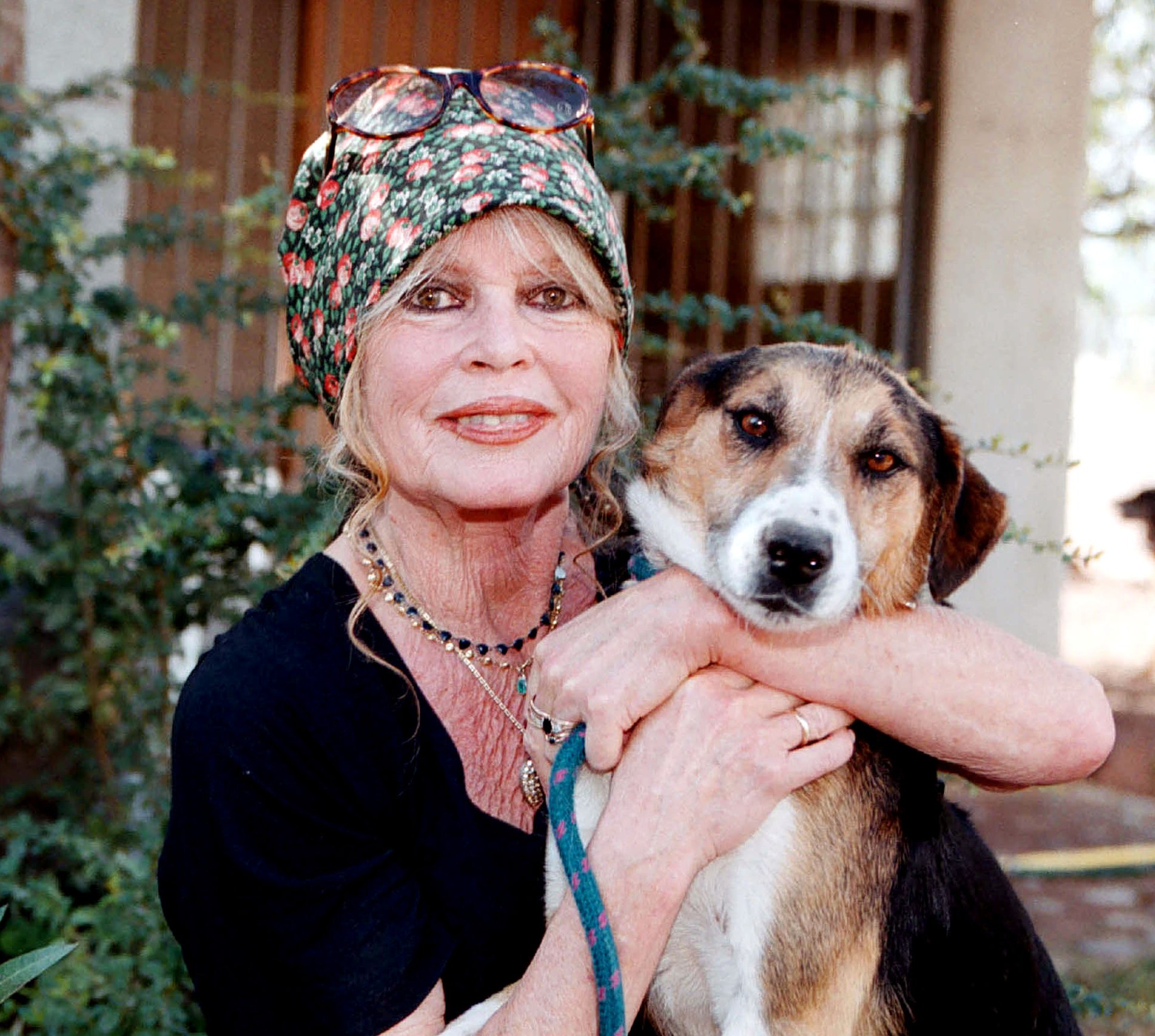
Bardot visits her dog refuge in Paris in 2001
GETTY IMAGES
The Vatican saw her as Satan incarnate, while French film producers saw her as the guarantee of box-office receipts. The documentary, for instance, includes extracts of an American TV news story about the release of And God Created Woman, the 1956 film directed by her first husband, Roger Vadim, which reported that “76 million American males” had been charmed by her. “The Devil takes many different forms,” the reporter added.
The new documentary also looks beyond the pout that was plastered across glossy magazine covers, to the mental anguish that beset Bardot as her home in St Tropez became a kind of golden prison. There was depression, and suicide attempts. A trip to the shops had become impossible, an appointment at the dentist an ordeal. Bardot’s third pregnancy — the first two reportedly ending in terminations, then illegal — was spent trapped at home, her house surrounded by paparazzi.
Distressed, lonely, unsure of herself, Bardot recalls in the film that was incapable of looking after her son, Nicolas-Jacques Charrier, who was largely brought up by his father, Jacques Charrier, her second husband.
While there have been many books, biopics and documentaries about her, the new documentary is a rare chance to hear Bardot speak about a life that has entered modern French folklore. She agreed to be interviewed in La Garrigue, the more secluded of her two properties in St Tropez, though her face scarcely appears on screen — perhaps a testament to her decision in 1973 to put herself in front of a movie camera no more. Still, it is her voice that narrates the 90-minute film.

SUNSET BOULEVARD/CORBIS VIA GETTY IMAGES
Bardot was recently hospitalised and is said to have difficulty walking. But her memory is sharp, her mind quick and her spirit unbowed. “I was born free and I will die free,” she tells the film-makers, adding that her life has never been easy but that she would not have wanted it so, preferring to “vanquish” difficulties than to avoid them.
In one particularly poignant scene, Bardot says she has always “carried a latent sadness in me”, arguing that this is common among actresses. She cites examples to prove her point — Rita Hayworth, Jean Seberg, Romy Schneider and Marilyn Monroe, the last shown smiling and waving before her death from a barbiturate overdose in 1962.
Bardot tells us she almost suffered the same fate, having made at least eight suicide attempts, one of which she survived only through a “miracle”. She adds that she has rarely wanted to talk about this, or indeed any aspects of her life. “I was hunted, I was besmirched, I was scorned, very often betrayed. What is more, I was insulted. That’s why I protect myself. I am distrustful. I flee all that a bit.”
• Brigitte Bardot says ‘calm down’ after health rumours
While offering rare access to one of the 20th century’s biggest stars, Berliner and Thevenet’s film skirts the many controversies in Bardot’s life. Her frequent attacks on Muslims — mainly over the slaughter of sheep for Eid al-Adha — are presented as the runaway emotions of an impassioned defender of animals.
Bernard d’Ormale, her fourth husband, is interviewed at length, without being questioned over his one-time role as an adviser to Jean-Marie Le Pen, the founder of the populist right National Front (now National Rally), who had multiple convictions for incitement to racial hatred and Holocaust denial.
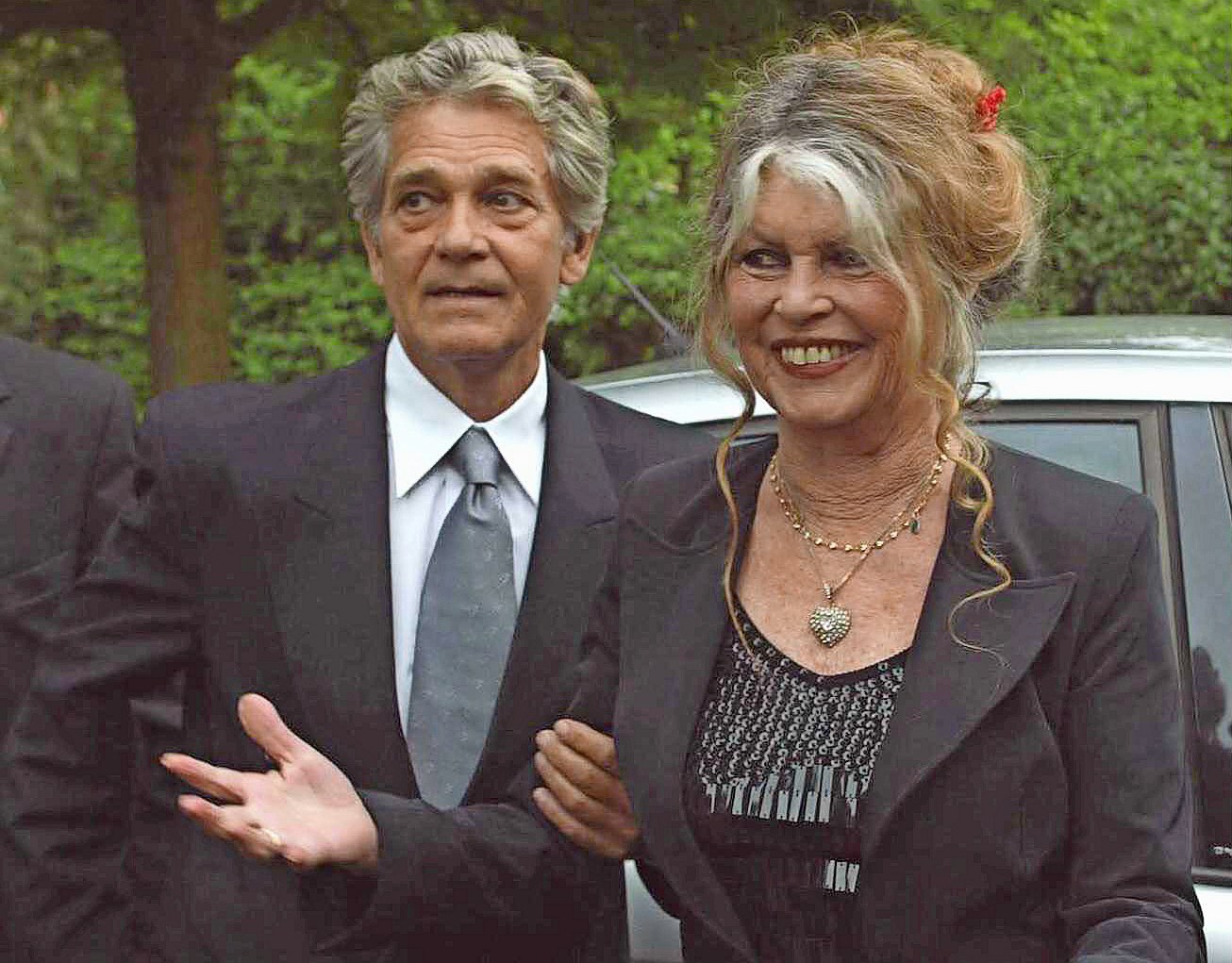
Brigitte Bardot with her fourth husband, Bernard d’Ormale, in 2002
SHUTTERSTOCK EDITORIAL
Bardot is also presented as a symbol of women’s liberty, a pioneer who challenged a patriarchal society. There is scant mention of her recent support for Gérard Depardieu, the actor convicted of sexual assault and charged with rape, which he denies.
“Feminism is not my thing,” Bardot told the French news channel BFM this spring. “I like guys.” She expressed dismay at the MeToo movement. “Those talented [men] who put their hands on a girl’s bottom are thrown into a ditch. We could at least let them live their lives.”
In France, the new documentary has had lukewarm reviews. The national radio station France Info said the film was “too hagiographic. The two directors seem so fascinated by the actress that they barely touch on the difficult subjects.”
Berliner and Thevenet themselves concede that Bardot is complex and ambiguous. Nevertheless, they try to depict her as a feminist icon, almost a role model. Perhaps, like so many directors before them, they had been bewitched by Bardot.
Bardot will be released in the UK next year