
OPINION: Don’t wait for B.C. public health to protect you this flu season
Published 7:00 am Saturday, December 6, 2025
Ten years ago, I took on a physician leadership position at my health authority that gave me a glimpse into the workings of its hospitals.
During a particular meeting that has remained burned into my memory, the department head for medicine was shaking his head in disbelief at having to state the obvious: “Why is it that every year, just like snow in winter, we know flu is coming, and yet every year flu catches us by surprise?”
The room fell silent.
It’s one thing not to be prepared for the unexpected. It is another thing altogether to be unprepared for the entirely predictable.
Here we go again. December is upon us and B.C. health-care leaders are about to be surprised, yet again, by influenza season.
This time B.C. public health leaders have ignored the urgent warnings of their own expert, Dr. Danuta Skowronski, BC Centre for Disease Control (BCCDC) epidemiology lead for influenza. In April, her team already was raising concerns about the circulating influenza A (H3N2) in Canada having acquired new mutations as our flu season progressed. She anticipated then that these mutations would result in the upcoming season’s flu vaccine being a poorer match, therefore less effective at preventing medical visits related to influenza.
On Oct. 28, Skowronski and colleagues at the BCCDC and the National Microbiology Laboratory published a paper showing that the influenza A (H3N2) virus had further evolved during the southern hemisphere’s flu season. Thus, although this year’s northern hemisphere flu vaccine will provide some protection, it will be less effective than hoped against the increasing numbers of circulating H3N2 variant (subclade K).
It also appears that this H3N2 variant has become easier to catch.
Across much of Asia, H3N2 influenza is now spreading like wildfire. Japan has experienced an early start to its flu season, with cases rising at the fastest pace in 10 years, and on Nov. 12, flu cases were already six times higher than last year. At the same time, the U.K. was also being hit early and hard, seeing triple the number of cases seen at that date last year.
All of this is concerning for what lies ahead for B.C.’s flu season. Already in Canada, labs are finding increasing numbers of the H3N2 variant, and testing has confirmed that this year’s vaccine will not be very effective against it.
On Dec. 1, on short notice, Dr. Skowronski gave a powerful presentation at the BC Centre for Disease Control highlighting the potential implications for this flu season in B.C. and Canada. In general, H3N2 flu seasons tend to be more severe, with more hospitalizations and deaths, particularly so for older adults, young children and high-risk individuals.
During B.C.’s last H3N2 season, in 2022-23 (after the COVID Omicron surge) six B.C. children tragically died of the “flu.” Clearly Dr. Skowronski was worried enough to share her concerns, as she stated “risk assessment is most helpful in advance of the peak, allowing time to anticipate and prepare.” She expects peak flu to hit B.C. during the holidays.
Unfortunately, warnings without actions are useless.
We can hope our public health leaders will act now rather than continue to “watch closely.” However, British Columbians do not need to wait for public health guidance to protect themselves, their children, their families and their community.
• People of all ages should roll up their sleeve and get their flu vaccine. If you are a health-care worker, it is doubly important. Yes, the effectiveness against the H3N2 variant will be less than ideal, but anything is better than no vaccination at preventing being hospitalized or dying. As well, the vaccine also protects against other strains of influenza such as A (H1N1) and B. Sadly, a Hong Kong teenager recently died from influenza B.
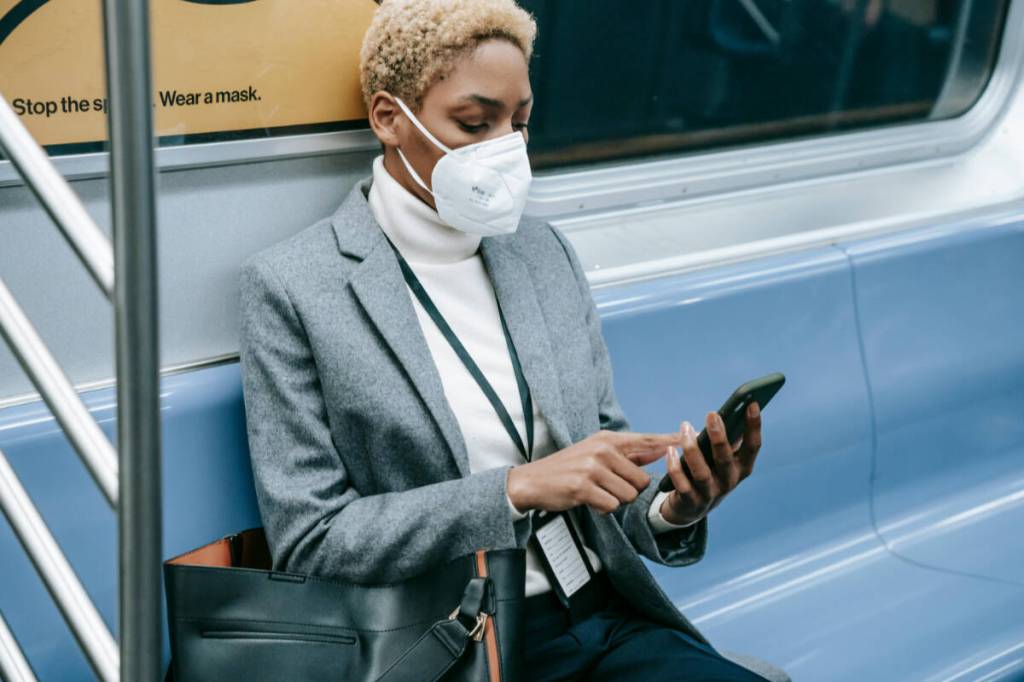
• Wear a well-fitted mask in crowded indoor public places. The influenza virus, like SARS-CoV-2, spreads in the air that we breathe, and inhaled influenza aerosols cause more severe infections than cases caused by droplet spray and dirty hands. Do both, wash your hands (surfaces) and clean the air.
• B.C. health-care workers, patients and visitors can already start wearing well-fitted high grade masks. B.C. public health should not delay any further bringing back real respiratory protections in all health-care facilities, including long-term care homes. Newfoundland and Labrador, Toronto University Health Network, the Montreal Jewish General Hospitaland Children Hospital of Eastern Ontario have done it. B.C.’s health care is already strained, with ER overnight closures becoming the new normal. Taking preventive measures now will help ensure someone is on duty in the ER when you or your loved one needs it most.
• Make the tools you need to allow your child and your family to breathe healthy air. Inexpensive DIY clean air boxes lower risk of respiratory infections in homes, schools and long-term care facilities. They also provide safe air to breathe during wildfire season.
All along parents have been correct: SARS-CoV-2 and most respiratory infections are transmitted by aerosols that we breathe in.
The world is catching up to what aerosol scientists have told us all along. On Sept. 23, a Global Commission on Healthy Indoor Air was launched at the United Nations to address indoor air quality as a public health crisis. The alternative, doing nothing, as parents know so well, is repeated respiratory infections brought home from school, and outbreaks in grandmother’s care home.
If public health won’t lead, the people can and should. Their health depends on it.
Dr. Lyne Filiatrault is a retired emergency physician who spent most of her 25-year career at Vancouver General Hospital. For 15+ years, she served as VGH Emergency Department Quality Improvement director.