
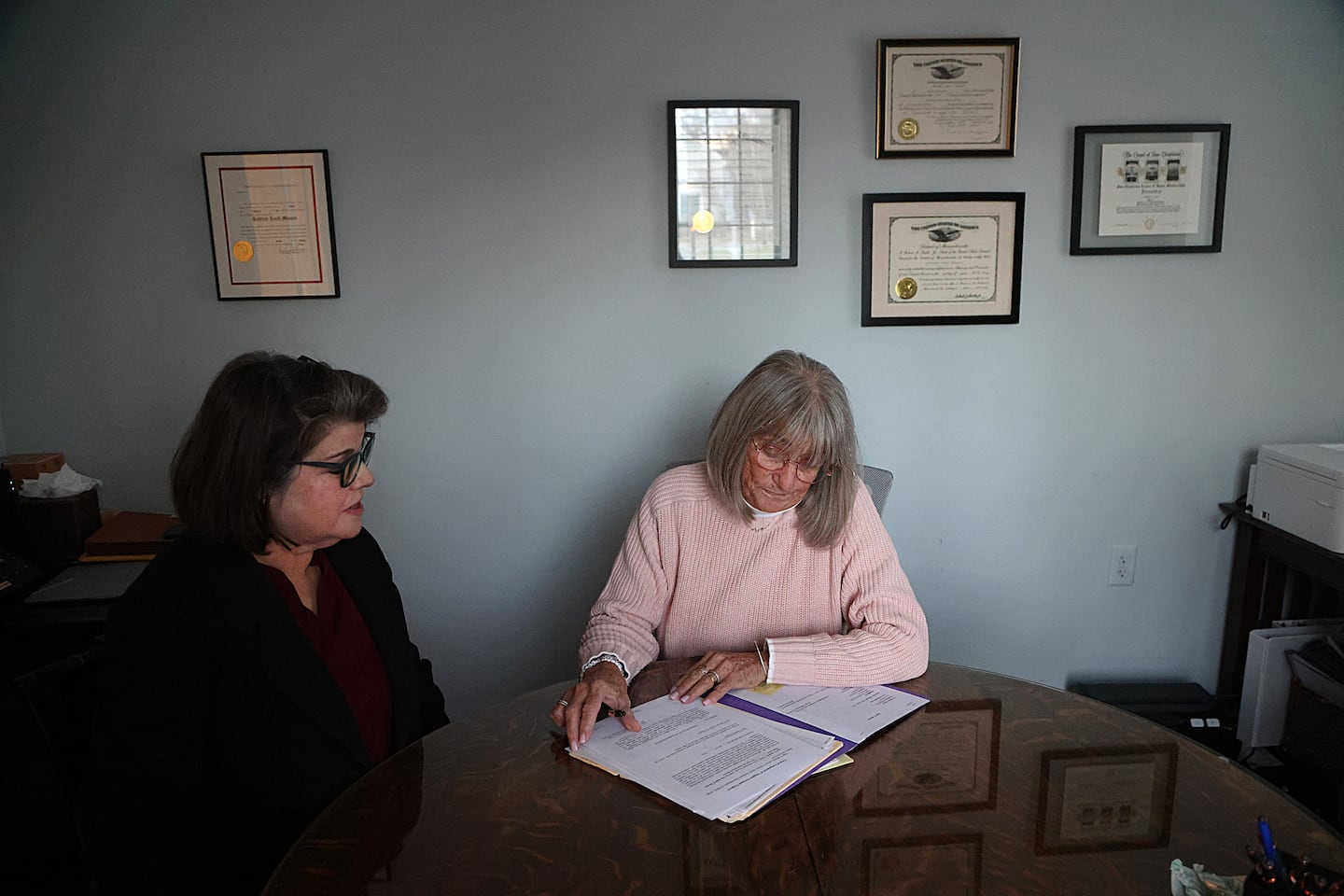
Michael Brown had always been meticulous and careful in managing the family’s finances. But his wife, Jane, hadn’t realized he had slipped into the fog of early-onset Alzheimer’s. Amid his confusion and the erosion of his health consulting business, he had quietly burned through the couple’s savings and his retirement accounts, trying to keep ahead of the bills.
Jane Brown would soon discover how much she needed that money as she struggled to care for her husband at home. For a decade, until her husband’s death three years ago at age 71, Brown patched together assistance from family to help pay for some of Michael’s home health aides. Eventually, he qualified for long-term disability payments and for Medicaid to cover many of the health care bills. She also took a reverse mortgage on their house and didn’t retire from her full-time job at a nonprofit until two years ago, at age 72.
Now, state health leaders are considering creating a public long-term care insurance program to help people pay for such costs. It comes as the percentage of older adults in Massachusetts is soaring, and public spending on home care, medical equipment, skilled nursing, therapy, and other services to help people as they age is swamping the state’s budget, eating up roughly a third of Massachusetts’ Medicaid money.
At the same time, substantial federal funding cuts to Medicaid have created uncertainty about states’ abilities to pay for long-term care going forward.
 Jane and Michael Brown at their daughter’s wedding in 2017.Family Photo
A state-commissioned study released earlier this year envisioned a program to be funded by a mandatory payroll tax, in much the same way Medicare and Social Security taxes are automatically deducted now. The payroll tax, depending on the plan a person chose, would range from 0.68 percent to 2.74 percent. For a person earning $100,000 a year, that translates to a monthly tax ranging from $56 for the cheapest option to $229.
The study explored many potential plans, but focused on three, with total lifetime benefits ranging from $75,000 to unlimited coverage for the most expensive. Plan benefits would increase with inflation and would cover a wide range of services, including home care, assisted living, and nursing homes.
The costs of such services can easily overwhelm families. A home health aide in Massachusetts costs about $87,000 a year, while assisted living averages roughly $109,000, and a private room in a nursing home $186,000, according to a 2024 survey by Genworth, a Virginia-based long-term care insurance and services company.
“I so wish it was something I had had at my disposal,” Brown said. “Maybe it could have taken away even a modicum of concern and worry and fear.”
Health leaders say most people don’t realize they will likely need at least some help with care as they age. But long-term care insurance is so expensive — averaging about $3,375 a year — only about 10 percent of people in Massachusetts over age 60 have such a policy, industry figures show.
“If you have a low enough income, you can qualify for Medicaid, and if you have enough, you can pay privately,” said Elissa Sherman, president of LeadingAge Massachusetts, a trade association of nonprofit health care providers.
“But it’s that growing middle that is stuck,” Sherman said. “They have to rely on family or impoverish themselves to qualify [for Medicaid], and we see that as not sustainable for families or for the state budget.”
The state’s feasibility study estimated the publicly funded insurance options have the potential to save between 5 percent and 45 percent on Massachusetts’ total Medicaid long-term care spending over 75 years, because workers would be funding this program through the payroll tax, easing the burden on the Medicaid system.
Legislation sponsored by state Senator Patricia Jehlen of Somerville and Representative Thomas Stanley of Waltham would create a commission composed of health industry leaders, advocates, and government officials to design a public long-term care program within two years. The legislation is in its final stages, under consideration by both chambers’ Ways and Means committees.
“Not only are people living longer, they’re surviving with more disabilities,” Jehlen said. “But they also have fewer supports at home, because even if they have somebody at home, they might be working.”
Massachusetts’ feasibility plan is loosely based on a program in Washington state, which passed a law creating its WA Cares Fund in 2019. It launched its payroll tax in 2023, and the first benefits are slated to be paid out next summer.
The program, the first of its kind in the country, charges a flat 0.58 percent payroll tax, and most workers must wait 10 years to qualify for benefits. The maximum lifetime benefit, at this point, is modest, just $36,500, which will increase with inflation. The program also allows residents who have contributed for at least three years, but who move out of state, to continue in the program.
But WA Cares had substantial growing pains. Initially, Washington allowed people to opt out of the program if they purchased private insurance, and almost 500,000 did that, nearly bankrupting it early on. The state has since closed that loophole, making the program mandatory for most people.
Elizabeth New, a policy analyst at the Washington Policy Center, a free market think tank, is not a fan.
“My biggest complaint with WA Cares is it is taxing low-income workers to pay for benefits of higher-income workers, who could afford their care,” she said. “It will go to all people, regardless of need.”
The program survived a repeal effort last year.
Stanley said he expects there will be pushback in Massachusetts as well.
“Any time we are asking for more money from residents, there will be some controversy,” he said.
Stanley noted that a 2023 KFF national survey revealed that nearly half of adults over 65 mistakenly believe Medicare covers long-term care. It does not.
Another survey, from the National Poll on Healthy Aging, found 57 percent of respondents aged 50 or older did not believe they would ever need long-term care. Yet 70 percent of people can expect to use some form of long-term care during their lives, according to the federal government.
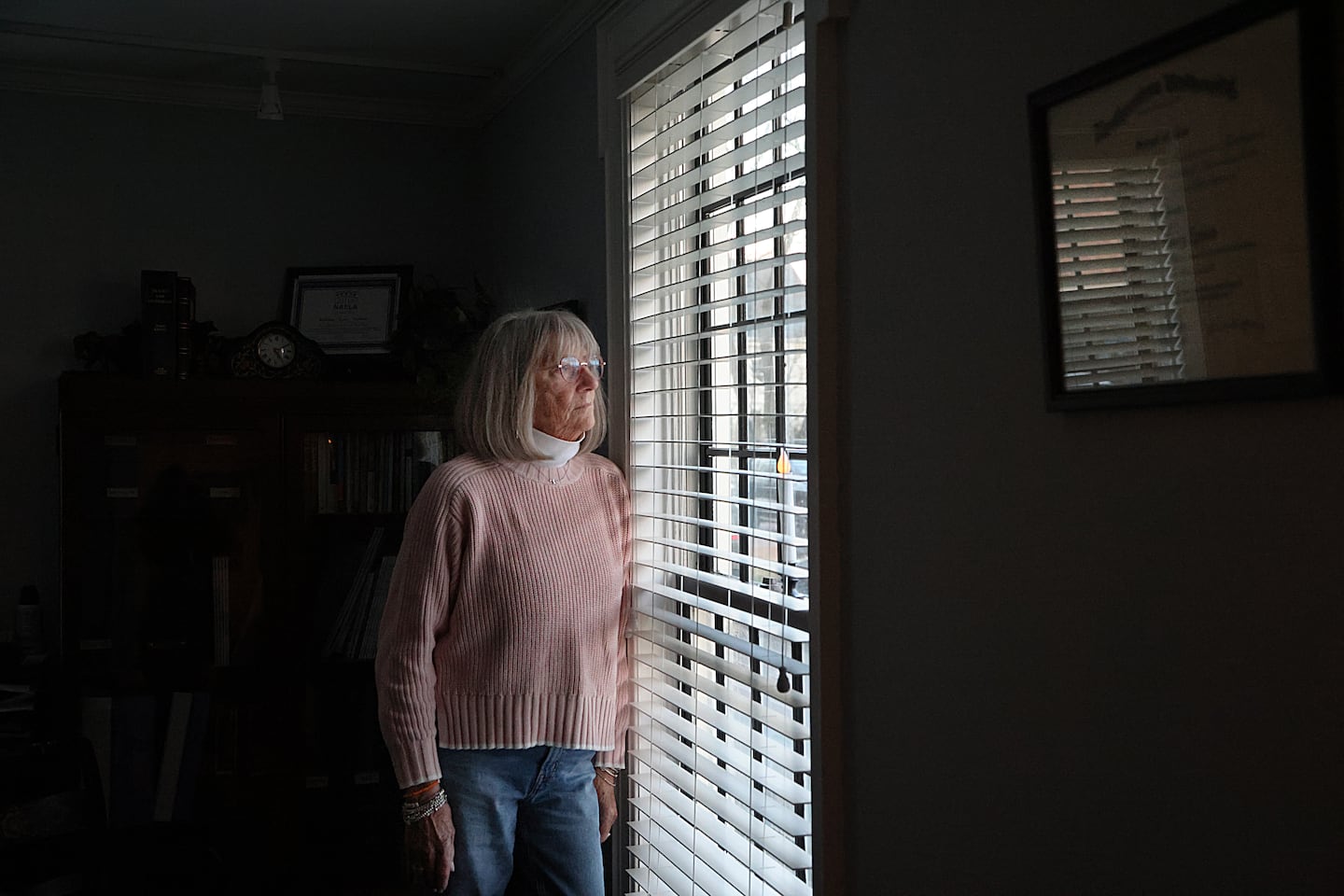 “There was rarely a night or day I didn’t wake up not worried about our finances,” Jane Brown said.Suzanne Kreiter/Globe Staff
Jane and Michael Brown believed they would need long-term care at some point and had applied for private insurance coverage several years before Michael was diagnosed with Alzheimer’s at age 57. But they were turned down because Jane was a cancer survivor and battling Crohn’s disease, while Michael had severe sleep apnea, she said.
That denial would haunt Brown over the decade she struggled to care for her husband at home.
“There was rarely a night or day I didn’t wake up not worried about our finances,” she said.
And yet, Brown sheepishly admitted she has not thought much about her own care going forward. She still lives in the same modest three-bedroom ranch house where the couple raised four children decades ago, so at least she will have single-floor living, she said.
“I don’t want to sound naive because I have had reality flashed in front of me,” Brown said. “But I am not there, yet.”
Kay Lazar can be reached at kay.lazar@globe.com Follow her @GlobeKayLazar.