
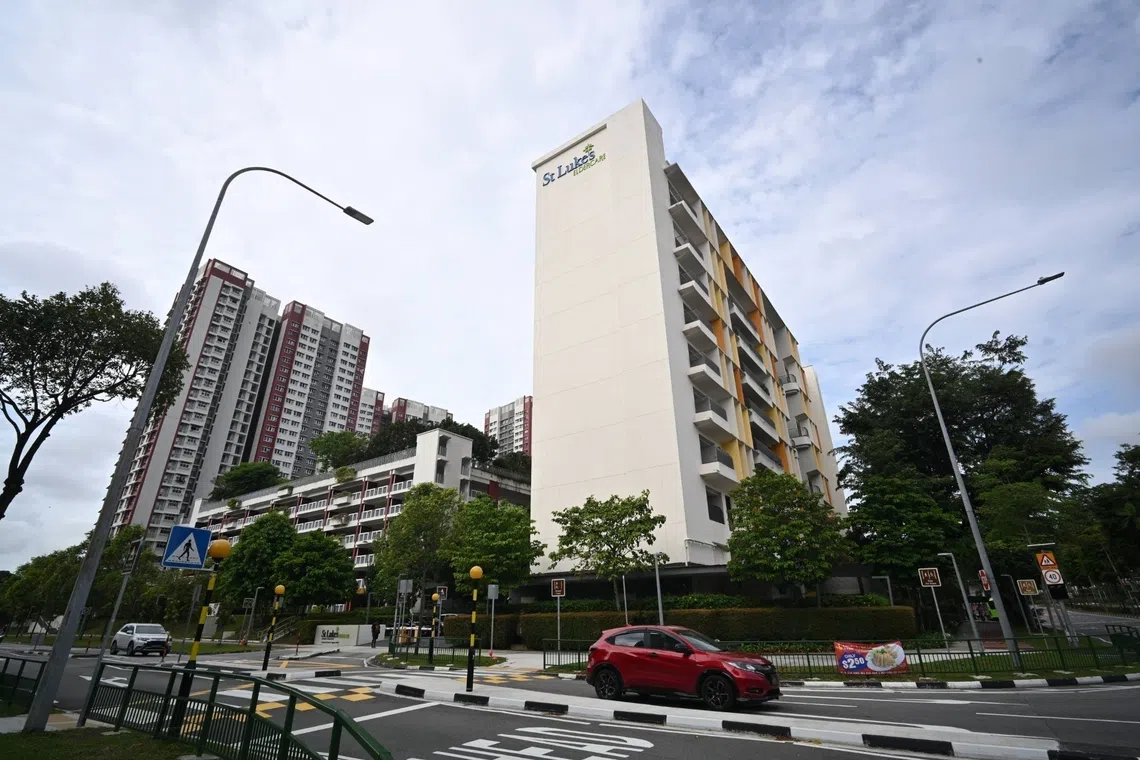
prefer to age
in a community setting
rather than in an institution will soon be able to share an HDB flat or private dwelling with other seniors, with basic support for daily living tasks provided by caregiving staff.
The Ministry of Health (MOH) announced on Dec 10 that the Shared Stay-in Senior Caregiving Services will become a mainstream model.
Interested companies can now apply for support to facilitate their operations, including additional foreign worker quotas and more options to hire from non-traditional source countries.
They can also apply for training subsidies for their caregiving staff, with up to 90 per cent of fees subsidised, MOH said.
The ministry and the Agency for Integrated Care (AIC) have published an industry-led Good Practice Guide for interested companies, clients and their families.
The new model is among the care options for seniors in Singapore. Apart from nursing homes for those with complex healthcare needs and more severe disabilities, the options today include
Community Care Apartments,
which are HDB flats designed for seniors and provide support for assisted living to assisted living facilities under the newly mainstream model.
Speaking at the 5th anniversary celebration of St Luke’s ElderCare (SLEC) Residential-Based Services on Dec 10, Minister for Health Ong Ye Kung said the stayed-in model makes more sense than each senior hiring their own domestic caregiver.
“As Singapore’s population ages, we recognise that seniors will increasingly have different needs and preferences….Wherever possible, we should support seniors to lead an active and independent life, because that is best for their well-being.”
MOH’s decision to mainstream the senior care model comes after a sandbox initiative was launched in September 2023 to test new care models, enhance support for families, and help more seniors age within their communities.
The sandbox featured caregiving staff providing basic support for daily living tasks, meals, housekeeping, and social activities to a group of seniors living in the same residence, mirroring how caregivers at home support their loved ones.
The outcomes of the sandbox have been encouraging, with five companies – Red Crowns Senior Living, St Bernadette Lifestyle Village and its franchisees BlueAtria and Muein, and GROW – serving a total of 232 clients as of end-September 2025, MOH said.
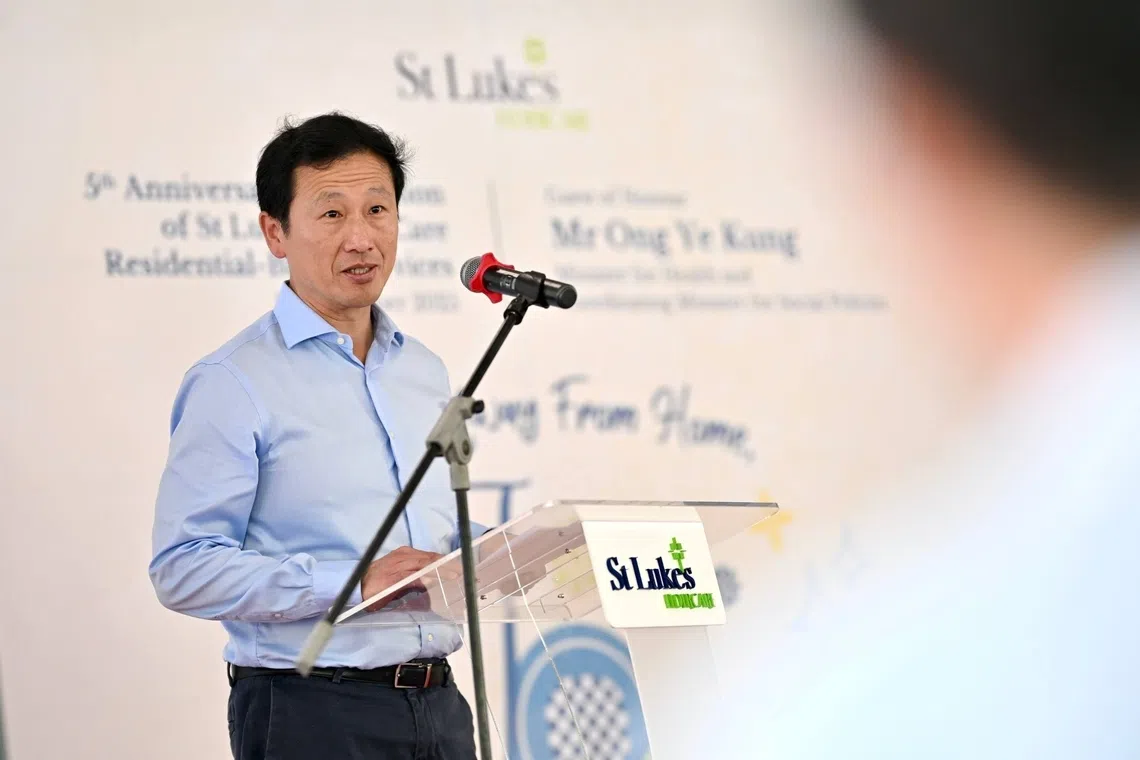
Minister for Health Ong Ye Kung said the stayed-in model makes more sense than each senior hiring their own domestic caregiver.
ST PHOTO: LIM YAOHUI
One of them, St Bernadette, first started assisted living in Singapore in 2015, but could not scale its operations then due to the lack of manpower and other challenges.
Co-founder Belinda Wee said the manpower support in the sandbox meant that they were allocated one care staff for every three seniors, with a quota of 34 staff. This enabled them to scale to nine assisted living facilities in the past 18 months. The newest facility, in Duku Road, opened in June 2025.
Dr Wee added that their staff are not live-in foreign domestic workers, but trained staff who may live off site.
They were initially trained at Good Shepherd Loft, a nursing home in Bukit Timah co-founded by Dr Wee. After the sandbox started, new care staff attended the ITE Skills Certificate in Healthcare (Home care) course, which is conducted in-house.
Dr Wee said the care staff function independently as care leads and can seek help from the hub, which is Good Shepherd Loft, when they have problems they cannot resolve.
MOH said that seniors receiving care from the Shared Stay-in Senior Caregiving Services still require close involvement from family members, such as in the caregiving decision-making process for their loved ones.
At the same time, the companies and their caregiving staff must be responsible for delivering services safely and professionally. If a client requires a licensed care service, Shared Stay-in Senior Caregiving Services providers must engage such services when requested by the family.
MOH said this collaborative approach between families, providers and caregiving staff is key to the success of the service.
Meanwhile, the 5th anniversary celebration of SLEC Residential-Based Services was held at its first nursing home – the 189-bed SLEC Residence @ Ang Mo Kio.
By the end of next year, it will have another two nursing homes. The three facilities will have a total capacity of more than 650 beds to meet growing demand.
Mr Ong, who is also Coordinating Minister for Social Policies, said MOH will continue to offer a diversity of care options for seniors.
For seniors who require assisted living but choose to live in their own homes, MOH is enhancing the Home Personal Care service to
better respond to their needs and provide more frequent support
to them. This will be rolled out island-wide in early 2026.
To ensure that seniors can transit from one care setting to another seamlessly, MOH will introduce new policies.
For example, service providers in various sub-regions will come together as an Integrated Community Care Provider (ICCP) to coordinate the delivery of care within their sub-region. New IT systems are being developed to support this, Mr Ong said.
In January 2026, MOH will table the Health Information Bill, which does not only govern the sharing of patient data in clinical settings, but also community settings, he added. This will ensure that seniors transition across various care settings more seamlessly – without a need for repetitive questioning, data collection and tests.
By sharing basic administrative data such as the names and addresses of vulnerable seniors who require befriending and engagement, personnel from public agencies, AIC and public healthcare clusters can better coordinate their efforts to support these seniors, Mr Ong added.