
A draft of Ethiopia’s second National Digital Payments Strategy for 2026 to 2030 outlines plans to allow cross-border remittances during the implementation period. Under the proposal, the government will issue clear policy guidance on outbound retail payments, assessing the country’s foreign exchange position and associated risks. If conditions allow, the central bank will issue an “Outbound Remittance Directive” authorizing licensed banks, payment service operators, microfinance institutions, and payment infrastructure providers to offer low-value cross-border transfers via cards, mobile wallets, and digital banking.
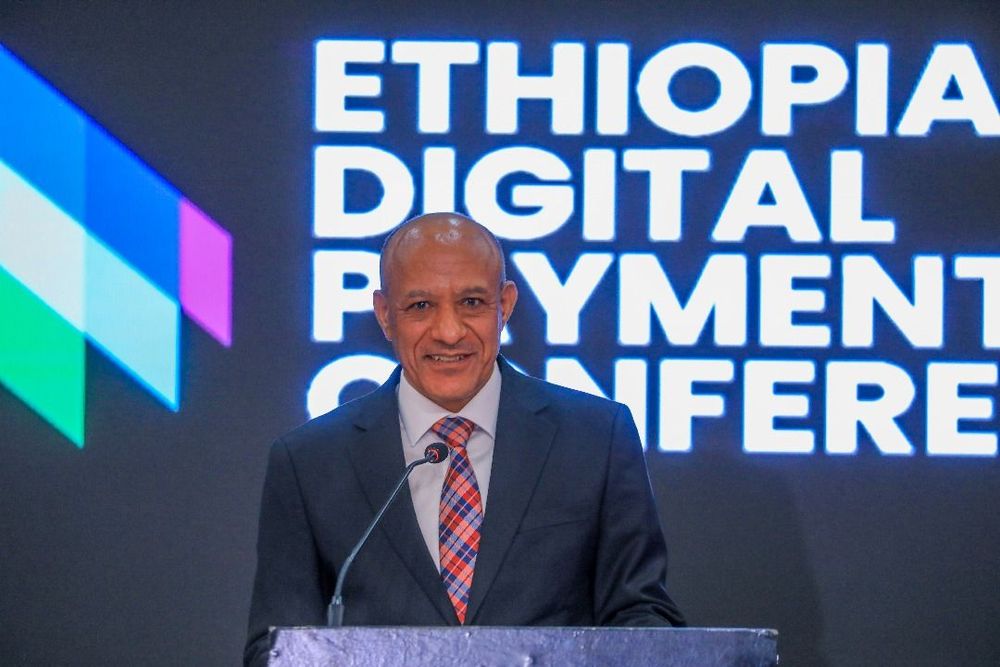
The draft strategy was presented at the second Ethiopian Digital Payment Conference at the Skylight Hotel on Monday morning. The event was opened by Deputy Prime Minister Temesgen Tiruneh and National Bank of Ethiopia Governor Eyob Tekalign(PhD).
Another key highlight of the conference was the launch of Ethiopay, an instant payment system developed by EthSwitch, the national switch operator. The platform provides a secure and interoperable infrastructure for person-to-person transfers, QR payments, bulk payments, and cross-border transactions, forming the backbone of Ethiopia’s digital payment ecosystem.
The updated strategy aims to expand digital payment adoption, upgrade financial infrastructure, and reduce barriers for underserved groups. It builds on rapid growth in Ethiopia’s digital finance sector. Mobile money accounts have surged from fewer than 1 million in 2020 to more than 128.5 million by the end of 2024. Total digital accounts surpassed 102.8 million by mid-2023, while transaction volumes for the 2023/24 fiscal year reached 9.7 trillion Birr, exceeding cash transactions in value. Mobile money transactions alone increased by 34,631 percent between 2019 and 2024.
Much of this growth reflects domestic innovation and regulatory reform. Ethio Telecom’s telebirr service, launched in May 2021, quickly became a dominant player. The entry of Safaricom’s M-PESA in 2023 introduced the first significant international competitor. Local payment service providers such as Chapa, Santimpay, and Arifpay have further expanded choice and competition. In 2023, the National Bank of Ethiopia amended the National Payment System Proclamation to allow foreign companies to operate digital payment systems, accelerating competition and innovation.
Planned initiatives under the draft strategy include establishing a centralized national data exchange, scaling the Ethiopia Instant Payment System to handle 30 percent of digital transaction volumes, and enforcing universal adoption of ISO 20022. By 2030, all financial accounts are expected to be linked to the national digital ID, Fayda. The strategy also targets 80 percent digital processing of government-to-person payments.
The government aims to reduce access and usage gaps between men and women to three percentage points and between rural and urban users to eight percentage points. Female agent representation is expected to rise from 5 percent to 40 percent, supported by programs for young people, persons with disabilities, and the onboarding of more SACCOs, microfinance institutions, and VSLAs onto shared platforms.
Digital payments per adult are projected to rise from 54 to 275 transactions annually, with the value of digital payments expanding to 750 percent of GDP. The strategy emphasizes merchant acceptance, QR code standardization, and digitization in transport, agriculture, and health sectors. Smartphone penetration is expected to reach 70 percent of adults.
Targets also include raising public awareness of digital payment services to 80 percent of adults and reducing digital literacy barriers to roughly 12 to 13 percent. The plan provides for training 5,000 agents and community leaders and strengthening internal capacity at the central bank through ongoing research and skills development.
The fraud rate is expected to fall sharply to 0.0008 percent of transaction value, supported by standardized national fraud reporting and broader cybersecurity compliance. Faster dispute resolution and minimum user-experience standards are planned for all financial institutions.
Other measures include licensing new payment service providers, expanding access to digital credit, savings, and insurance products, enabling cross-border payment connections, and increasing e-commerce to 4 percent of digital payments. The framework also introduces competition policies and commits to nondiscriminatory access to payment infrastructure.