
CHIP RACE:
Three years of overbroad export controls drove foreign competitors to pursue their own AI chips, and ‘cost US taxpayers billions of dollars,’ Nvidia said
China has figured out the US strategy for allowing it to buy Nvidia Corp’s H200s and is rejecting the artificial intelligence (AI) chip in favor of domestically developed semiconductors, White House AI adviser David Sacks said, citing news reports.
US President Donald Trump on Monday said that he would allow shipments of Nvidia’s H200 chips to China, part of an administration effort backed by Sacks to challenge Chinese tech champions such as Huawei Technologies Co (華為) by bringing US competition to their home market.
On Friday, Sacks signaled that he was uncertain about whether that approach would work.
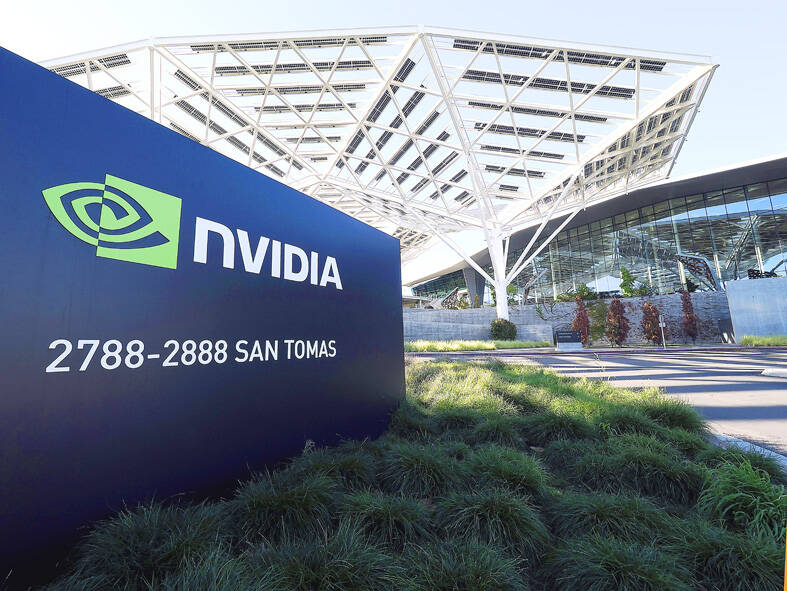
Photo: EPA
“They’re rejecting our chips,” Sacks said in an interview on Bloomberg Tech, citing an unspecified news article he had seen that day. “Apparently they don’t want them, and I think the reason for that is they want semiconductor independence.”
Sacks on Saturday wrote on social media that he was referring to a Financial Times report that China was poised to limit access to the chips through a local approval process in which Chinese buyers would need to justify their purchases.
Sacks’ comments raise questions about whether Nvidia would be able to recover revenue from China. Bloomberg Intelligence analysts estimate annual H200 revenue in China to be a US$10 billion opportunity — but only if the nation accepts the US firm’s chips.
Nvidia would continue to work with the administration on H200 licenses for vetted customers, a company spokesperson said in a statement.
“While we do not yet have results to report, it’s clear that three years of overbroad export controls fueled America’s foreign competitors and cost US taxpayers billions of dollars,” the company said.
China is weighing a package of incentives worth as much as US$70 billion to support its local chipmaking industry, Bloomberg reported on Friday, underscoring Beijing’s resolve to reduce its reliance on foreign chipmakers such as Nvidia.
It suggests that the government would continue to support companies such as Huawei and Cambricon Technologies Corp (寒武紀) even with the H200 cleared by the US for export to China.
The H200, which was introduced in 2023 and began shipping to customers last year, is part of the Hopper generation of Nvidia’s graphics processing units, second-best to the Blackwell line and two generations behind the upcoming Rubin series. An 18-month lag behind the latest Nvidia chips was part of the Trump administration’s justification for the decision.
Sacks, a venture capitalist who joined the administration in January, identified China’s desire to prop up and subsidize Huawei as a key reason for its H200 reluctance.
“What you see is China’s not taking them because they want to prop up and subsidize Huawei,” Sacks said. “That was part of our calculation, of selling not the best, but lagging chips to China, is that you can take market share away from Huawei, but I think the Chinese government has figured that out, and that’s why they’re not allowing them.”
Beijing has yet to publicly agree to allow imports of Nvidia’s H200 products. It also has yet to publicly reject them, despite the recent US policy change. Earlier this year, China shunned the H20, a significantly less capable chip Trump allowed this summer.