
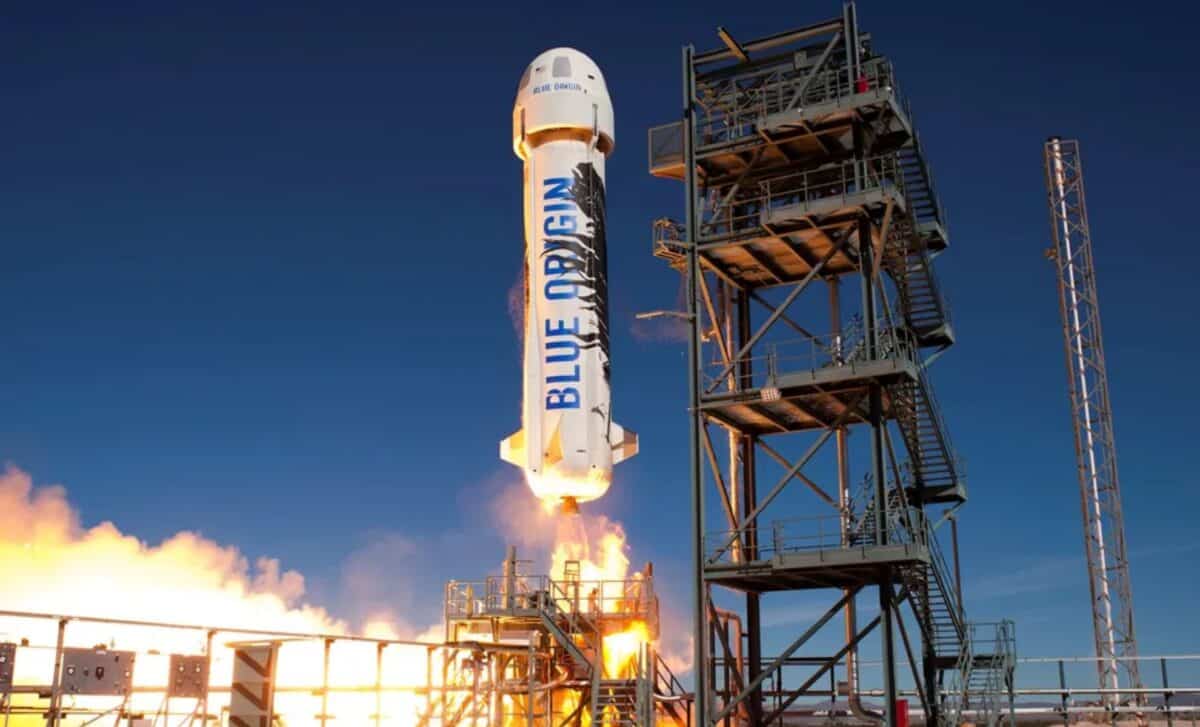
Blue Origin’s NS-37 mission made history on December 18, 2025, by launching the first-ever wheelchair user into space. Michi Benthaus, an aerospace engineer from the European Space Agency, was among the six passengers aboard the New Shepard rocket, marking a groundbreaking moment for both space tourism and accessibility in space exploration.
Benthaus, who has used a wheelchair since a 2018 mountain biking accident, joined five other passengers, including aerospace professionals, investors, and entrepreneurs. The brief, suborbital flight offered a rare chance to experience weightlessness and see Earth from above the Kármán line, about 62 miles (100 km) above the planet.
New Shepard: A Key Player in Suborbital Space Tourism
Blue Origin’s New Shepard rocket, which has now completed 37 missions, is central to the company’s efforts to popularize suborbital space tourism. The rocket’s reusable design allows for brief but thrilling missions, lasting between 10 and 12 minutes.
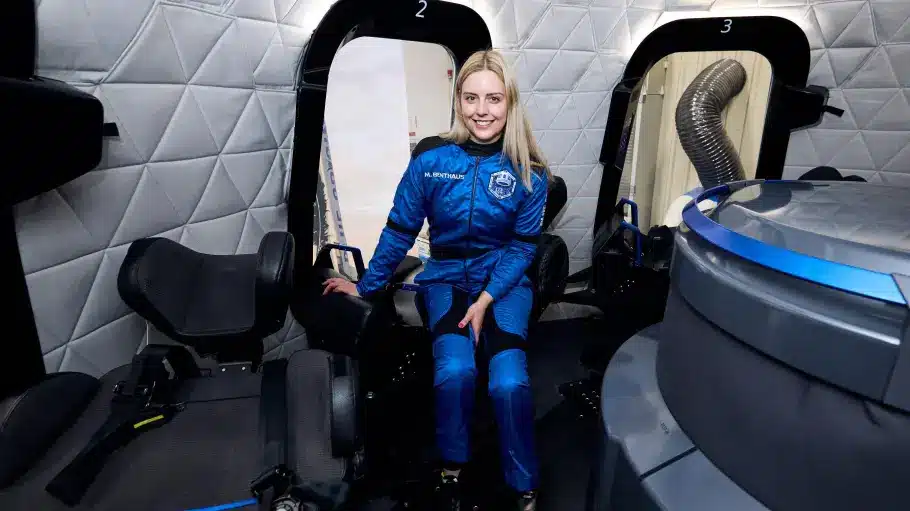 Michaela (Michi) Benthaus, an aerospace engineer with the European Space Agency, is on track to become the first wheelchair user to travel to space. Credit: DPA/Blue Origin/AP
The passengers aboard NS-37, including Michi Benthaus, experienced a few minutes of weightlessness and a view of Earth against the backdrop of space. According to Space.com, New Shepard has previously completed 36 crewed flights, carrying 86 people in total.
While Blue Origin has not publicly disclosed ticket prices, these missions are seen as an important step in making space accessible to civilians.
“We couldn’t be more thrilled to welcome you onboard, Michi! New Shepard’s mission is to make space accessible to everyone. This is a meaningful step towards that future and an inspiration for others to see what’s possible,” Blue Origin wrote in a social media post.
Michi Benthaus: A Trailblazer for Accessibility in Space
Michi Benthaus’ journey to space represents a landmark for people with disabilities in the aerospace field. Since her 2018 accident, she has worked at the European Space Agency and remained an active contributor to aerospace engineering. Her participation in the NS-37 mission makes her the first wheelchair user to reach space.
“I’m beyond excited,” Benthaus mentioned in a social media update. “I thought my dream of going to space had ended forever when I had my accident. But over the past few months, I’ve been working with an amazing and supportive team to make it possible for a wheelchair user to take part in a suborbital flight, something that’s never been done before.”
Celebrating Diversity in the Quest for Space
The inclusion of Benthaus in Blue Origin’s historic flight reflects a larger trend toward diversity and accessibility in space exploration. The mission also featured several notable passengers, including aerospace engineer Hans Koenigsmann, who worked at SpaceX for nearly two decades. His involvement, alongside entrepreneurs like Joey Hyde and Adonis Pouroulis, underscores the growing diversity of individuals involved in civilian space missions.
The success of the NS-37 flight suggests that the future of space exploration will be shaped not just by technological advancements, but by efforts to make space travel accessible to a broader range of people. With each mission, companies like Blue Origin are pushing the boundaries of who can go to space, ensuring that opportunities for exploration are more inclusive than ever before.