
Kenya’s 2025 National Wildlife Census report has revealed a complex trend in wildlife: Populations of some iconic animal species are steadily growing, while other populations are declining or remain stagnant.
At the launch of the report, compiled by the Wildlife Research and Training Institute (WRTI), Kenya’s President William Ruto described the findings as “a mosaic of wins and urgent conservation emergencies.”
The Dec. 11 launch brought together more than a dozen stakeholders in research and conservation. In the report’s recommendation the authors said the findings should shape policy for parks and community conservancies, by integrating “the national wildlife corridor mapping initiative and wildlife census data into national and county spatial and land use plans.”
At the launch of the report the CEO of WRTI, Patrick Omondi said, “We also recommend acceleration of enactment and implementation of the Wildlife Conservation Bill (2025) and complementary amendments on the Wildlife Act, 2023.”
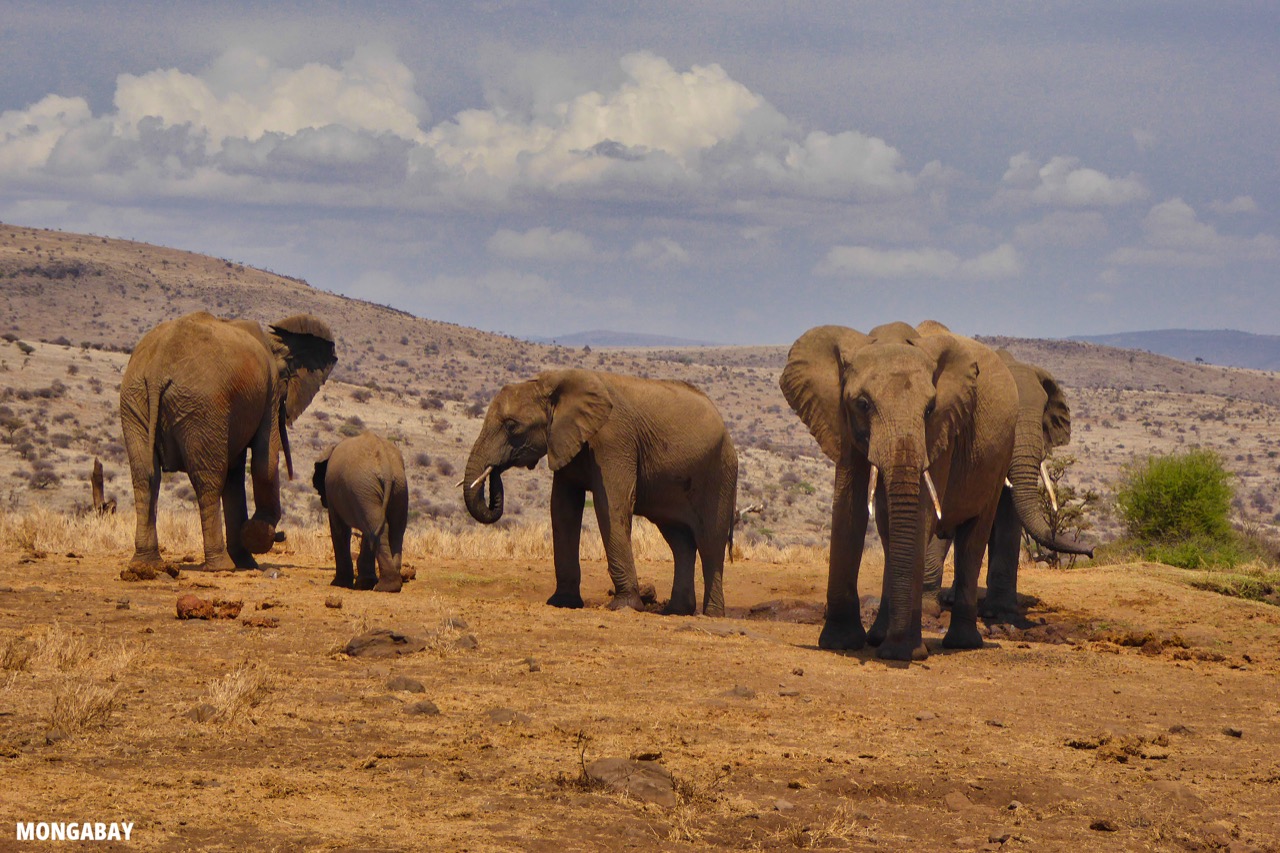
The report highlighted a 4% increase in the populations of elephants as well as black rhinos (Diceros bicornis) and white rhinos (Ceratotherium simum), since the last census in 2021. The report estimates that Kenya is home to more than 40,000 elephants in the wild and just over 2,100 rhinos.
Giraffe (Giraffa) species saw a 5.4% increase in their populations; at least 43,000 individuals were counted.
Authorities attribute the growth to decades of efforts to end poaching in the parks, targeted translocation of the mammals, stricter law enforcement, community-led conservation and ecological connectivity.
However, the census also revealed the vulnerability of some species and habitats that underpin Kenya’s rich biodiversity. For example, the populations of lions (Panthera leo), cheetahs (Acinonyx jubatus) and African wild dogs (Lycaon pictus) all declined. Cheetahs and wild dogs each lost roughly half their populations over the last four years.
Data collected from at least 11 key sites show the populations of some wetland waterbirds are plummeting by upward of 80%. The range-land buffalo (Syncerus caffer) population also fell by more than 8%. The report authors suggest the buffalo decline may partly be a function of the different seasons in which the surveys were conducted and methodological differences; however, they caution, that shouldn’t reduce efforts to better manage the species.
The report calls for more targeted interventions to increase the small, fragmented populations of Grévy’s zebra (Equus grevyi), mountain bongo (Tragelaphus eurycerus) and the critically endangered roan (Hippotragus equinus) and sable (Hippotragus niger) antelopes.
To assemble the data, researchers compiled some 1,500 hours of aerial surveys as well as ground counts and camera trapping. They also applied modeling to avoid counting the same animals twice and dedicated coastal and marine assessments to count species missed by aerial methods.
The report is expected to inform government policies and planning at both national and local levels, resulting in better wildlife management.
Banner image: Elephants in Kenya. Image courtesy of Nancy Butler.
