
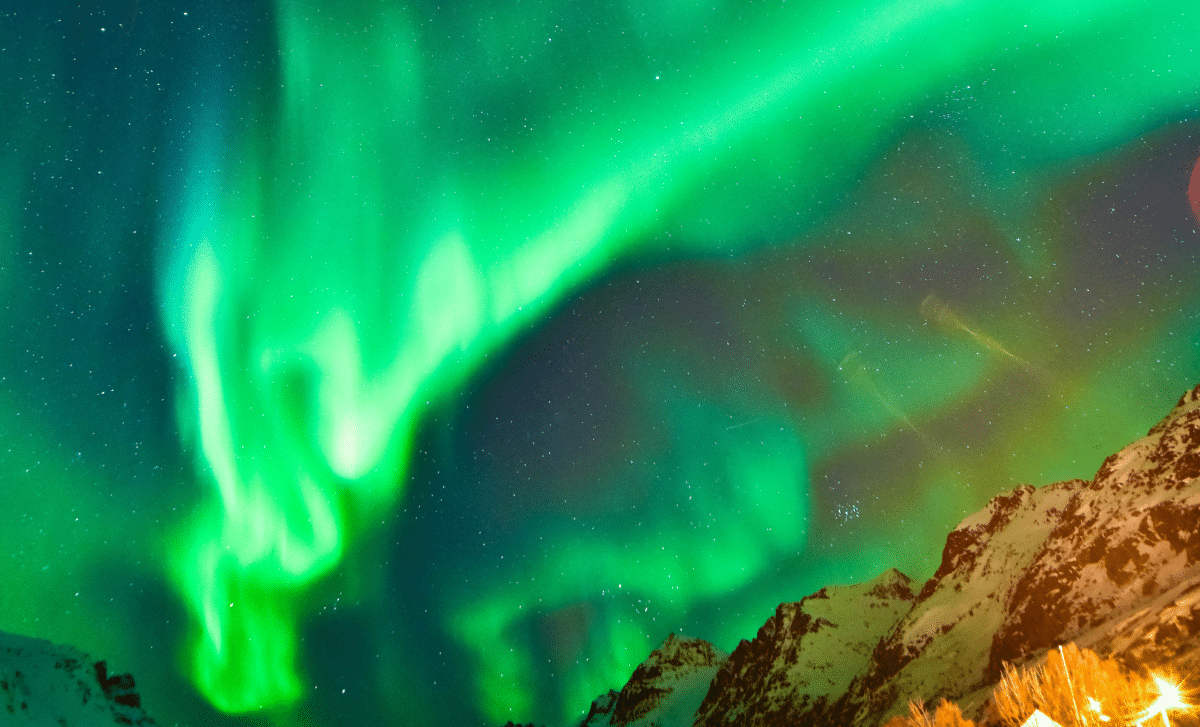
The Northern Lights, or Aurora Borealis, are one of the most mesmerizing natural phenomena. According to NOAA, the display is expected to light up the skies across 15 U.S. states on December 17, 2025. For skywatchers, this could be an unforgettable opportunity to witness the beauty of these luminous waves. Let’s dive into the science behind the aurora and how you can catch the best view of the show.
The Science Behind the Aurora Borealis
The Northern Lights are not just beautiful; they are the result of complex solar activity. Solar storms send charged particles toward Earth, and when these particles collide with our planet’s magnetic field, they create the stunning colors that dance across the night sky. The colors depend on the type of gas in the Earth’s atmosphere and the altitude at which the collisions occur. Green, the most common color, happens when particles interact with oxygen at lower altitudes, while red and purple hues are created higher in the atmosphere.
The lights are primarily seen in the auroral oval—an area encircling the geomagnetic poles. For viewers in the U.S., the further north you are, the better your chances of catching the show. However, strong solar storms can extend this aurora zone, meaning even states not typically known for aurora sightings may get a glimpse.
When and Where to See the Northern Lights in the U.S.
According to NOAA’s forecast for December 17, 2025, the Northern Lights could be visible across parts of 15 northern U.S. states. These include Alaska, Minnesota, Michigan, and Maine, all of which have a history of aurora sightings. However, states as far south as Wisconsin, New York, and Montana might also get an opportunity to witness the spectacle, depending on weather conditions and solar activity.
To get the best view, head for darker areas, away from city lights. A remote cabin or even a quiet field can give you an unobstructed view of the night sky. Clear skies are essential, so monitoring weather forecasts in advance is key. The aurora is best observed after sunset but typically peaks after midnight. Patience is necessary, as the lights often appear and disappear in waves throughout the night.
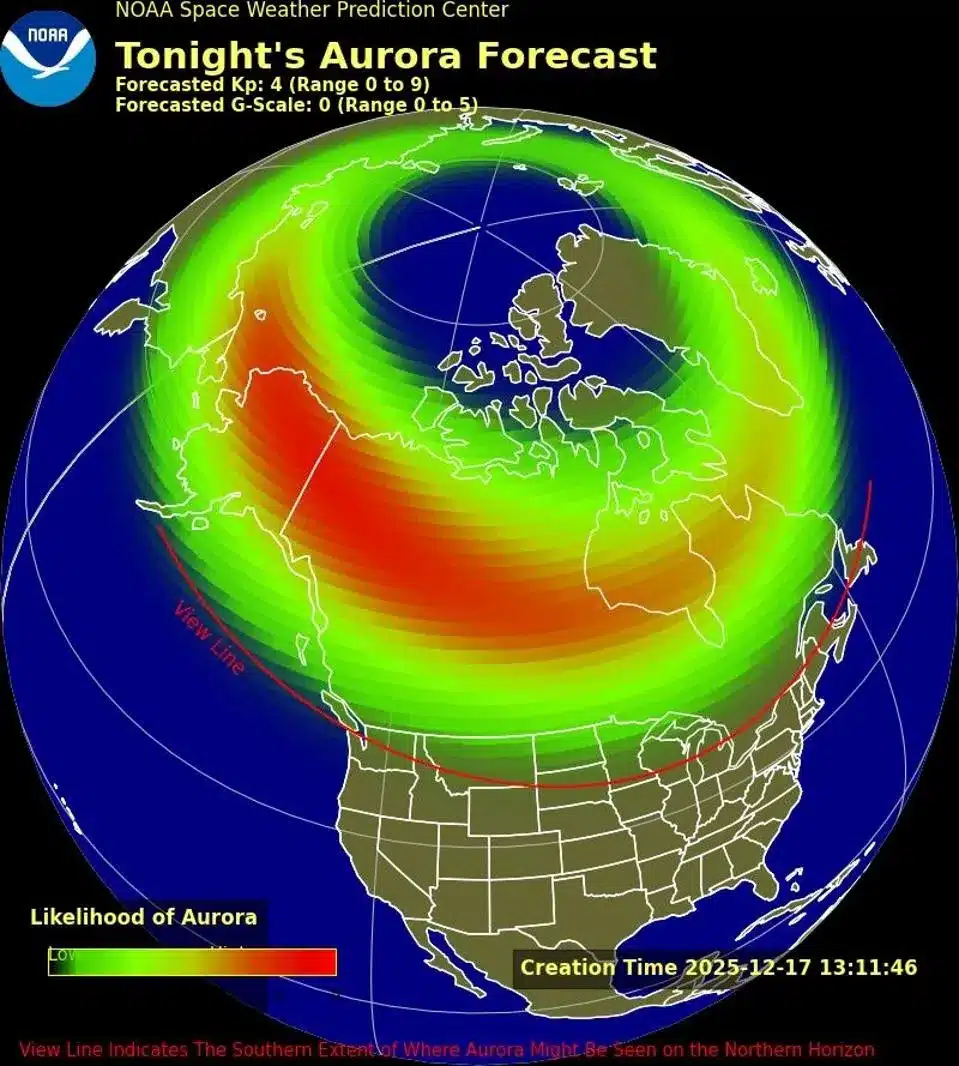 Credit: NOAA
Why This Solar Event is Special
This particular aurora display is linked to a significant solar storm. Solar storms occur when there’s a massive burst of solar wind that reaches Earth, often in the form of coronal mass ejections (CMEs). These events are relatively rare but can produce some of the most intense aurora displays. This storm, predicted by NOAA, promises to make the aurora visible over a wide area, which is not typical for most aurora events.
NOAA also notes that such solar activity can affect communication systems and satellite operations. While the aurora’s beauty is captivating, solar storms can cause disruptions in technology, making this event a fascinating one for both scientists and casual skywatchers alike.
How Solar Activity Affects the Northern Lights
Solar activity follows an approximately 11-year cycle of highs and lows. Right now, we are nearing the peak of the solar cycle, which means there is an increased likelihood of solar storms and geomagnetic activity. This could lead to more frequent and more intense aurora displays, providing greater opportunities for those in northern states to see the lights.
What makes these solar cycles so important to the aurora is that the stronger the solar activity, the more particles are sent toward Earth. These particles interact with Earth’s magnetic field, which generates more dramatic auroral displays. NOAA has predicted an uptick in these solar events as the solar cycle nears its peak, making this a prime time for aurora enthusiasts to witness a show.
Preparing for the Northern Lights Viewing Experience
While the Northern Lights are a rare and breathtaking sight, seeing them requires more than just good luck. Preparation is key to a successful viewing experience. First, check the solar activity levels through reliable sources like NOAA’s space weather forecast. A strong geomagnetic storm increases your chances of seeing the aurora, but the solar wind needs to be strong enough to reach Earth.
Secondly, plan your viewing location. Cities, while convenient, have light pollution that can block the visibility of the aurora. Opt for locations in rural or remote areas that are far from artificial light. Warm clothing is also essential, especially in December, as temperatures can drop drastically in the northern U.S. at night.