
NEED TO KNOW
The northern lights could be visible across 10 U.S. states tonight as increased solar activity raises the chance of auroras appearing after dark
The best viewing window is between 4 p.m. and 10 p.m. EST, though sightings are possible anytime after dark in clear-sky locations
Aurora activity may continue through Christmas Eve, giving skywatchers multiple opportunities to catch the glow during the holiday week
If you needed an excuse to step outside tonight, the cosmos are about to give you one!
The northern lights could make a surprise appearance across parts of the U.S. as a fast stream of solar wind increases the odds of colorful auroras after dark.
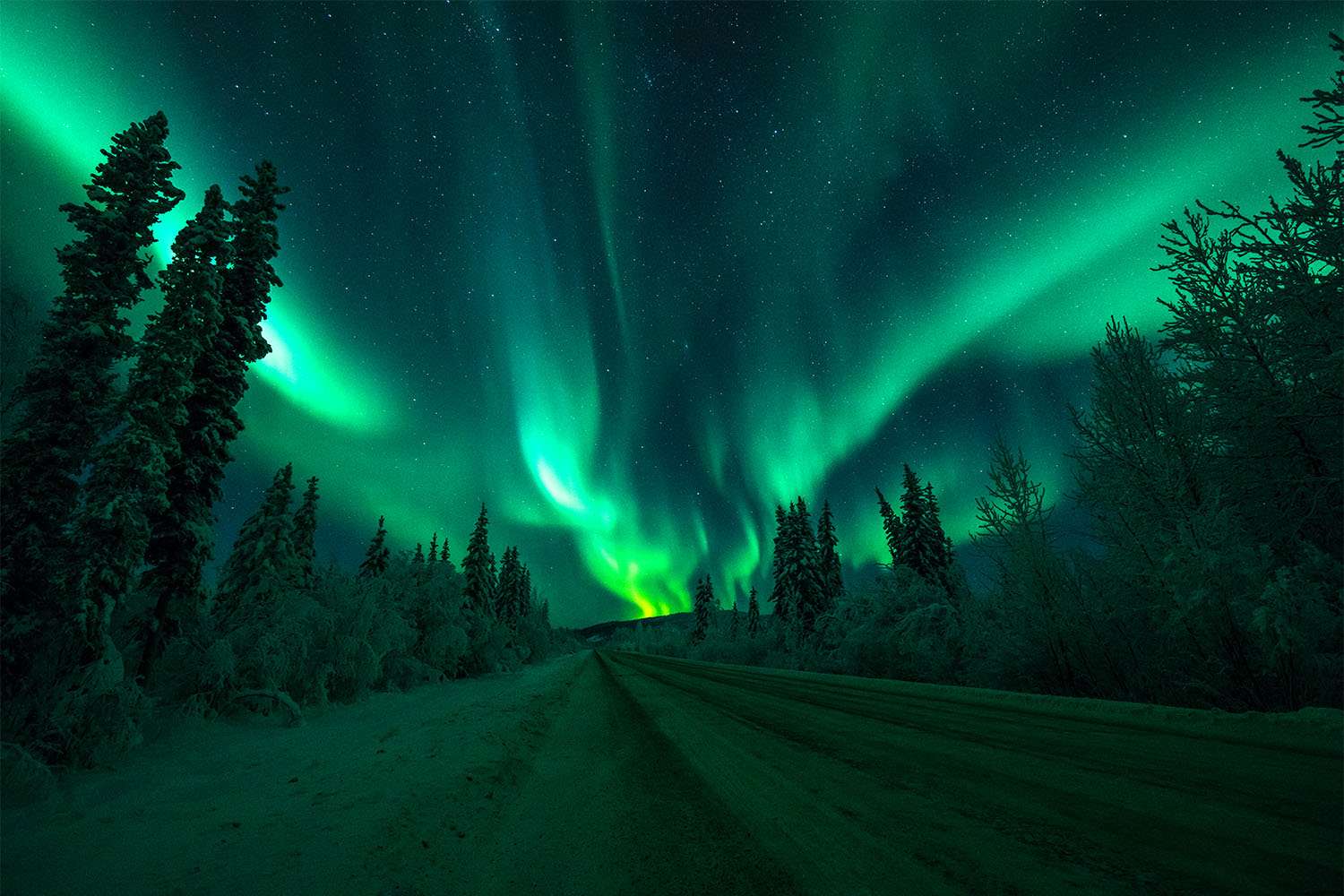
The aurora borealis (northern lights) is caused by geomagnetic storms, which occur when charged particles from the sun collide with gases in Earth’s atmosphere, creating brilliant waves of light in the sky.
According to space weather forecasters at the NOAA Space Weather Prediction Center, Earth is currently being brushed by fast-moving solar wind streaming from an Earth-facing coronal hole on the sun.
Forecasts show geomagnetic activity reaching minor (G1) storm levels overnight, which is often enough to push the aurora farther south than usual.
These lower-level geomagnetic storms don’t guarantee a jaw-dropping light show, but they do raise the odds, particularly for people living in darker areas with clear skies and a good view of the northern horizon.
The best part? Forecasters are saying this isn’t a one-night event.
In fact, the same stream of fast solar wind is expected to influence Earth through Wednesday, Dec. 24, meaning there could be multiple chances to catch the northern lights in the days leading up to Christmas.
This is especially encouraging for skywatchers and aurora chasers, as the northern lights are famously fickle, often requiring equal amounts of luck and patience.
In the meantime, read on for more on this stellar spectacle.
Never miss a story — sign up for PEOPLE’s free daily newsletter to stay up-to-date on the best of what PEOPLE has to offer, from celebrity news to compelling human interest stories.
When will the northern lights be visible?
Aurora borealis display near Fairbanks, Alaska.
Gallo Images ROOTS Collection/Getty
The northern lights could become visible as soon as it gets dark tonight, Monday, Dec. 22, with the best chances expected during the evening and early overnight hours.
NOAA’s short-term outlook shows the strongest activity window between 4 p.m. and 10 p.m. local time. Still, be sure to check the sky periodically rather than heading before it’s time.
Where will the northern lights be visible?
The northern lights above Norway.
Getty
Based on NOAA’s latest aurora forecast map, the following U.S. states are fully or partially within the potential viewing zone tonight: Alaska, Washington, North Dakota, Minnesota, Montana, Maine, Michigan, Wisconsin, South Dakota and Idaho.
If geomagnetic activity intensifies or skies are especially clear, the aurora could extend farther south than forecasted. If not, visibility may stay limited to darker, northern regions.
How to watch the northern lights?
Northern lights (Aurora Borealis).
Robert Nemeti/Anadolu via Getty
If you’re hoping to catch a glimpse of the aurora borealis, here’s what you have to do:
First, find a north-facing spot with a clear view of the horizon — get as far from light pollution as possible. Then, let your eyes adjust to the darkness for at least 20 to 30 minutes.
You can use your smartphone to scan the sky, since cameras often detect faint auroras before the naked eye.
Most importantly, stay warm and be patient! The lights can appear suddenly when you least expect them.
How to take photos of the northern lights?
People visit St Mary’s lighthouse.
Ian Forsyth/Getty
Let’s face it, there’s no proof that the northern lights actually happened… unless you take a photo of them yourself.
The good news is, most smartphones have a high-tech capability that allows you to capture the breathtaking phenomenon on camera. All you have to do is hit the “Night Mode” settings. Then, simply aim your lens to the sky and snap away!