
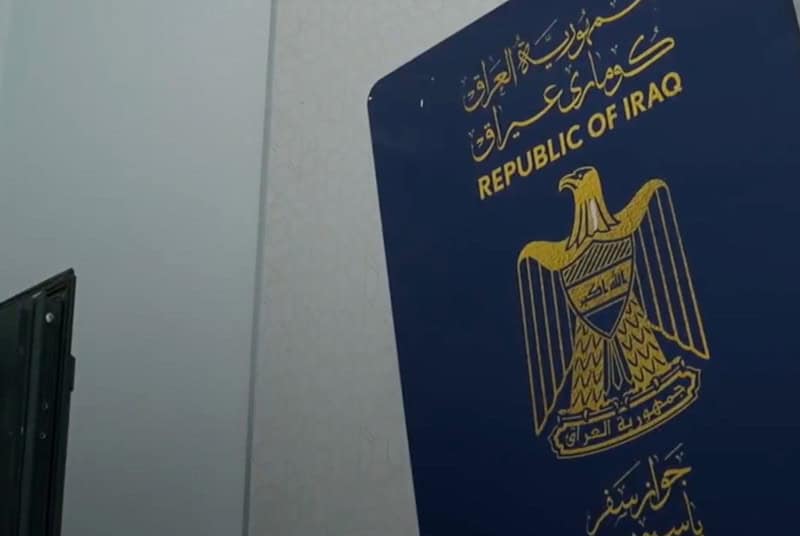
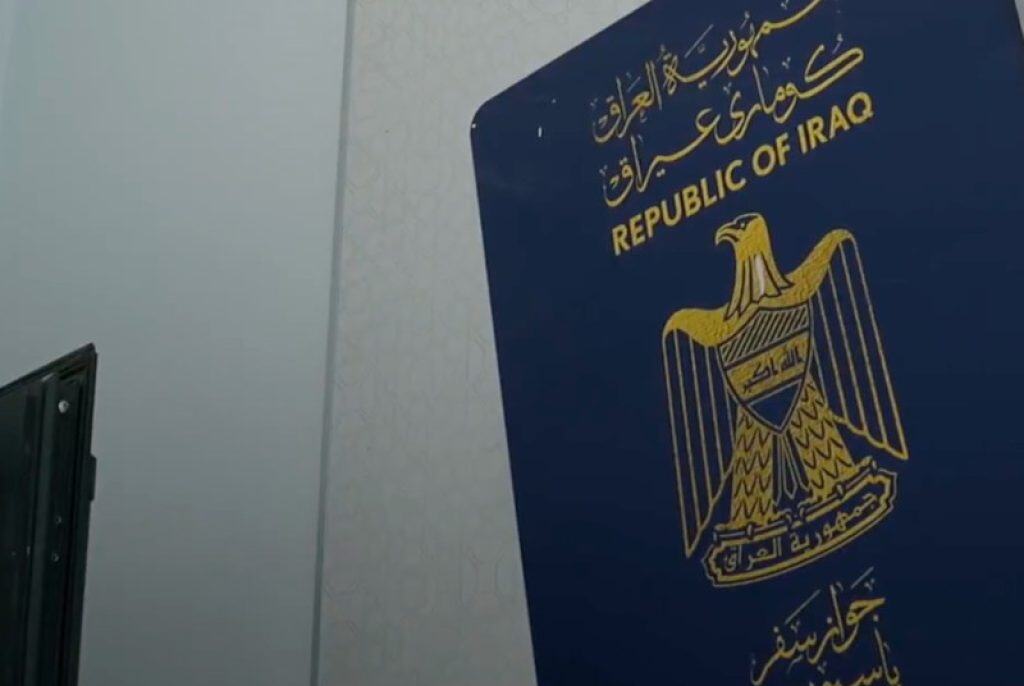
 A sign inside an Iraqi Interior Ministry building.
The Iranian-backed Iraqi militia Kataib Hezbollah has said it will not disarm in the wake of reports that suggest armed militias in Iraq will place their weapons under state control. “The Iraqi group Kataib Hezbollah (Hezbollah Brigades) on Saturday rejected calls to disarm, linking any such move to the withdrawal of US forces and other foreign troops from Iraq,” Iraq’s Shafaq News reported on December 20. The focus on disarming Iranian-backed militias in Iraq comes as Iraq seeks to choose a new prime minister after elections in November.
US Special Envoy to Iraq Mark Savaya lauded the possible disarmament of militias in a post on X on December 22. “The reported steps by Iraqi armed groups toward disarmament are a welcome and encouraging development.” Savaya added that disarmament must be “comprehensive, irreversible, and implemented through a clear and binding national framework.”
Kataib Hezbollah is the most prominent militia to reject disarmament. It is a US-designated terrorist group and one of the powerful militias within the Popular Mobilization Forces (PMF), a state-affiliated group of militias. The PMF was incorporated as an independent security force in Iraq in 2016. While members of these groups receive government salaries, some of the militias have continued to act outside of state control. For instance, they have been accused of carrying out drone attacks on US forces. Baghdad has made past attempts to rein in the militias, six of which have been sanctioned by the US as terrorist groups.
The move to get the militias to place their weapons under government control gained momentum after Faiq Zidan, the head of Iraq’s Supreme Judicial Council, made a statement about restricting weapons to state control. “The head of Iraq’s highest judicial body said Saturday that the leaders of armed factions have agreed to cooperate on the sensitive issue of the state’s monopoly on weapons,” London-based Asharq al Awsat newspaper noted on December 21. The report added that the militias Asaib Ahl al Haq, Harakat Ansar Allah al Awfiya, and Kataib Imam Ali appear to be willing to acquiesce to the demand to place their weapons under government control.
Shafaq’s December 20 report also said these three groups had supported the plan. However, Qais Khazali, the head of Asaib Ahl al Haq said, “We are now part of the state,” which may indicate that the group’s leadership already believes its weapons are restricted to state control. In this context, it was unclear what change the disarmament would actually bring.
The reports that the militias may disarm or place their weapons under government control have received significant media coverage in the Middle East. When Hezbollah rejected the initiative, Al Ain News in the UAE analyzed the ramifications. “These positions are seen as part of a broader strategy by armed groups linked to Iran, based on retaining weapons as a tool of political and security influence, and using them to pressure national governments, rather than integrating into state processes and building institutions,” the Al Ain News report said.
The National, a state-owned daily newspaper in the UAE, reported that US Envoy Savaya and a US delegation were expected to visit Baghdad soon. “The comments underline growing confusion in Iraq over whether powerful Iran-backed militias are prepared to relinquish their arms, amid mounting US demands, internal political maneuvering and outright rejection by some armed groups,” The National noted.
The issue of disarmament has spurred debate in Iraq. “Falah al-Jazairi, a member of the Construction and Development (Imar wa Tanimia) coalition, led by Prime Minister Mohammed Shiaa al-Sudani, explicitly played down the issue,” the Qatari New Arab reported. Jazairi was quoted as saying that the subject “should not be exaggerated.” The same report said there was progress on confining weapons to state control, but there were unresolved issues, such as demands by some militias for the withdrawal of anti-Islamic State coalition forces from Iraq. The Iraqi news website Al Jeebal reported on December 22 that the powerful Shiite Coordination Framework political bloc, which contains a number of Shiite groups, supported the decision to restrict weapons to the state.
Iraqi political analyst Hussein Kinani told Baghdad Today News that if the militias disarm, new armed groups could emerge, effectively rendering the move irrelevant. The Iraqi website Hatha al Youm reported on December 21 that Kataib Hezbollah and another militia, Harakat Hezbollah al Nujaba, possess long-range weapons, such as missiles. These “could be used in any potential confrontation with Israel or in other regional conflicts,” the report added, explaining why these militias want to hold onto their weapons.