
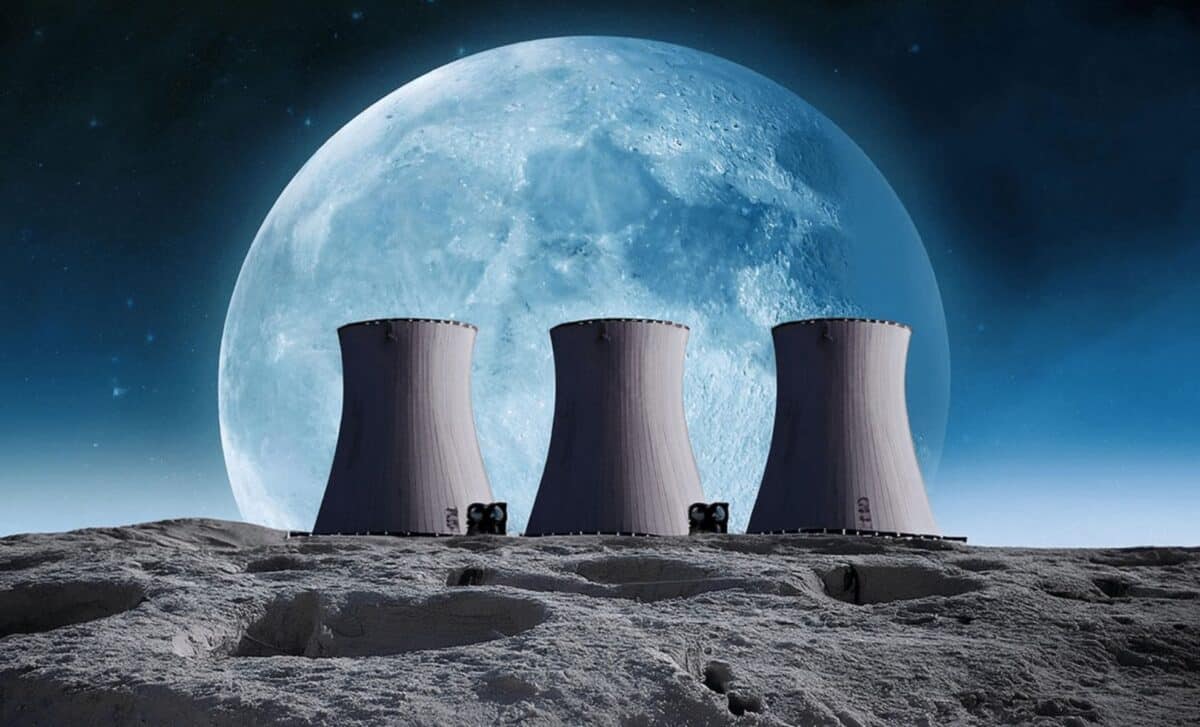
Russia is taking a bold step towards the future of lunar exploration, with plans to establish a nuclear power plant on the Moon within the next decade. The ambitious project, announced by Roscosmos, Russia’s space agency, aims to provide sustainable energy to power its lunar program, including rovers, observatories, and other key infrastructure. This move, reported by Reuters on December 24, 2025, underscores Russia’s commitment to playing a central role in the evolving space race, alongside international collaborations.
The nuclear plant is expected to overcome the significant limitations of solar energy on the Moon, where long nights and extreme environmental conditions make reliance on solar power impractical. The project also aligns with Russia’s broader strategy of deepening its cooperation with China on space exploration.
Roscosmos’ Vision for Lunar Energy
According to Reuters, the planned nuclear power plant, set to be completed by 2036, will be pivotal in fueling Russia’s expanding lunar program. The plant is designed to provide energy to various robotic systems, including rovers, which are essential for exploring the Moon’s surface, and scientific instruments such as an observatory.
Also, the power plant will be integral to supporting infrastructure such as communication networks and data transmission systems. These systems are vital to ensure long-term sustainability and success on the Moon. The Russian space agency has indicated that the plant will be developed in collaboration with several scientific and industrial organizations, including Lavochkin, a prominent aerospace manufacturer.
“The project is an important step towards the creation of a permanently functioning scientific lunar station and the transition from one-time missions to a long-term lunar exploration program,” Roscosmos said.
It also confirmed that the plant’s energy output would be used to power not only Russia’s missions, but also its ongoing partnership with China in establishing the International Lunar Research Station (ILRS).
“We’re in a race to the moon, in a race with China to the moon. And to have a base on the moon, we need energy,” remarked U.S. Transport Secretary Sean Duffy.
The Struggles of Tapping Into Lunar Power
While the idea of a nuclear power plant on the Moon may seem futuristic, it is driven by the practical challenges of sustaining a human or robotic presence in the harsh lunar environment. The Moon’s surface experiences extreme temperatures and prolonged periods of darkness, which make solar power unreliable for continuous operations.
The proposed nuclear plant, by contrast, would provide a stable energy supply capable of functioning around the clock, regardless of the lunar day-night cycle. The technology behind the plant will likely involve small modular reactors (SMRs), which are considered ideal for such missions due to their compact size, safety features, and efficiency.
These reactors have been under development in Russia for various applications, including space missions. However, the plant’s construction will require overcoming significant engineering and logistical hurdles, such as launching the necessary materials and assembling the infrastructure on the Moon.
Russia says it plans to build a nuclear power plant on the Moon by around 2036 to support its lunar programme and a joint research base with China, according to Roscosmos.
The plant would power rovers, scientific equipment, and long-term infrastructure, marking a shift from… pic.twitter.com/70UpE4iUzR
— Clash Report (@clashreport) December 24, 2025