
From drones to defiance: Jack Hill’s pictures of the year
, The Times
I was asked recently who the most interesting person I’ve photographed was. It’s a good opener and an impossible question. I thought of an evening 25 years ago with Don King and Frank Warren, six frames left, a dying flash. This year, though, it was wounded Ukrainian veterans who stayed with me. I can’t pretend to grasp what it means to be sent to the front and return with life-changing injuries, but thanks to Doctors for Heroes we met soldiers putting their bodies and lives back together as best they could. What struck me was the good humour and grace with which they approached those challenges. Not everyone will feel that way, of course, but the people I met did, and it was humbling.
There were four assignments to Ukraine this year. Each time felt more dystopian, with increasingly sophisticated drones over markets and highways draped in anti-drone netting and people knowing their drills and slipping into hedges as the distinctive whine passed overhead. In some areas this is the daily rhythm of life: sirens and the constant calculation: incoming or outgoing?
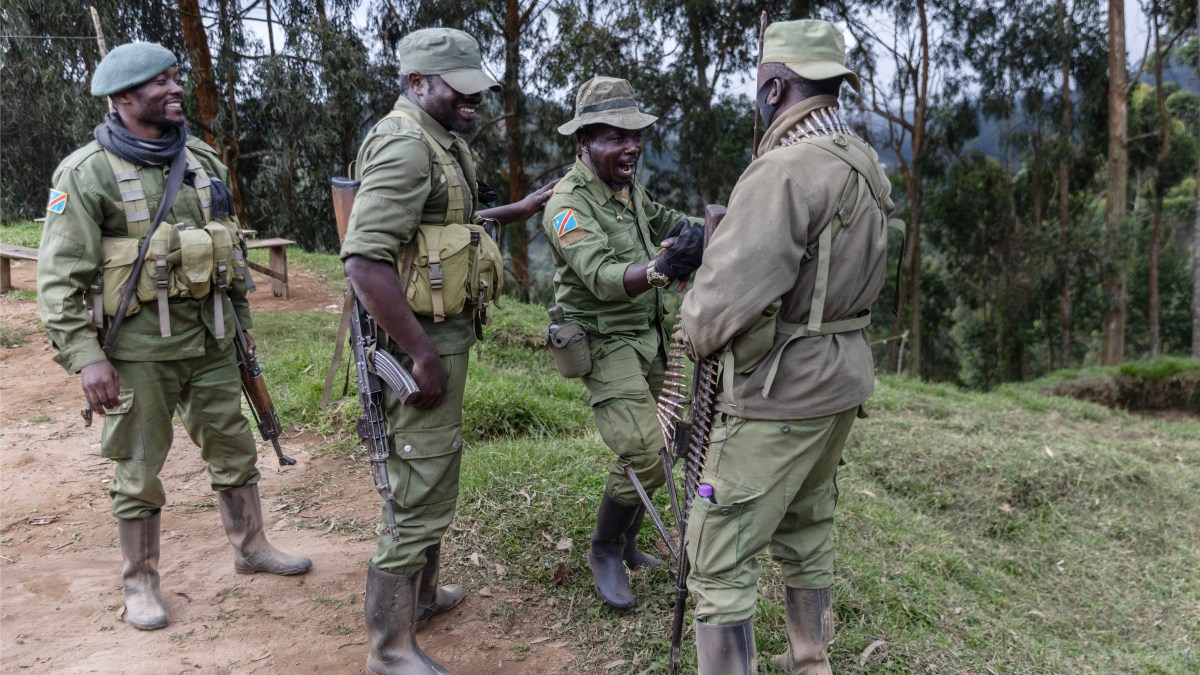
The rangers of Virunga National Park are impressive in a different way. It is not a benign job. More than 200 have been killed over the past century protecting the park and its wildlife, notably the endangered mountain gorillas. One of my most memorable days was hiking Mount Tsiaberimu to reach the Katsubara family group of lowland gorillas moved higher for safety.
In the same country, but across the line, we spent a week in rebel-controlled Goma. I watched a recruitment rally for M23 rebels end, after hours of speeches, with a call for volunteers. Silence, until a large man waded into the crowd and returned with one.
Closer to home I was on the north French coast, trying to understand the mechanics of Channel crossings. I was also fortunate to be granted a rare journalist visa for Iran, a country I had long wanted to visit. Such assignments only give you a glance into society, but it was fascinating: subtle changes were notable with pre-Islamic Persian figures such as Cyrus and Shapur reappearing and many women simply choosing not to wear the hijab.
Putting this edit together reminded me how fortunate I am to be sent to these places. In an era when our visual understanding is increasingly shaped by algorithms, the work can be painful, occasionally dangerous, sometimes uplifting and always worthwhile.
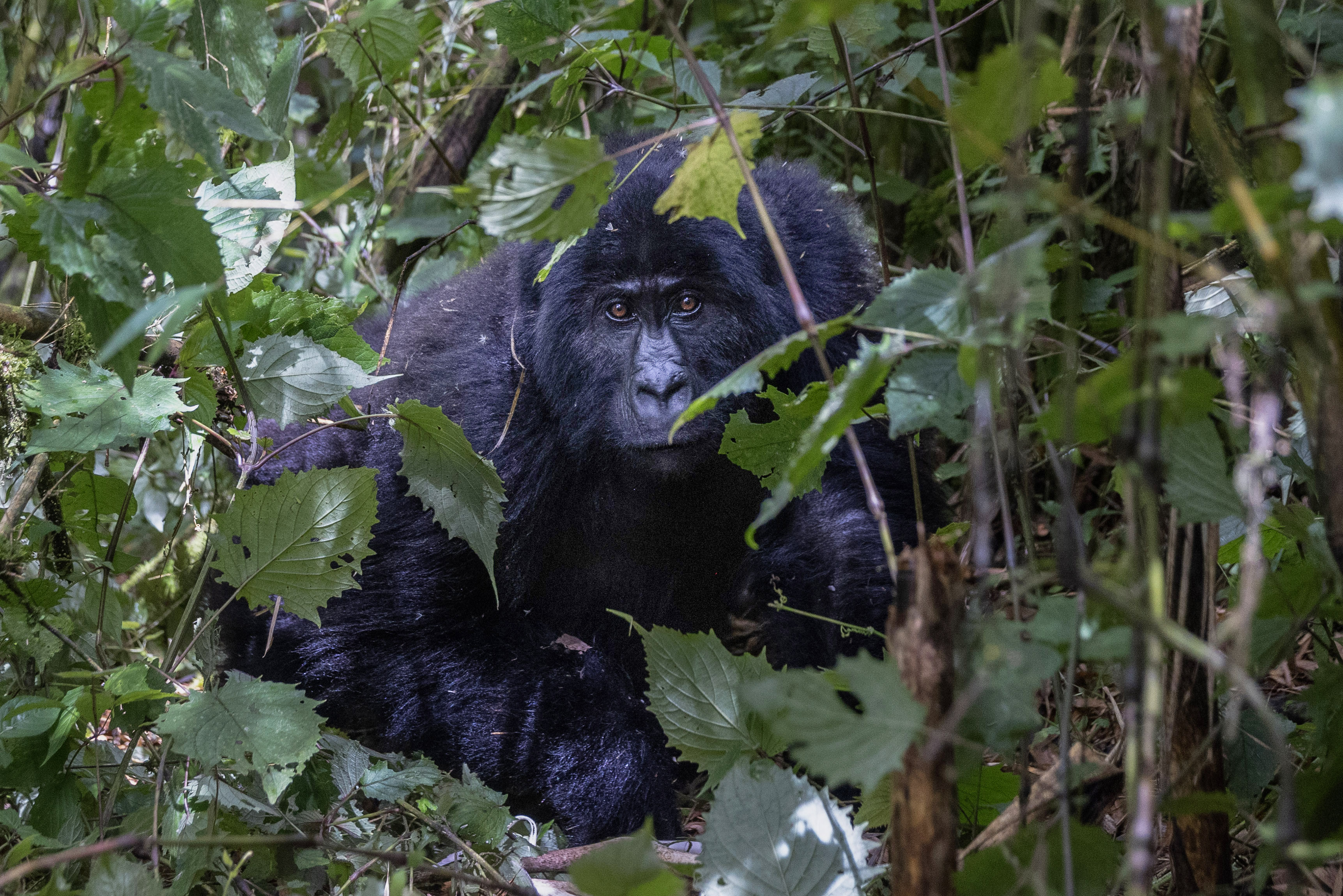
April 21: The Katsabara group of Grauer’s gorillas (eastern lowland gorillas) on Mt Tsiaberimu. The group consists of the male named Katsabara, “crazy one”, the female Mukokya, pictured here, and a juvenile. They were moved higher up the mountain for protection
TIMES PHOTOGRAPHER JACK HILL
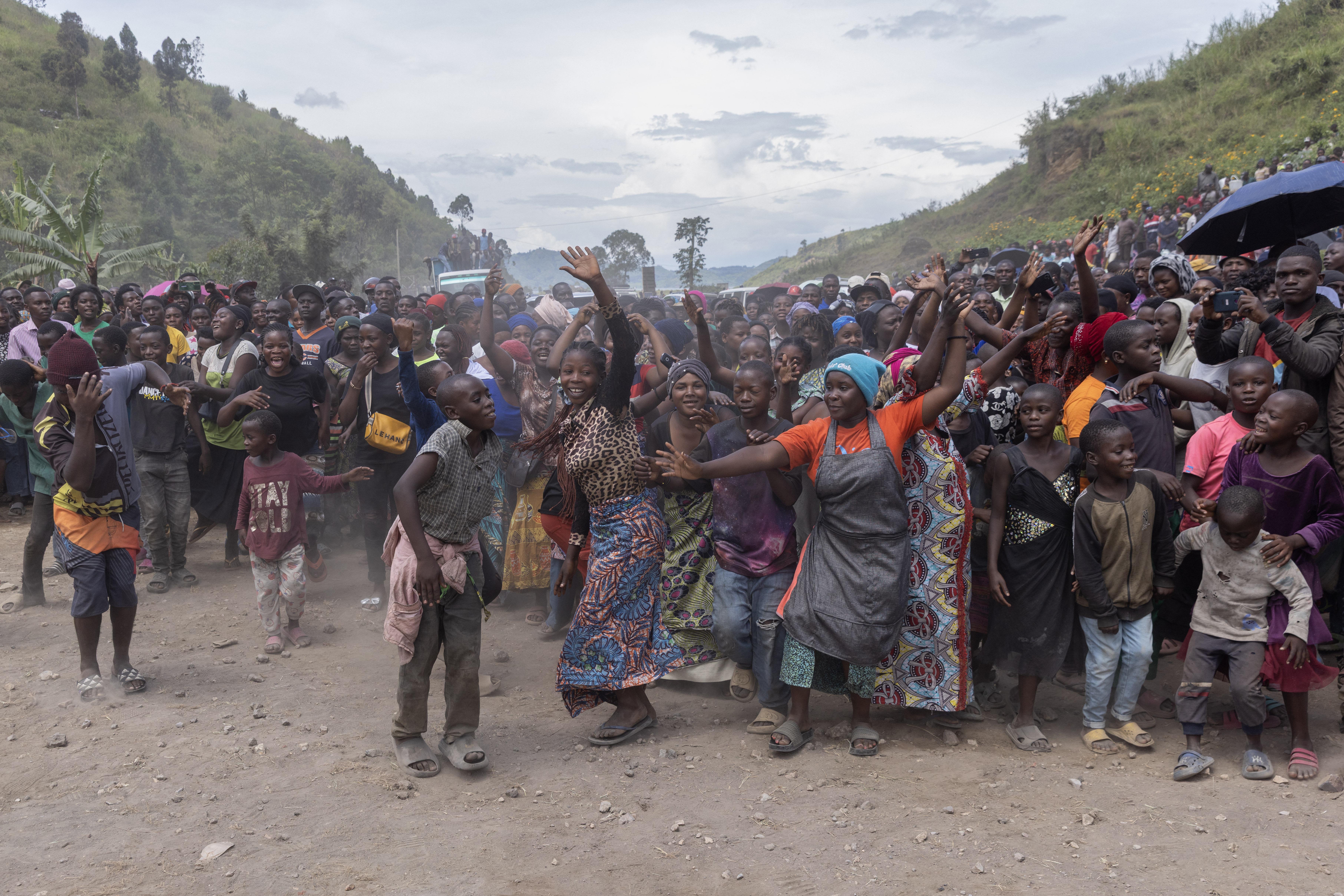
A crowd erupts into spontaneous dancing at the end of an event in Sake, near Goma, where a ceremony was held unveiling plans to improve the road to Rubaya, a mining area in North Kivu province seized from the government by M23 rebels
TIMES PHOTOGRAPHER JACK HILL

A wide-angle view of one of the mines in Rubaya, where minerals such as coltan and manganese are extracted
TIMES PHOTOGRAPHER JACK HILL
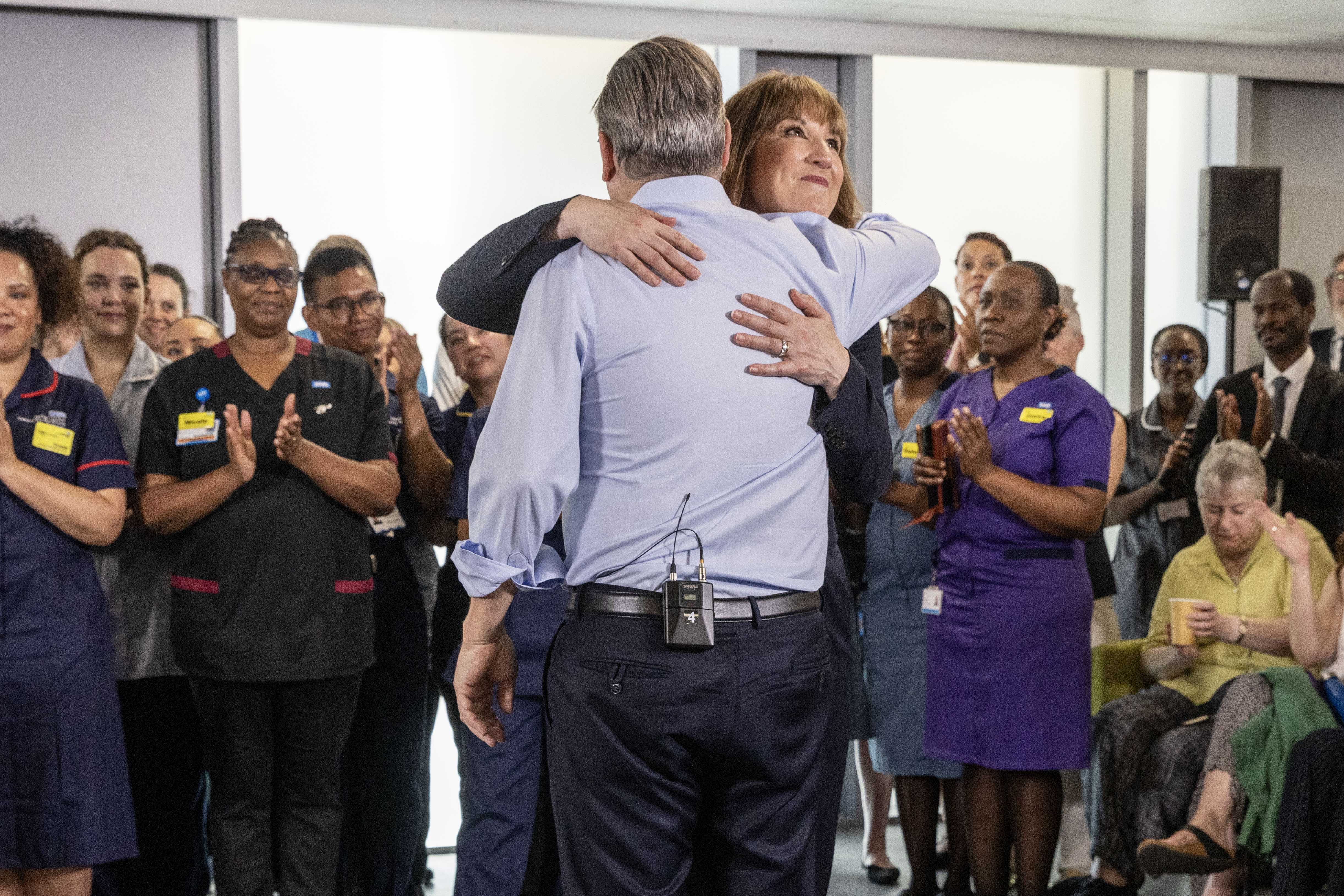
July 3: The prime minister and chancellor embrace at a health centre in east London. Rachel Reeves’s expression was telling at this hastily arranged appearance, held the day after she was seen crying in the Commons during PMQs
TIMES PHOTOGRAPHER JACK HILL
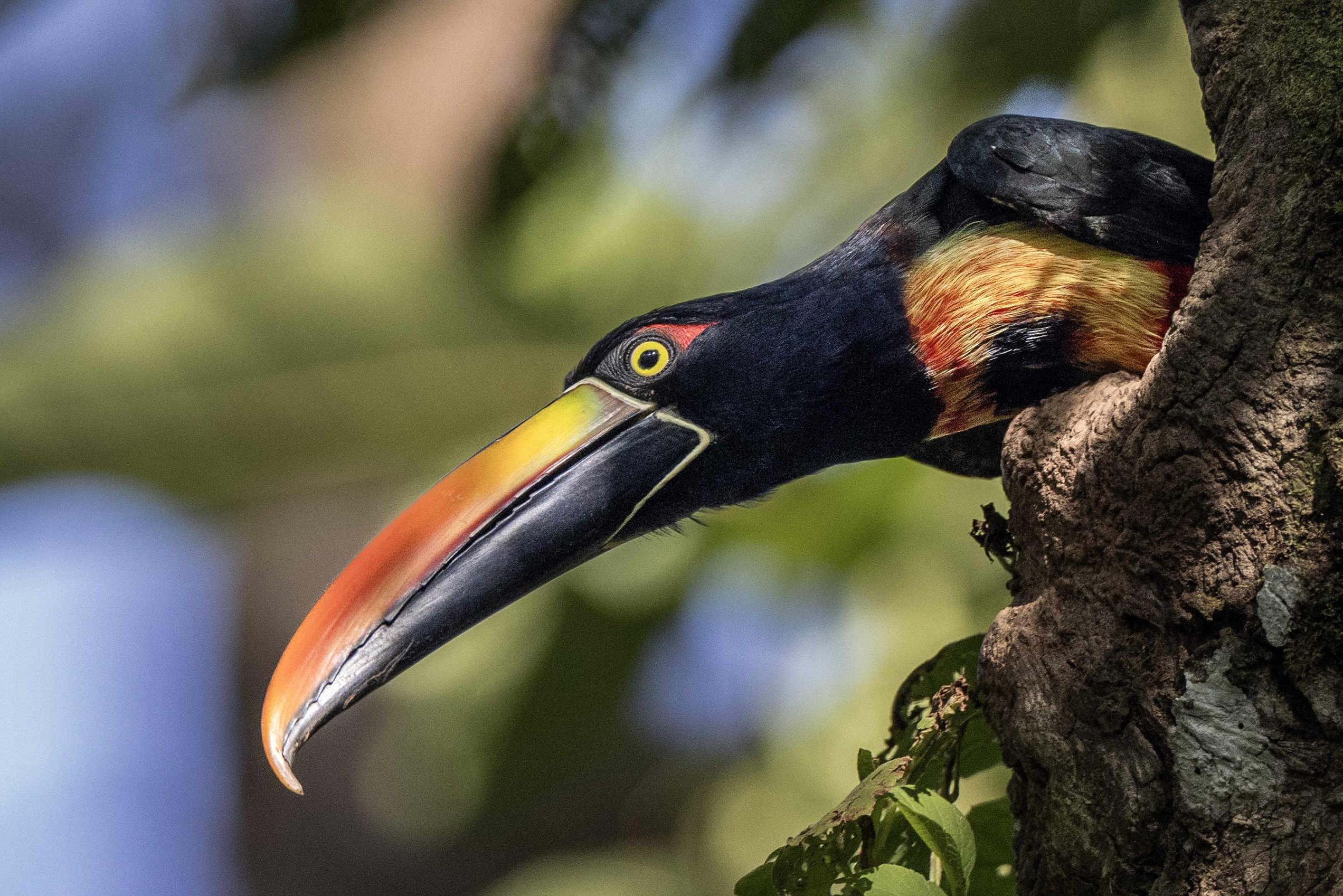
In September I travelled to Costa Rica for The Times’ Luxx travel section to write about birdwatching in this remarkable country with rich biodiversity. I was delighted to see and photograph the fiery-billed aracari
TIMES PHOTOGRAPHER JACK HILL

November 7: A concert was held in Enqelab Square in Tehran before the unveiling of a rock face relief depicting the third-century battle of Edessa, in which the Persian King Shapur triumphed over the Roman Emperor Valerian. A reflection on past glories that signals a shift in Iran’s attitude toward its pre-Islamic heritage
TIMES PHOTOGRAPHER JACK HILL
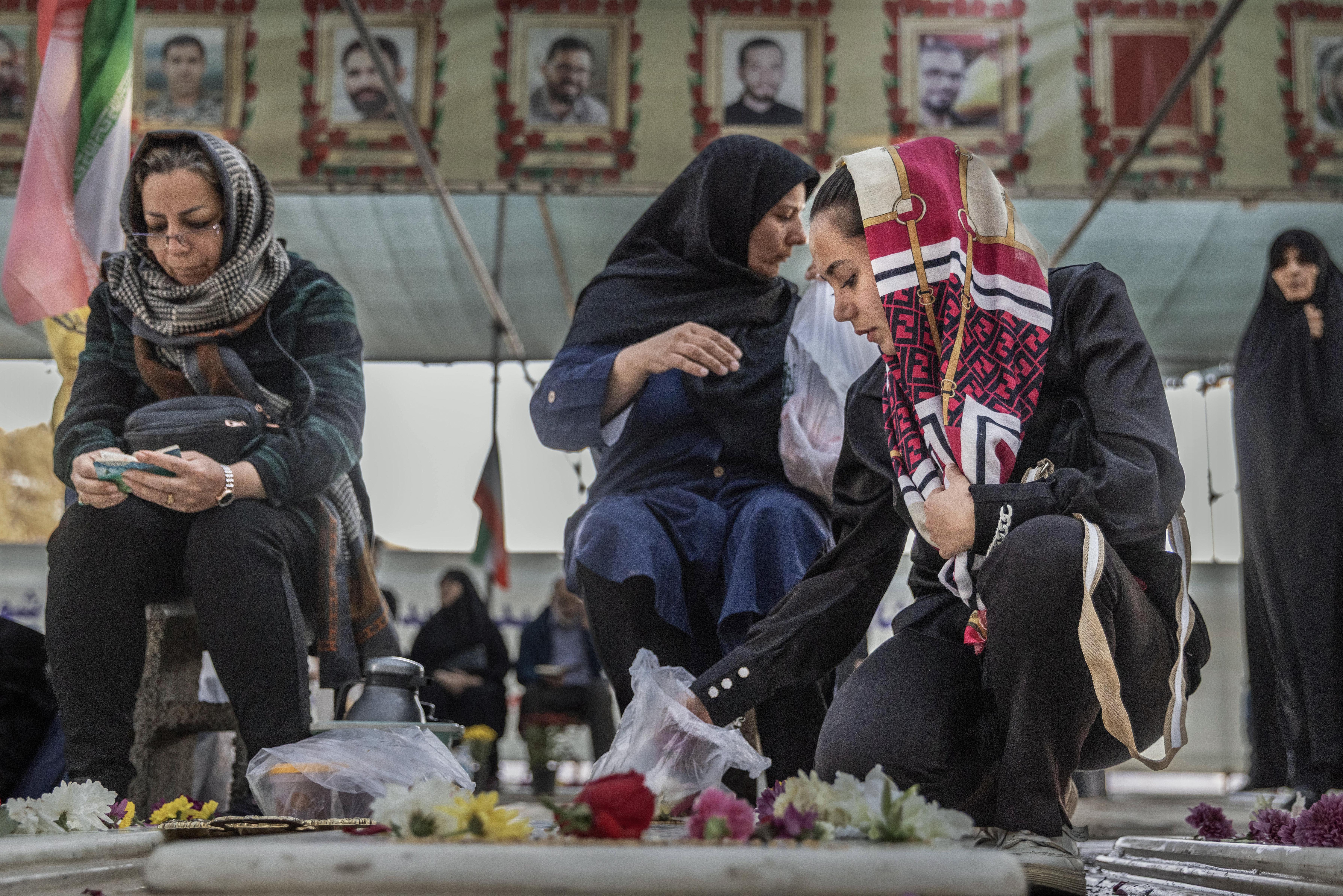
November 8: Mourners in the martyrs’ section of Behesht-e Zahra, the largest cemetery in Iran. This section is dedicated to soldiers and civilians who were killed in the recent military conflict with Israel
TIMES PHOTOGRAPHER JACK HILL
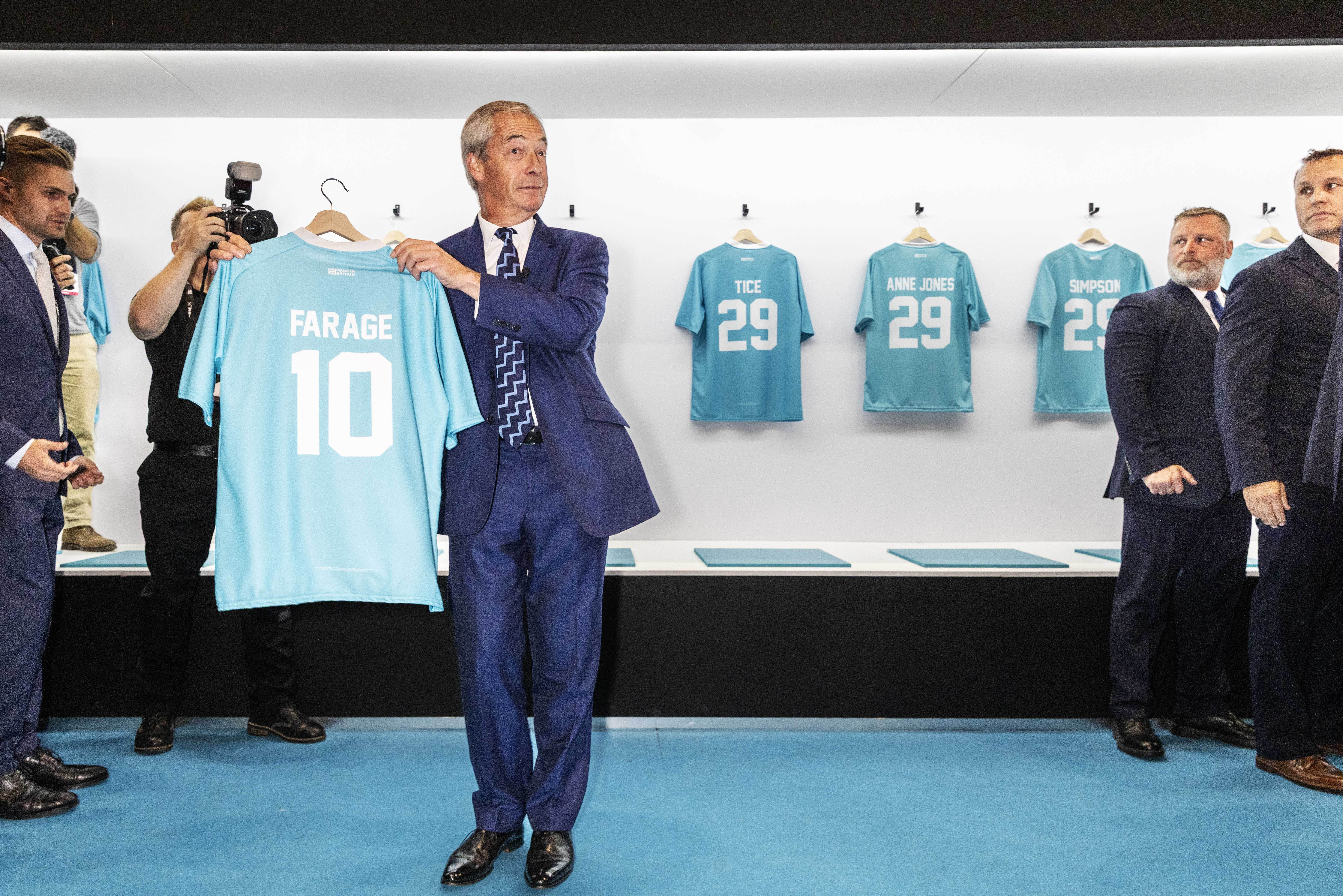
September 5: It seemed fitting to include a photograph of the Reform UK leader Nigel Farage, who claimed his party’s membership had overtaken Labour’s. This was taken as he unveiled his first eleven (bagging number ten for himself) during a party conference in Birmingham
TIMES PHOTOGRAPHER JACK HILL
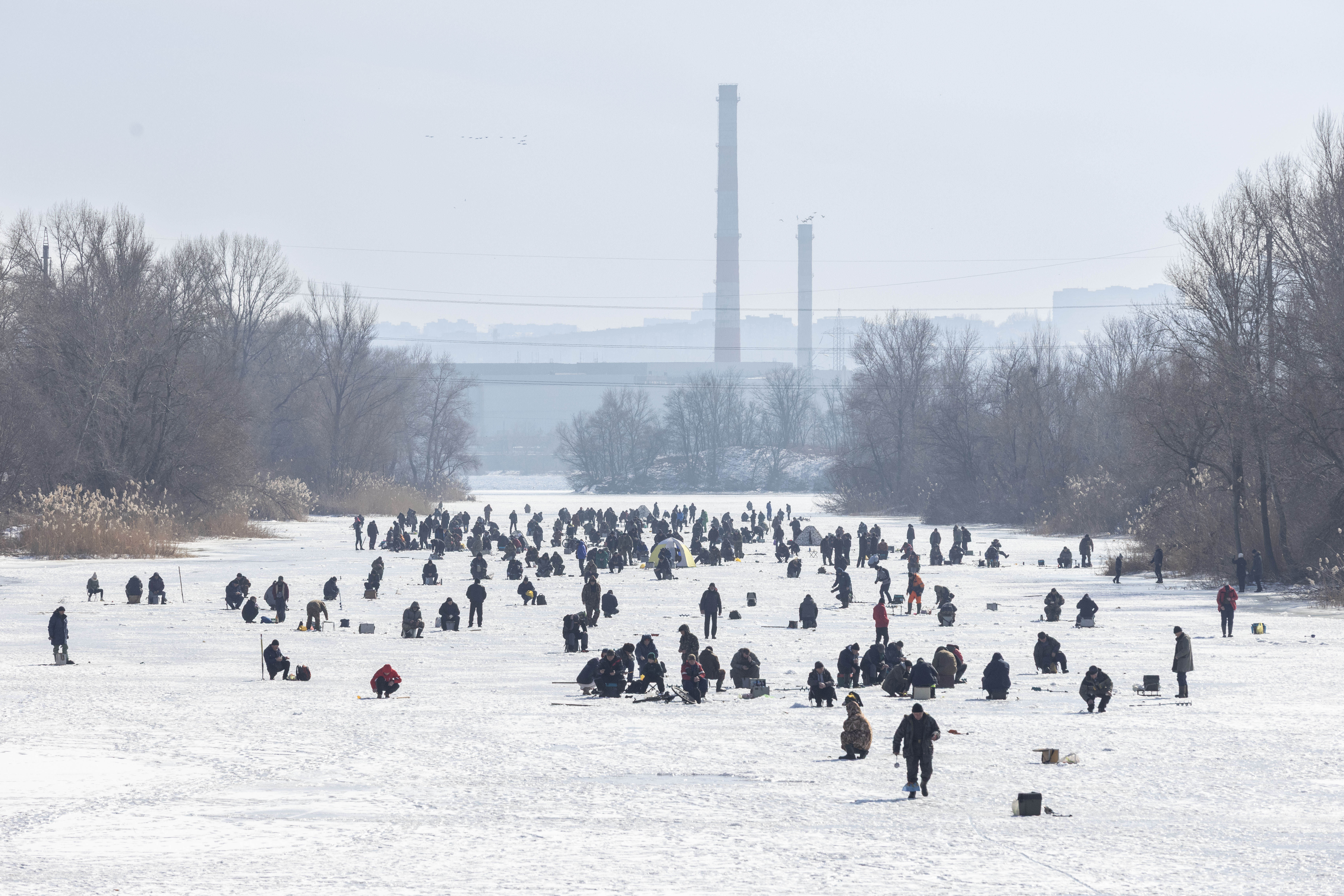
Homage to Lowry, March 1. “Penguins” ice fishing on a cut of the Dnieper river on the outskirts of Dnipro in eastern Ukraine. They congregate here as the frozen river begins to thaw with the temperatures rising at the beginning of March
TIMES PHOTOGRAPHER JACK HILL

November 26: Anti-drone netting protects a mother and child in Kherson. It was one of the first cities to be liberated, but residents are under frequent drone and artillery fire from Russian positions across the Dnieper river
TIMES PHOTOGRAPHER JACK HILL
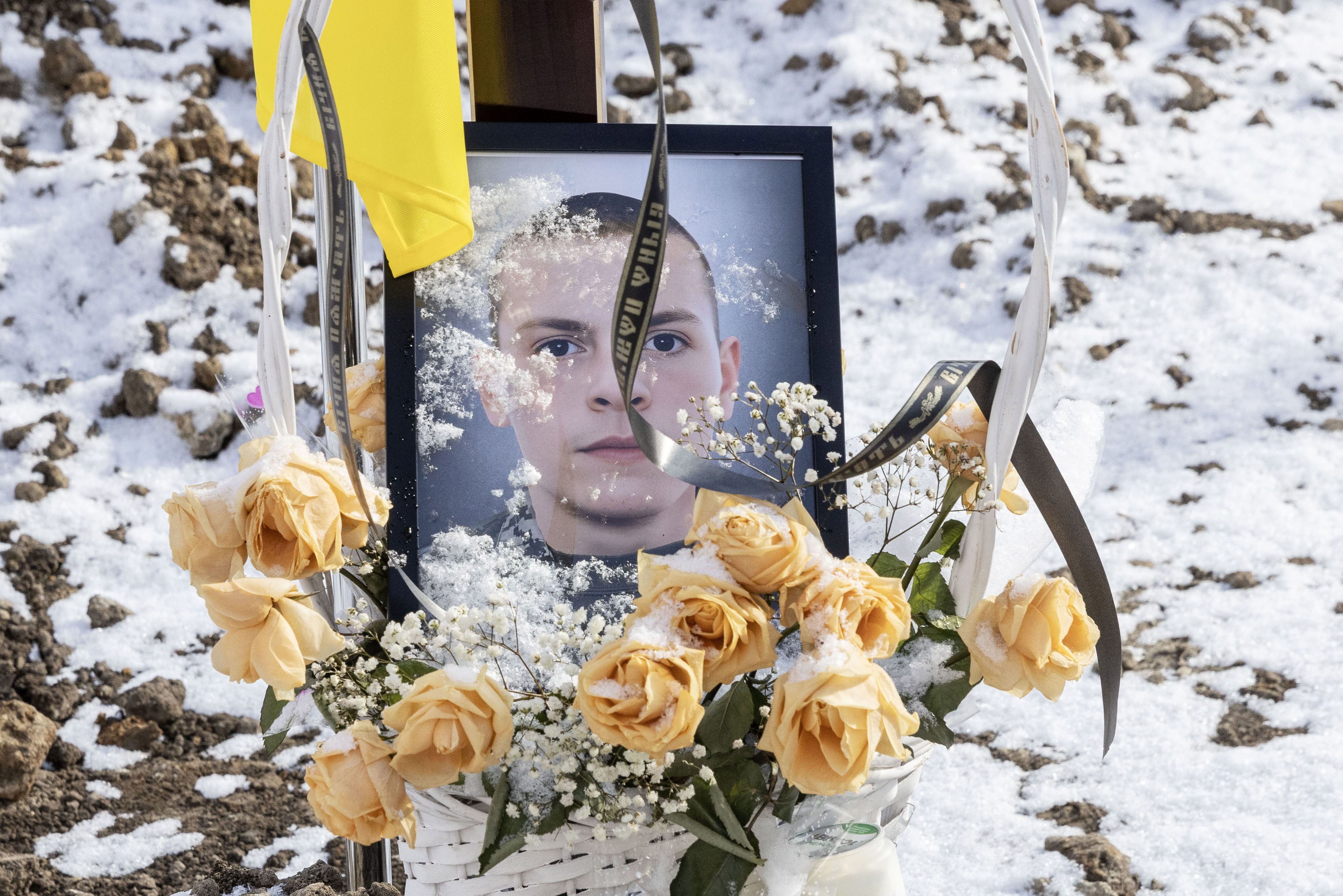
February 20: It is moving to see the faces of the fallen in the cemeteries and Avenues of Heroes across Ukraine, a cross-section of ages and lives that reflect the scale of sacrifice. Many were not soldiers by profession but teachers, artists, IT specialists, carpenters and sons and brothers, like this boy who looked so young. This was taken in the military section of Lviv cemetery
TIMES PHOTOGRAPHER JACK HILL
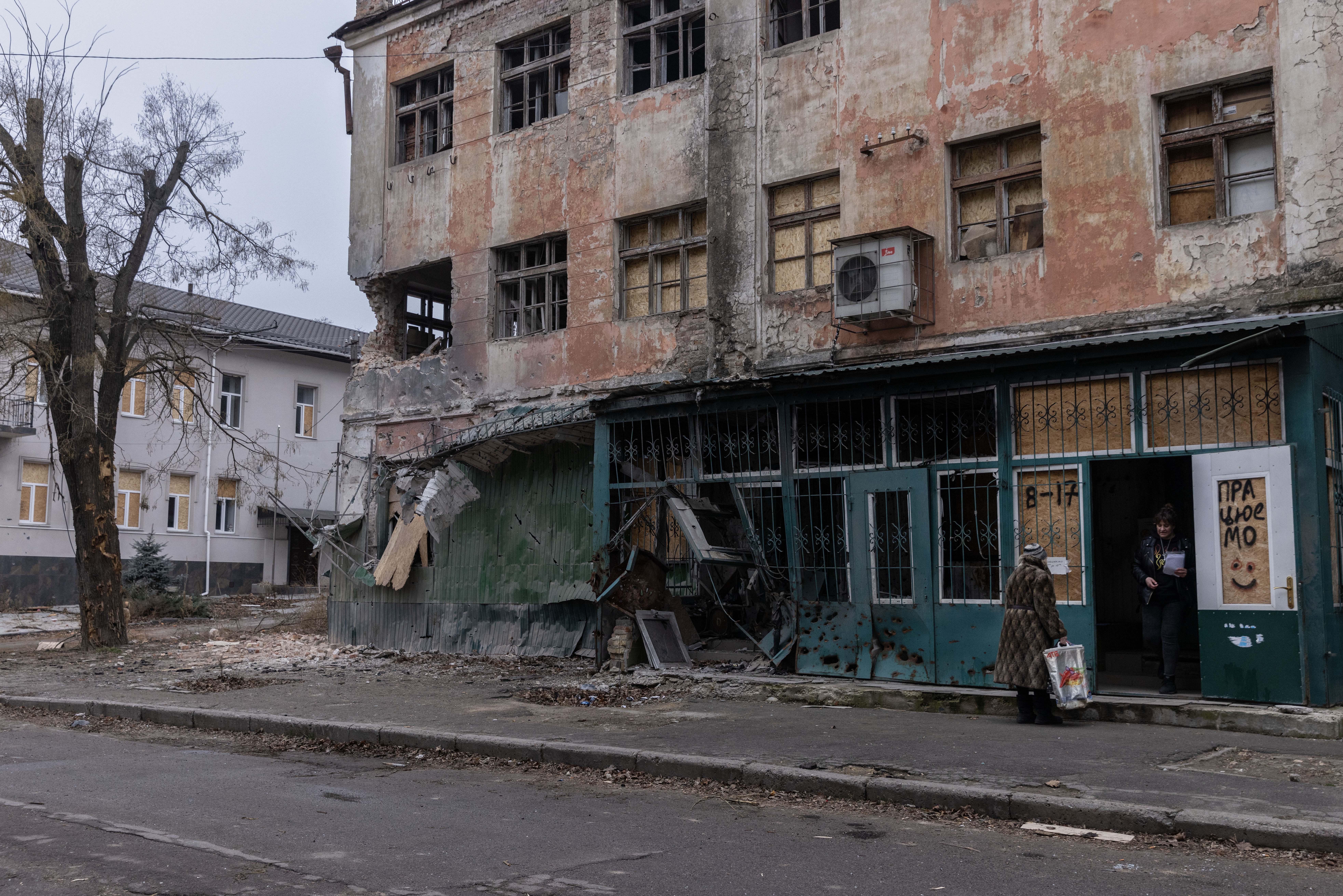
In January we reported on Russian drone attacks on civilians in Kherson. Here, in a street near the dividing line of the Dniper river, drones were seen and heard overhead. Despite the danger, this shop remained open to serve the few residents remaining in that part of the city
TIMES PHOTOGRAPHER JACK HILL
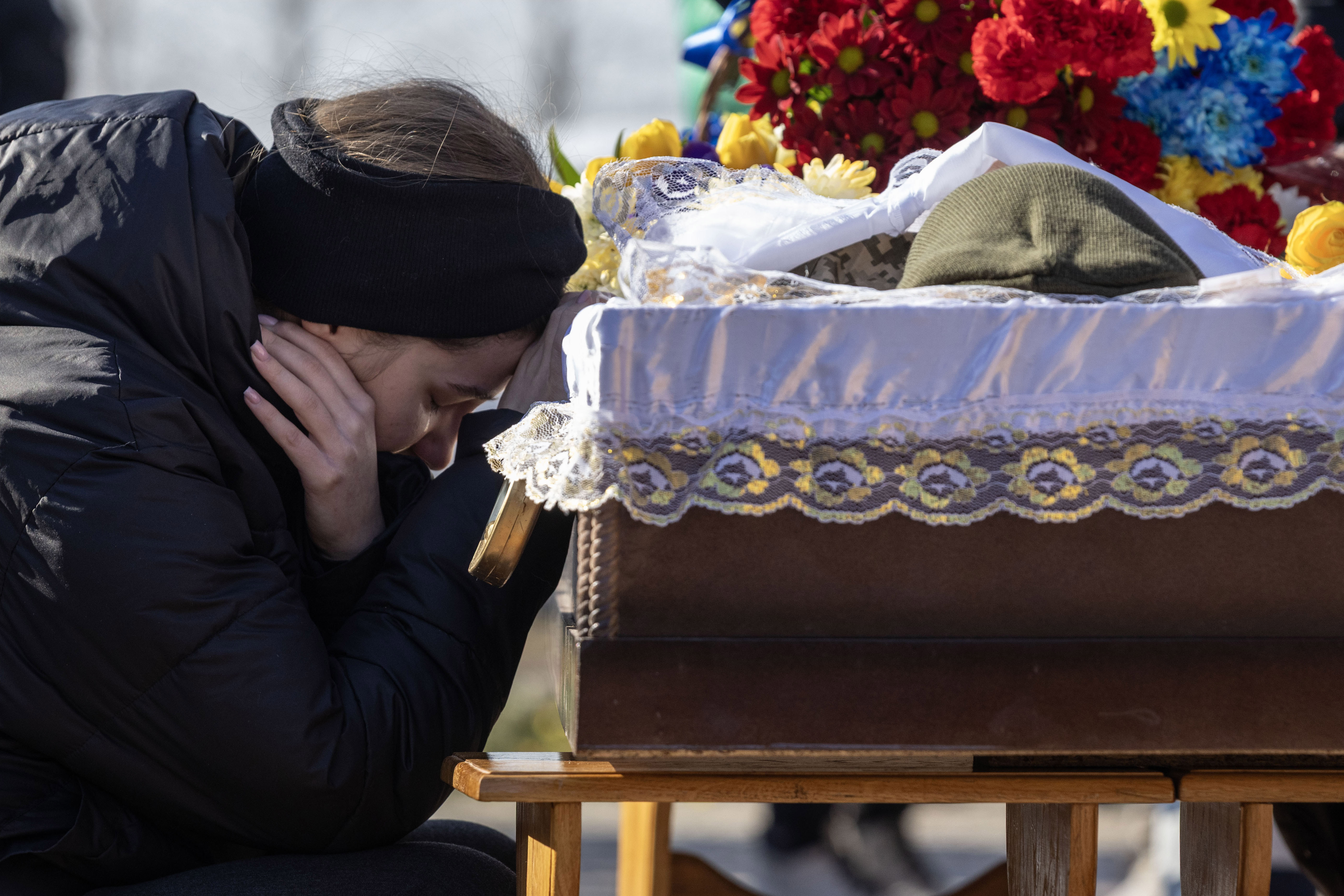
February 24: On the third anniversary of Russia’s full invasion, there was a double funeral for Volodymyr Semenyuk and his comrade in arms Serhiy Voytenko. They both volunteered in 2022 and were killed in the same glide bomb blast. Semenyuk’s daughter weeps as his coffin is laid in front of the family home in Fastiv, near Kyiv
TIMES PHOTOGRAPHER JACK HILL
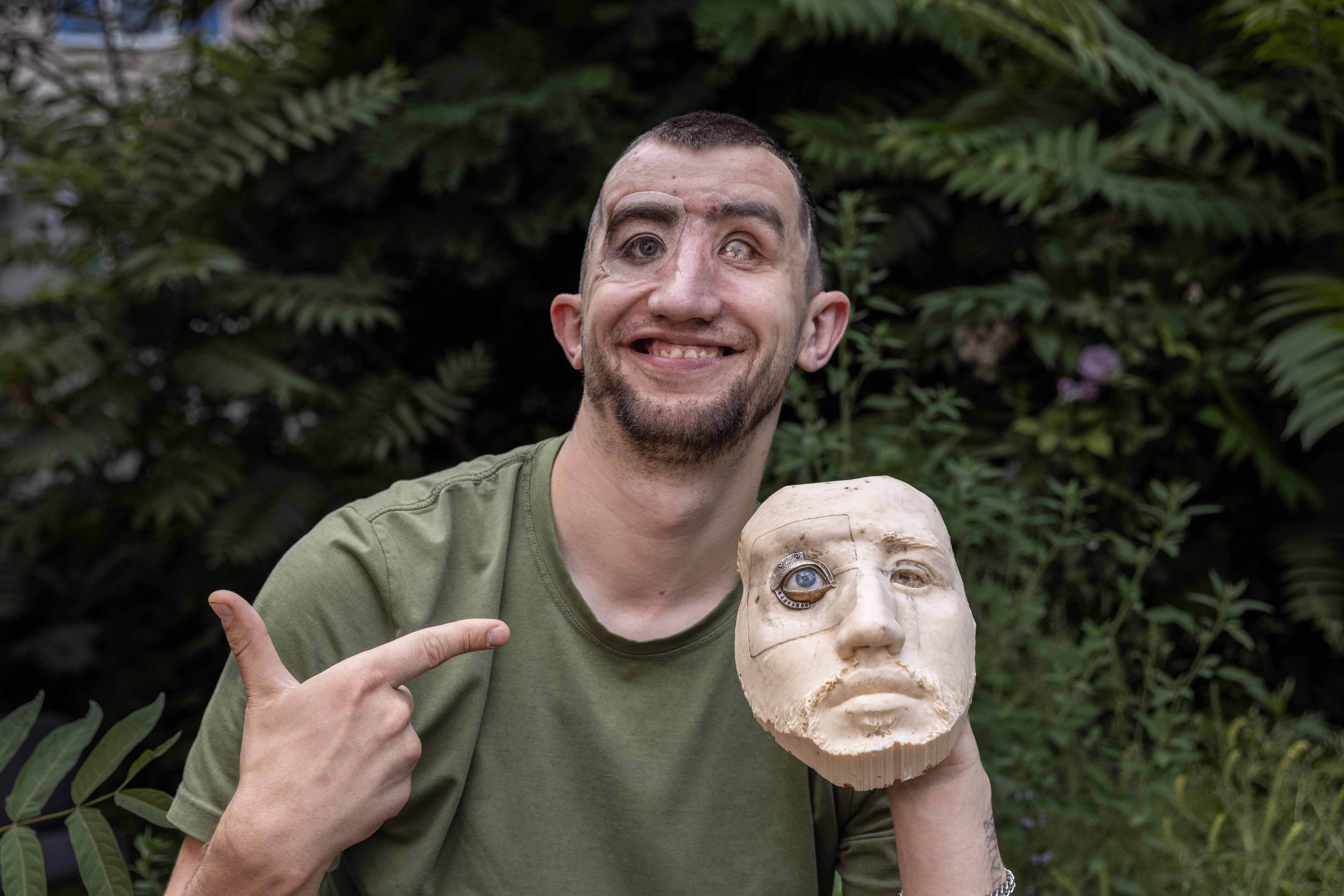
As part of a series titled Faces of War, I photographed Ukrainian veterans who suffered life-changing injuries in combat. Andrii Onopriienko, of the 110th Mechanised Brigade, was wounded in Avdiivka when a Russian anti-tank missile hit his bunker. He has since had ten operations, including the fitting of a titanium plate to his forehead and a mesh to reconstruct the right side of his face. His right eye is now a prosthetic held in place by magnets; his left is in the process of being fitted. His spirit and humour were remarkable
TIMES PHOTOGRAPHER JACK HILL
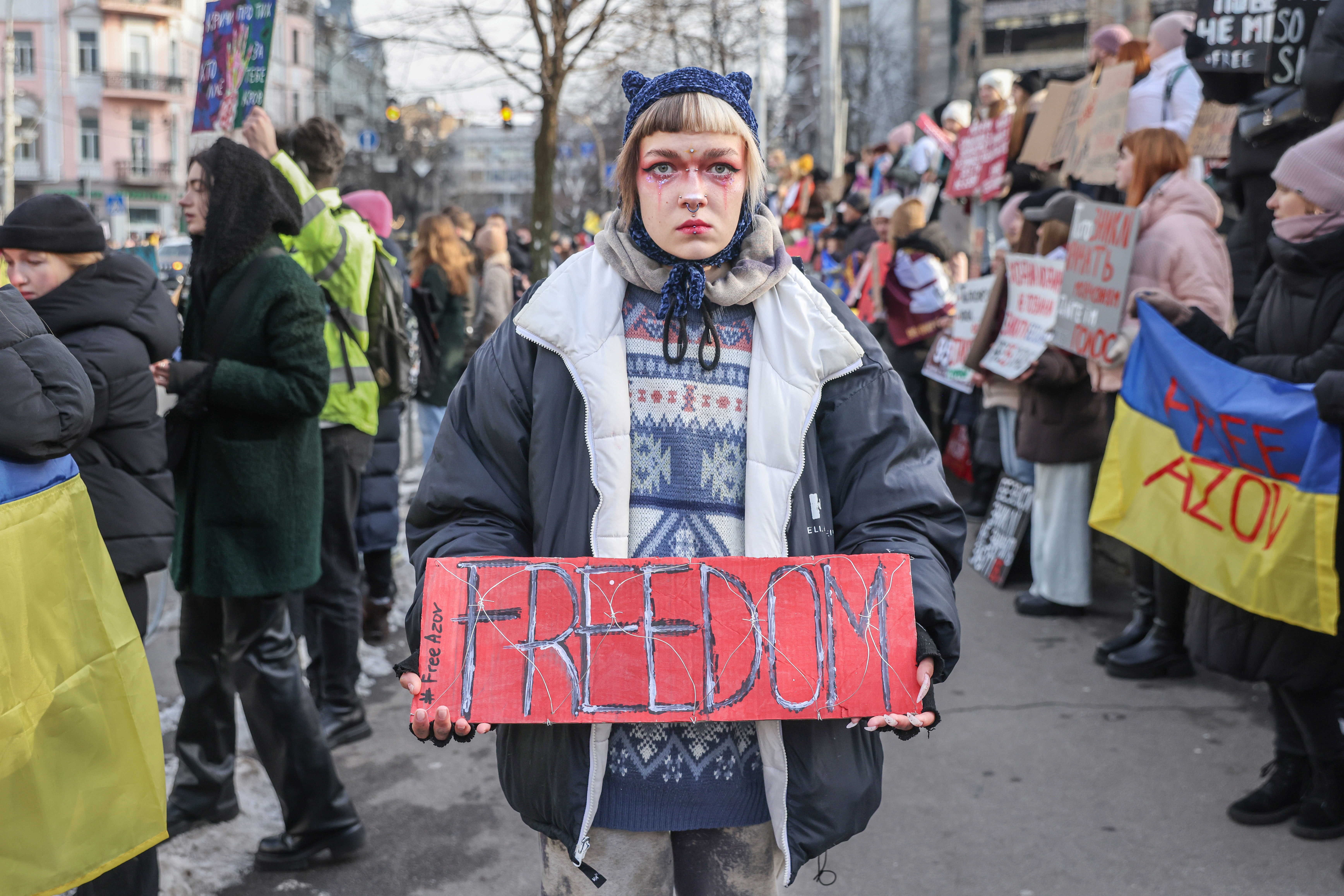
January 12: A woman holds a placard at a rally in Kyiv in support of Ukrainian prisoners of war. Regular demonstrations continue in the capital and other cities, calling for the release of the captured defenders of Mariupol and other PoWs held by Russia
TIMES PHOTOGRAPHER JACK HILL
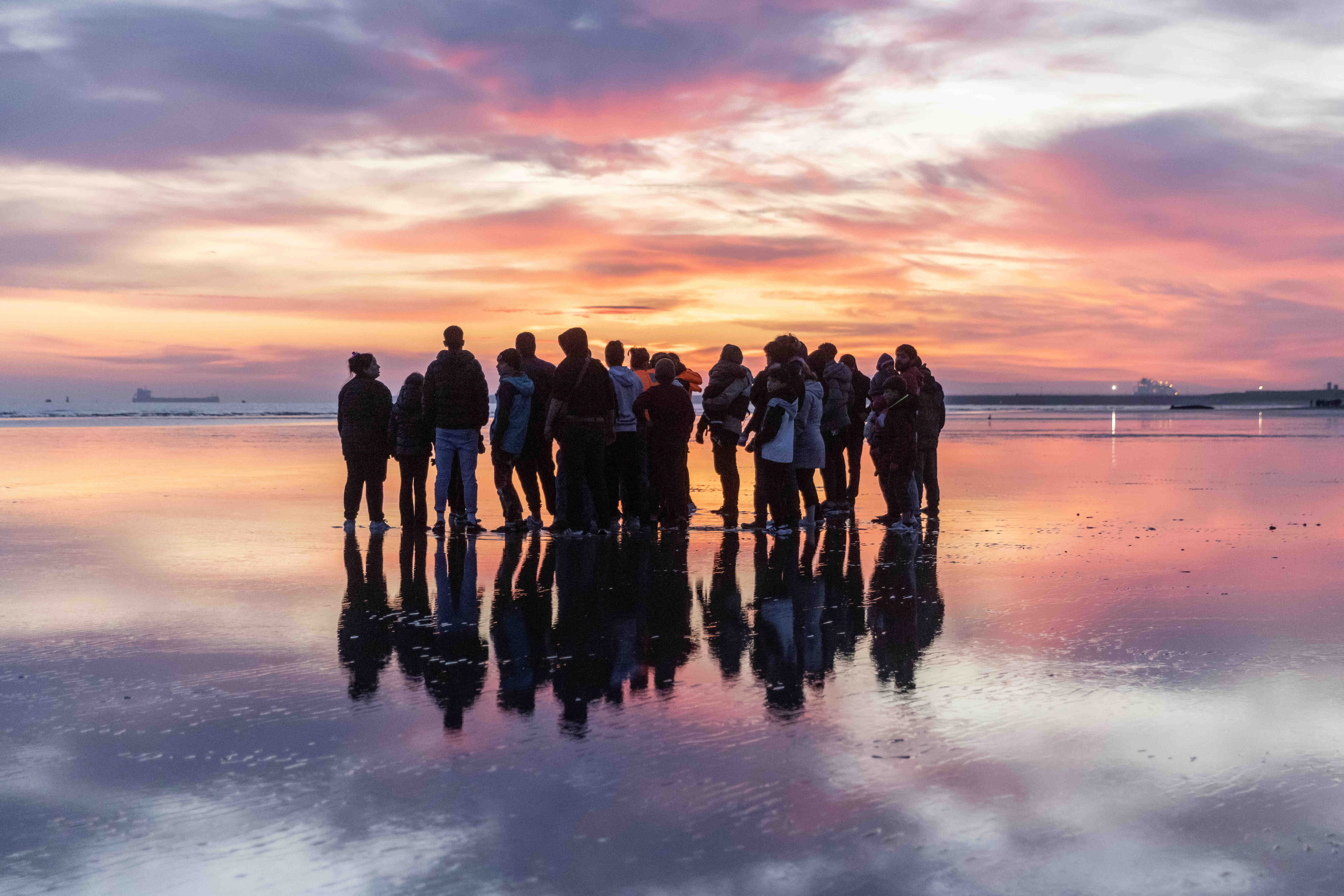
May 31: As dawn broke on a beach west of Dunkirk, migrants moved into position to prepare for the arrival of a “taxi” boat to take them across the Channel
TIMES PHOTOGRAPHER JACK HILL
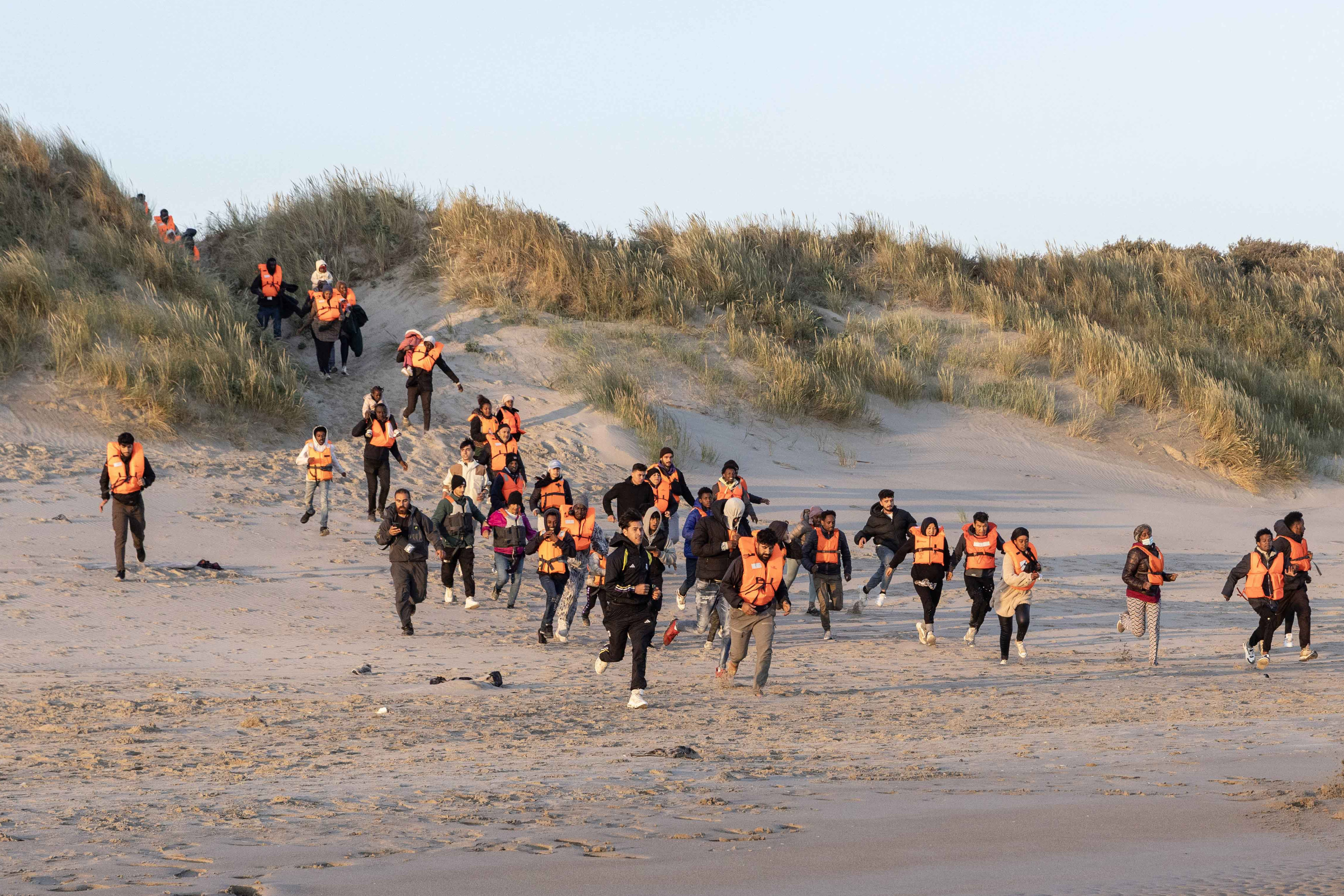
June 16: On another morning migrants remained partially hidden in the dunes. After a cat and mouse game with police, a boat snuck into one end of the 3km beach and the passengers ran towards it
TIMES PHOTOGRAPHER JACK HILL
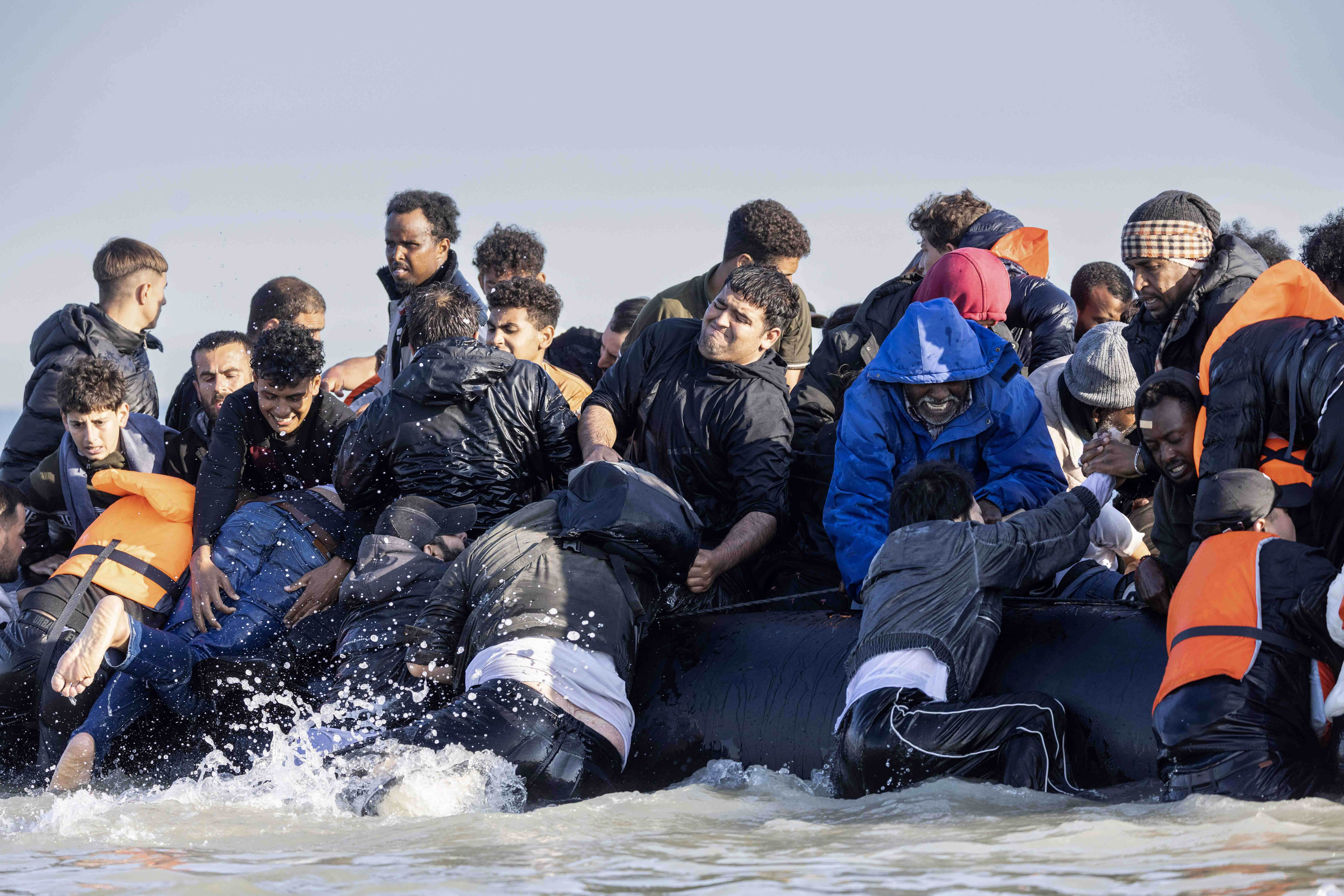
Once the boat arrives, there is a scramble as the passengers, some without life jackets, others unable to swim, are hoisted aboard
TIMES PHOTOGRAPHER JACK HILL
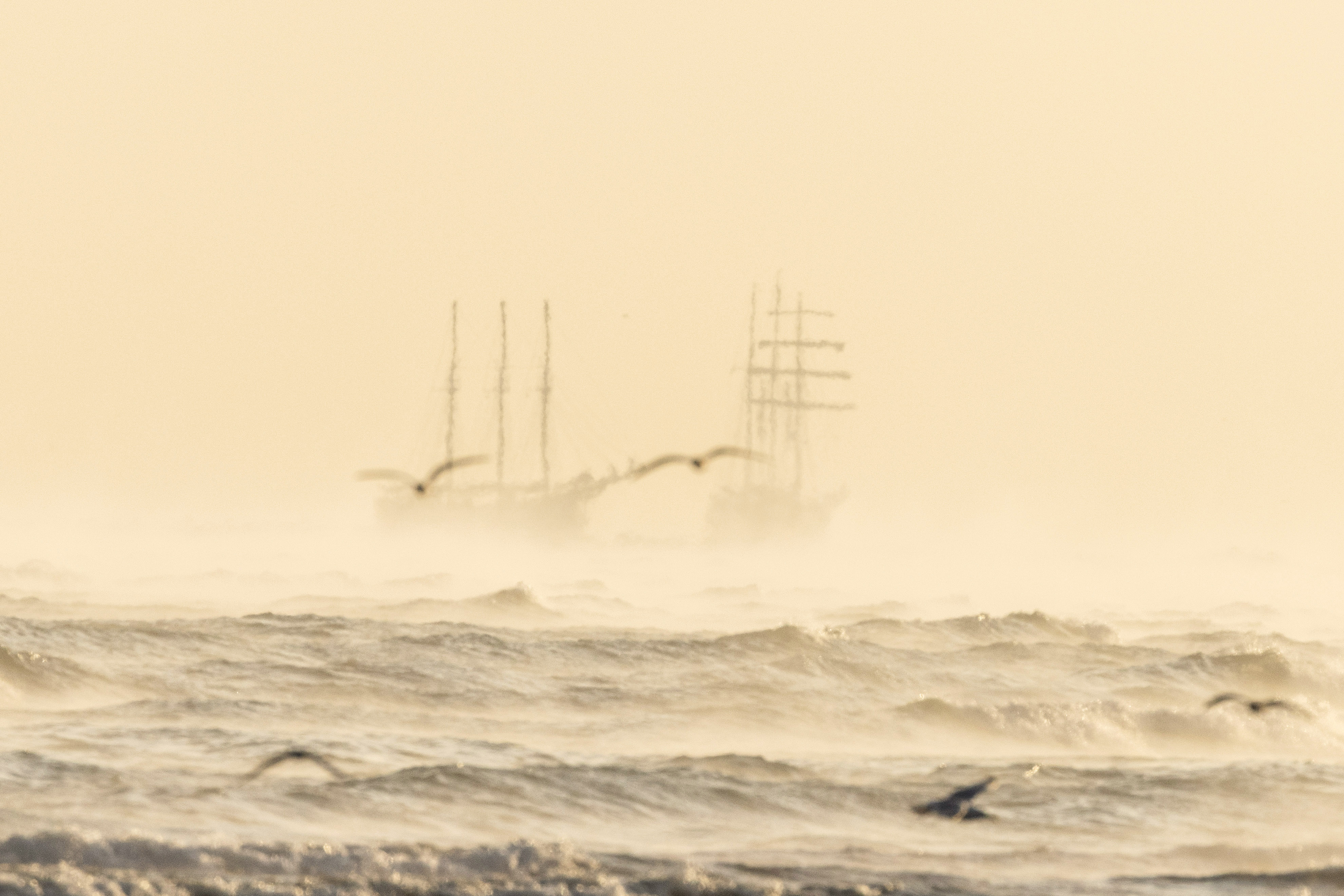
Working on one project does not preclude keeping eyes open for something else. Waiting in vain for a migrant crossing, I turned my camera seaward and photographed tall ships
TIMES PHOTOGRAPHER JACK HILL
For more pictures from The Times follow us on Instagram