
This month marks one full year since Dr. Hussam Idris Abu Safiya, a pediatrician and neonatologist, was detained by Israeli forces while directing medical care at Kamal Adwan Hospital in northern Gaza. One year without formal charges. One year without trial. One year in which credible human rights organizations have documented his mistreatment, physical abuse, and denial of adequate medical care.
One year is not an administrative delay. One year is a policy choice.
In international law, prolonged detention without charge, especially of a civilian medical professional, crosses from temporary security measures into arbitrary detention. When coupled with credible allegations of torture and cruel, inhuman, or degrading treatment, it becomes a matter of grave legal concern, not only for the detaining power, but for allied governments that continue diplomatic, military, and financial support.
A Doctor Who Chose Humanity Over Flight
In December 2024, as Israeli military operations intensified in northern Gaza, one image came to symbolize the human cost of the war. A doctor in a white lab coat walked slowly through the ruins of Kamal Adwan Hospital, stepping over shattered concrete and twisted rebar, toward Israeli tanks stationed nearby. He was unarmed. He was not fleeing. He was responding.
That doctor was Dr. Hussam Abu Safiya, director of Kamal Adwan Hospital. While evacuation orders were issued and health infrastructure collapsed, he remained with his patients. He stayed with premature infants, children with traumatic injuries, and families trapped in an overwhelmed hospital with failing electricity, limited anesthesia, and dwindling supplies.
That walk was not symbolic theater. It was the culmination of weeks of refusing to abandon medical duty, even as personal loss mounted.
Arrested While Providing Protected Medical Care
Shortly after that moment, Israeli forces raided Kamal Adwan Hospital. Dr. Abu Safiya was arrested along with medical staff, patients, and civilians. Since December 27, 2024, he has been detained under Israeli legal frameworks that permit incarceration without public charges or disclosure of evidence.
Israeli authorities acknowledge that he is in custody. Yet no indictment has been issued. No trial date has been set. His detention has been repeatedly extended by military courts without meaningful transparency. His legal counsel has been denied access to the evidence allegedly justifying his imprisonment.
Under international humanitarian law, medical professionals performing their duties during armed conflict are explicitly protected persons. The Fourth Geneva Convention, as well as customary international humanitarian law, prohibit the punishment or detention of doctors for carrying out medical functions consistent with medical ethics.
Credible Allegations of Torture and Ill Treatment
What elevates Dr. Abu Safiya’s case from unlawful detention to urgent human rights emergency are the well documented reports of his treatment in custody.
Physicians for Human Rights Israel, along with regional and international human rights organizations, have documented severe mistreatment. These reports include beatings, prolonged shackling, forced stress positions, solitary confinement, denial of adequate medical care, and extreme weight loss. Legal representatives have reported that Dr. Abu Safiya was stripped, bound, beaten with batons, forced to sit on gravel for hours, and denied treatment even as his physical condition deteriorated.
These are not allegations sourced from rumor or social media. They are based on sworn statements, legal filings, and monitoring by organizations whose credibility is recognized globally.
Under the Convention Against Torture, to which Israel is a party, torture and cruel, inhuman, or degrading treatment are absolutely prohibited, without exception. Prolonged incommunicado detention itself is recognized as a condition that facilitates torture.
A Father Who Lost His Son and Still Treated Children
Dr. Abu Safiya’s commitment to medical care came at devastating personal cost. Several weeks earlier in the Genocide, one of his sons was killed by a drone strike at the Kamal Adwan Hospital. Yet he continued to report to the hospital daily. In public letters and communications with international media, he described treating children without sufficient anesthesia, performing procedures without electricity, and watching preventable deaths unfold due to siege conditions.
He continued not because he was immune to grief, but because he believed abandoning his patients would be a moral failure. This belief is foundational to medical ethics worldwide. It is why medical neutrality exists as a legal and moral principle.
Medical Neutrality Is a Legal Obligation, Not a Suggestion
Medical neutrality is embedded in the Geneva Conventions and reinforced by international human rights law. Doctors are not combatants. Hospitals are not legitimate targets. Detaining a physician for performing medical duties undermines not only one individual, but the global system of humanitarian protection.
If a pediatrician can be detained for refusing to abandon injured children, then medical protection becomes conditional, fragile, and meaningless.
This Case Exists Within a Broken Ceasefire
Advocating for Dr. Abu Safiya’s release does not diminish the urgent need for a real and enforceable ceasefire. It underscores how incomplete and fragile current arrangements remain.
According to reporting by Democracy Now and other outlets citing official and independent monitors, hundreds of ceasefire violations have been documented in recent months. Civilian infrastructure continues to be damaged. Palestinians have been warned against returning to their homes in certain areas. Investigations by journalists and human rights organizations continue to raise alarms about ongoing violations.
Dr. Abu Safiya’s detention is not separate from this context. It is part of a broader erosion of humanitarian protections.
Why the United States, and Connecticut, Are Legally Implicated
The United States is not a passive observer. Under US law, including the Leahy Laws and the Foreign Assistance Act, the US is prohibited from providing assistance to foreign security forces credibly implicated in gross human rights violations without accountability.
The US Department of State is responsible for assessing such allegations and raising specific cases through diplomatic channels. When credible evidence of torture exists, silence is not neutrality. It is acquiescence.
As a former Connecticut state legislator and continuing advocate for social justice, I know how constituent pressure shapes action. That is why Connecticut’s US delegation, Senators Richard Blumenthal and Chris Murphy and our members of Congress, must press the Department of State to engage directly and publicly on Dr. Abu Safiya’s case.
What the Public Can Do Now
Civic action matters.
First, contact your Connecticut State Representative and State Senator. Visit cga.ct.gov and use the Find Your Legislator tool. Ask them to urge Connecticut’s federal delegation to act.
Second, contact your US Representative and Senators directly. Use house.gov and senate.gov to find contact information. A short message is sufficient:
“I am a constituent. I urge you to press the Department of State to intervene for the release of Dr. Hussam Abu Safiya, a pediatrician detained without charge or trial, with credible reports of torture.”
Third, contact the Department of State through state.gov and ask what actions are being taken.
Fourth, for those who choose, contact the Israeli Embassy in Washington and request transparency, due process, and compliance with international law.
One Case, Many Doors
This is one case. But history shows that one case can open doors for others. Securing the release of one detained humanitarian can restore norms that have been dangerously eroded.
Dr. Abu Safiya chose to walk toward tanks rather than abandon children. One year later, Connecticut must choose whether to look away, or to act.
—
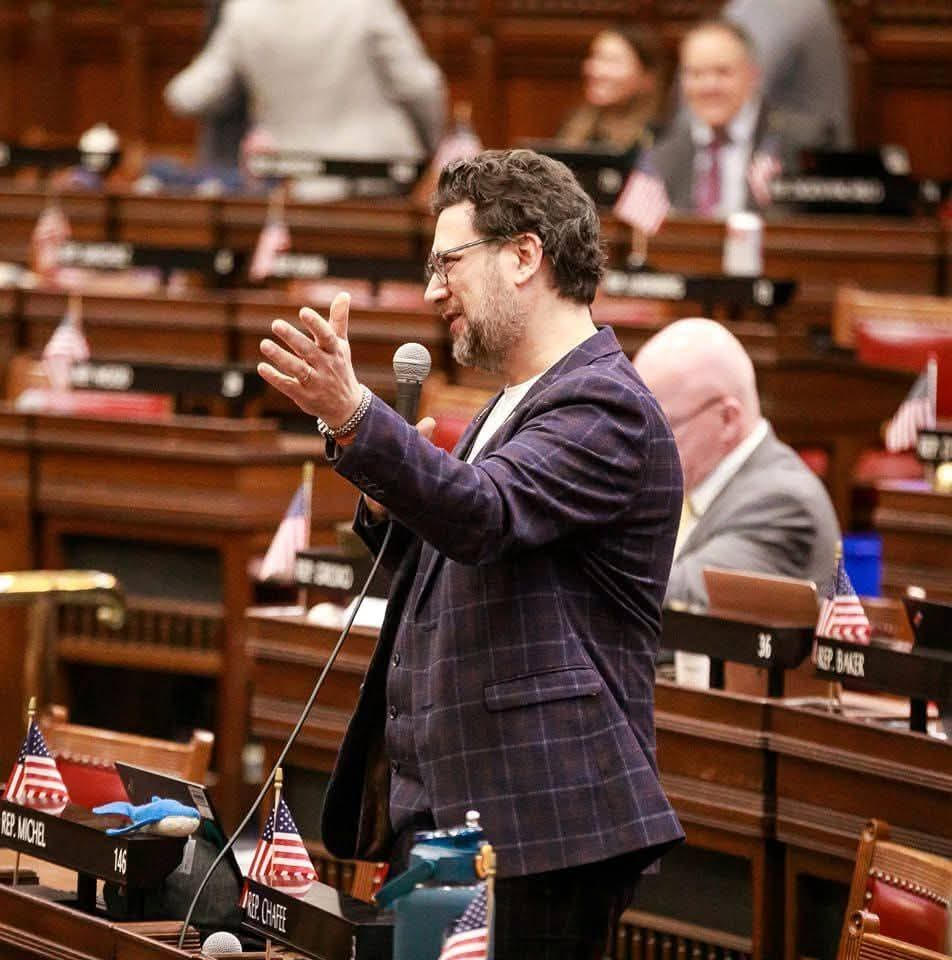
David Michel is a former State Representative from Stamford and also a member of the CT Palestinian Alliance and is a National Lawyers Guild Legal Observer. His paternal grandfather, who was a medical doctor and Jewish German, was imprisoned shortly after Adolf Hitler’s election in 1933. He was fortunately able to leave for France shortly after and spent the following few years in France and Scotland helping German emigrant healthcare workers settle in other countries.