
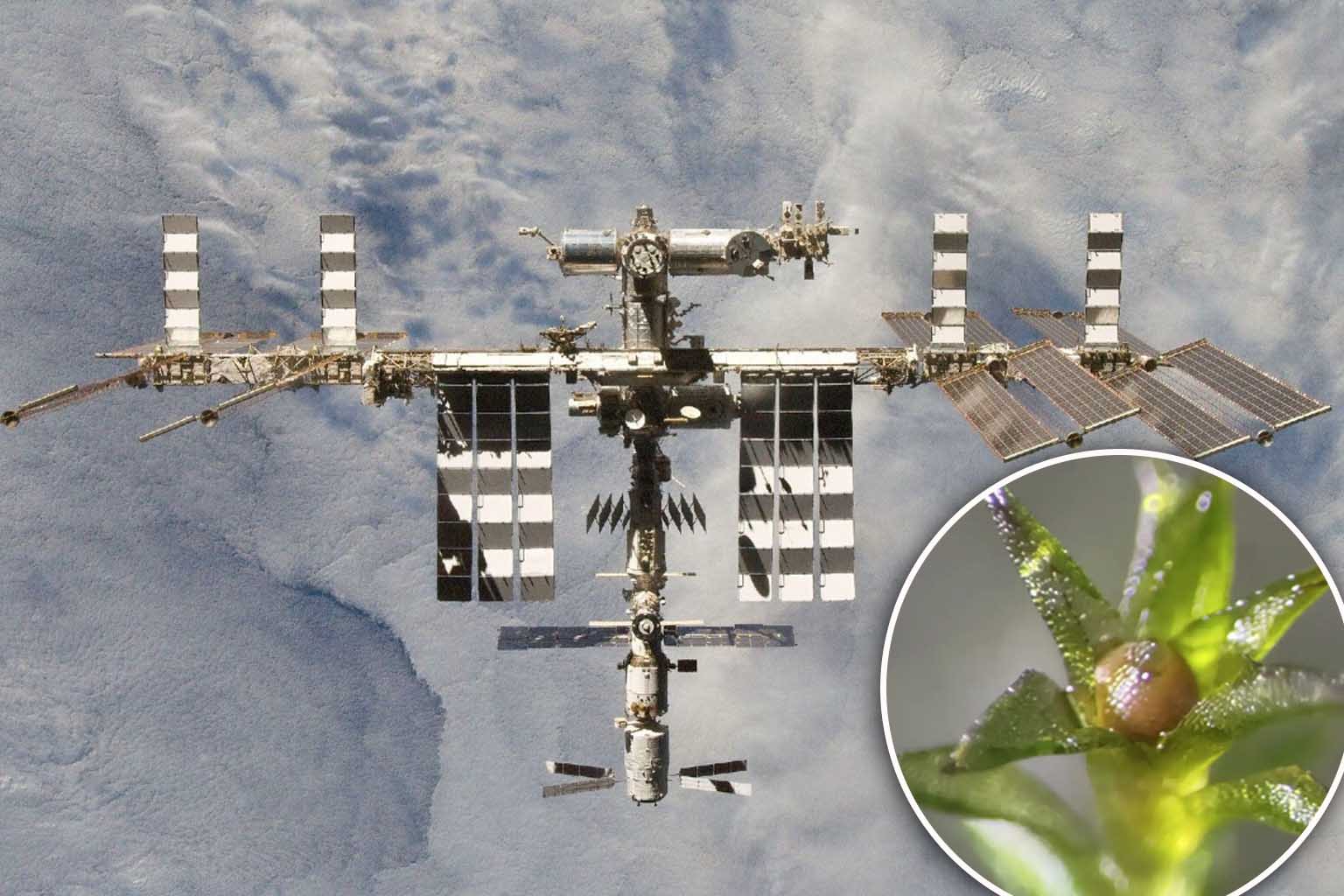
When scientists attached samples of moss to the outside of the International Space Station for nine months, they weren’t just testing another organism’s limits. They were exploring whether life as we know it could eventually establish itself beyond our planet. The results, published in iScience, reveal something remarkable: over 80% of the moss spores not only survived the brutal conditions of space but continued reproducing once back on Earth.
This isn’t simply another tale of biological resilience. The success of Physcomitrium patens in the vacuum of space, exposed to cosmic radiation and extreme temperature swings, suggests that the building blocks for extraterrestrial ecosystems might already exist in nature. The implications stretch far beyond academic curiosity, touching on humanity’s long-term survival prospects and our understanding of life’s fundamental adaptability. Just as NASA’s Parker Solar Probe pushes the boundaries of space exploration by venturing into extreme environments, these moss experiments reveal how life itself might expand beyond Earth’s protective atmosphere.
What makes this discovery particularly significant is the timeline. Computer models based on the experimental data suggest these moss spores could survive in space for up to 5,600 days — roughly 15 years. That’s long enough to travel between planets, to establish footholds on distant worlds, or to serve as biological insurance policies for space-faring civilizations.
The Strategic Choice of Moss Over Flashier Organisms
Previous space biology experiments focused on bacteria or crop plants, organisms that grab headlines but miss a fundamental point. Moss represents something different: a biological foundation species that thrives in Earth’s most punishing environments, from Death Valley’s scorched landscape to the oxygen-thin peaks of the Himalayas. These aren’t glamorous plants, but they’re the ones that colonize barren ground and make it livable for other species.
The research team at Hokkaido University deliberately tested different cell types within the moss’s reproductive cycle. Sporophytes — the protective casings around spores — showed the greatest tolerance to ultraviolet light, freezing, and heat stress. This wasn’t random; it reflects millions of years of evolution that equipped these structures to survive while vulnerable reproductive material develops inside.
Research from the ESA’s BIOMEX experiment has demonstrated that the nine-month exposure on the ISS’s exterior wasn’t a gentle introduction to space conditions. These samples faced the full brunt of cosmic radiation, temperature fluctuations from -157°C to +121°C, and the complete vacuum of space. Most Earth life would be obliterated within hours under such conditions.
“Moss spores demonstrated remarkable resilience to space exposure, with survival rates exceeding expectations for biological materials subjected to extreme UV radiation and vacuum conditions” – ESA space biology research
What Space Actually Does to Living Tissue
The detailed analysis of returned samples reveals which aspects of space pose the greatest threats to biological systems. Surprisingly, the vacuum of space, microgravity, and even extreme temperature swings caused relatively little damage. The real killer was high-energy ultraviolet light, particularly wavelengths that Earth’s atmosphere normally filters out.
This UV exposure significantly reduced levels of chlorophyll a and other photosynthetic pigments, creating a cascade of problems for the moss’s ability to generate energy and grow. The damage wasn’t immediately fatal, but it compromised the plants’ long-term viability. This finding has practical implications for designing biological systems intended for space colonization. Understanding these biological stress responses requires the same kind of careful observation that helps us recognize how our bodies signal stress in other extreme environments.
Research indicates that the protective, spongy casing surrounding moss spores acts as a natural shield against both UV damage and dehydration. This biological armor may have evolved specifically to help early land plants survive the transition from aquatic to terrestrial environments — a transition that required surviving conditions nearly as harsh as space itself.
The Evolutionary Accident That Could Save Our Species
The success of moss in space appears to be an evolutionary accident with profound implications. When early plants developed protective mechanisms to survive on land hundreds of millions of years ago, they unknowingly created structures capable of surviving in space. The same cellular armor that protected against terrestrial UV radiation and desiccation works remarkably well against the challenges of the cosmic environment.
This suggests that life’s expansion beyond Earth doesn’t require exotic genetic engineering or entirely new biological systems. Instead, we might leverage evolutionary solutions that already exist, refined over geological time scales. The moss spores’ ability to remain viable for potentially 15 years in space creates a realistic pathway for biological colonization of other worlds. This kind of biological resilience demonstrates the same principles that make some people mentally stronger when facing challenges — adaptation through evolutionary pressure creates remarkable survival capabilities.
The protective mechanisms that allow moss to thrive in extreme Earth environments — from arctic tundra to desert rocks — translate directly to space survival. This isn’t coincidence; it’s evidence that the fundamental challenges of extreme environments share common elements whether they occur on Earth or in the void between planets.
The Biological Engineering Challenges Nobody Mentions
While the survival statistics sound impressive, the reality of using moss for space colonization involves complex biological engineering challenges that remain largely unaddressed. The 80% survival rate represents spores that remained viable, but viability and thriving are different concepts. Many of the returned samples showed compromised growth patterns and reduced photosynthetic capacity.
The UV damage that affected chlorophyll production points to a fundamental problem: organisms adapted for space survival might struggle to establish productive ecosystems once they reach their destination. A moss that survives the journey to Mars but can’t effectively photosynthesize in Martian conditions provides little foundation for larger biological systems.
Studies documenting moss survival in space have shown that the metabolic stress of space exposure creates lasting changes in cellular function that don’t immediately manifest as mortality. These subcellular changes might accumulate over generations, potentially creating evolutionary bottlenecks that could doom long-term space-based populations. The current research, while groundbreaking, represents just the first step in understanding these complex biological dynamics. Like discovering unexpected data on a storage device, these biological findings reveal layers of complexity that weren’t immediately apparent.
The discovery that ordinary moss can survive months in space and continue reproducing opens questions about life’s cosmic potential that extend far beyond human space exploration. If simple evolutionary mechanisms can produce space-hardy organisms, the universe might be far more hospitable to biological expansion than we previously imagined. The challenge now lies in understanding not just what survives, but what thrives in the vast emptiness between worlds.