
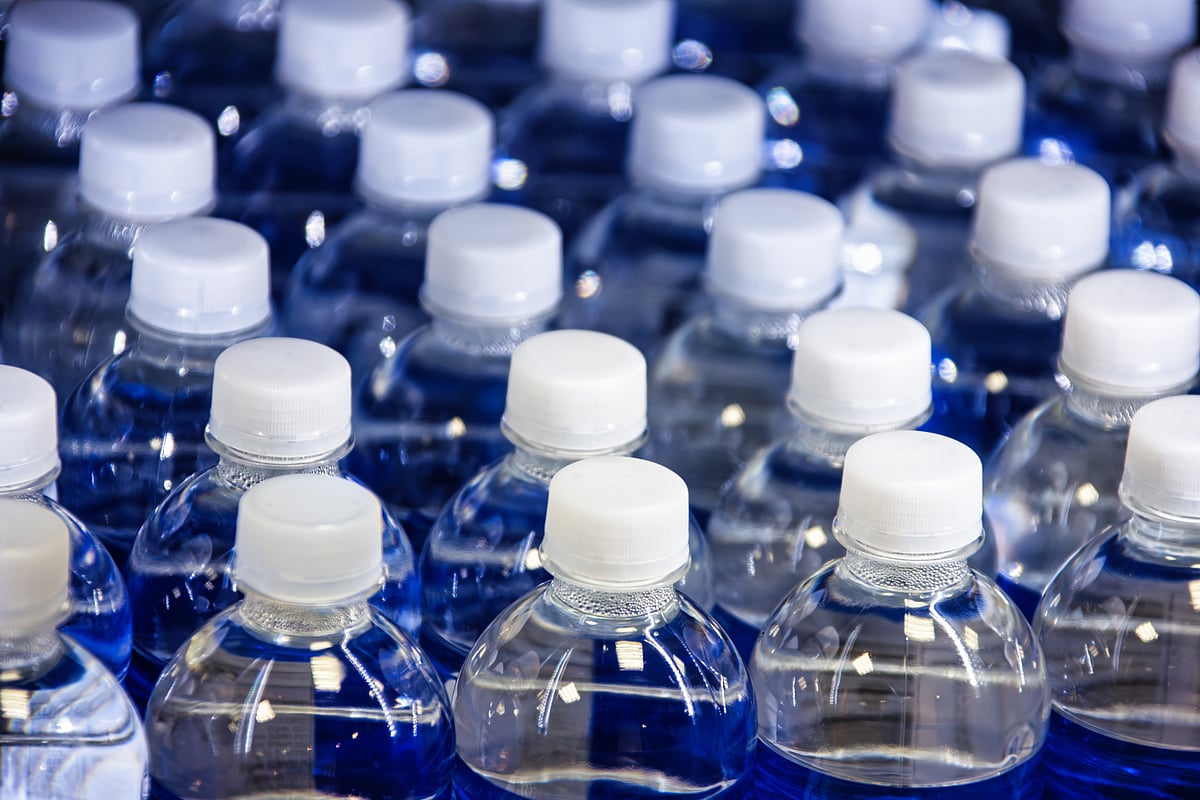
How do microplastics end up in bottled water?
According to the research, microplastics are released at several stages of a bottle’s life cycle – during manufacturing, storage, transportation and breakdown over time.
Because many bottles are made from low-quality plastic, they shed tiny particles whenever they are handled. Exposure to sunlight and temperature changes further accelerates this process.
Unlike other plastic particles that enter the body through the food chain, microplastics from bottled water are ingested directly from the source.
Some bottled water brands contained far higher levels of microplastics than others
The review also examined a 2018 study by researchers from the State University of New York at Fredonia, which analysed bottled water samples from 16 countries.
The study found that Nestlé Pure Life and India-based Bisleri recorded the highest average concentrations of microplastic particles, ranging from 826 to 2,277 particles per litre.
Why microplastics can be harmful to health
This may lead to chronic inflammation, oxidative stress on cells, hormonal disruption, impaired reproduction, neurological damage and various types of cancer.
However, researchers stress that the long-term effects are still poorly understood, largely due to limited testing and a lack of standardised methods for detecting and measuring microplastics.
Why measuring microplastics is so difficult
The study identifies several methods used to measure nano- and microplastics, each with limitations.
Some techniques can detect extremely small particles but cannot determine their chemical composition. Others can identify what the plastics are made of but miss the smallest particles. The most accurate and reliable tools are often very expensive and not widely available.
Should we stop using plastic water bottles?
The researchers advise caution rather than panic.
“Drinking water from plastic bottles is fine in an emergency, but it is not something that should be used in daily life. People need to understand that the issue is not acute toxicity, it is chronic toxicity,” said Sarah Sajedi, lead author of the review published in the Journal of Hazardous Materials, in remarks shared by Concordia University.
What is the UAE doing to reduce plastic waste?
Research into how microplastics enter the human body and their long-term effects is still developing.
From January 2026, the import, manufacture and trade of a wider range of single-use plastic products will be prohibited, including:
Beverage cups and lids
Cutlery, including spoons, forks, knives and chopsticks
Plates
Straws and drink stirrers
Food containers and boxes made from Styrofoam
Dubai’s next phase of the plastic ban
Dubai’s earlier plastic ban has already limited single-use items like plastic bags, cups, plates, containers, stirrers, cotton buds, table covers, and straws.