
Washington, DC — From the halls of power in Washington to the streets of New York and Los Angeles, 2025 exposed the raw fault lines of a nation under strain.
Political violence, mass protests and sharp shifts in leadership defined a year when voices once pushed to the margins forced themselves back into the centre.
These are the ten stories that came to define the United States in 2025.
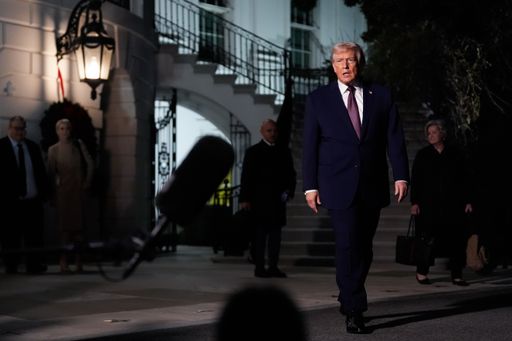
Trump strides back to power
Donald Trump was sworn in as the 47th US president on January 20, 2025, beginning a rare nonconsecutive second term. Bitter cold forced the ceremony indoors to the Capitol Rotunda, the first such inauguration in decades, as Chief Justice John Roberts administered the oath using the Lincoln Bible.
In his address, Trump declared the day “Liberation Day”, promised a “golden age” and a “revolution of common sense”, and vowed swift, forceful action.
He moved immediately, signing 26 executive orders on day one, a record, and by the end of 2025 had issued 225, far exceeding the 220 from his entire first term (2017–2021) and setting a modern record for volume in a single year.
ICE raids deepen national fractures
Federal immigration raids expanded rapidly through the spring, with masked ICE agents appearing in cities far from the southern border.
Legal scholars warned the tactics risked hardening political divisions rather than resolving them.
“In the long term, the ICE raids are likely to increase the political divisions across America,” Paul Collins, Professor of Legal Studies and Political Science at the University of Massachusetts Amherst, told TRT World.
Collins pointed to growing unease over due process. “Concerns raised include not giving immigrants due process, stationing masked agents across the country, and tearing apart families, which many people view as un-American.”
Trade War 2.0 hits hard
Trump returned to tariffs with muscle memory from his first term, only heavier.
A flat 10 per cent was imposed on nearly all imports, with rates rising beyond 50 percent for China, Canada and Mexico, pushing the average effective US tariff to around 17 percent.
US imports shifted away from heavily taxed partners, but economists said the measures functioned as a tax increase of $1,200 to 2,400 per household, fuelling inflation, slowing growth to about 1.5 to 2 per cent, and delivering limited, sector-specific reshoring amid continued retaliation from trading partners.
US brokers Gaza Ceasefire
In October 2025, a US-brokered ceasefire took hold between Israel and Hamas over Gaza.
Trump drove the deal, unveiling a 20-point plan at the White House and leaning on US envoys and mediators from Qatar, Egypt and Türkiye.
Phase one delivered most living Israeli hostages and facilitation aid in exchange for Palestinian prisoners and limited Israeli withdrawals, enough to halt the war but not resolve it.
By December, the truce remained fragile and stalled, with accusations of violations by Israel, mounting civilian deaths in Gaza, and Trump publicly pressing Netanyahu while warning Hamas that failure to disarm would bring consequences.
Longest US government shutdown in history
The longest shutdown in US history froze the government (started in November 2025), paralysed public services, closed national parks and left 800,000 federal workers without pay.
Republicans refused to negotiate an extension of expiring Affordable Care Act subsidies, keeping the House of Representatives on extended recess while demanding a clean continuing resolution with no policy additions.
Democrats, in turn, declined to pass Republican funding bills that excluded the health insurance extensions, allowing the stalemate to drag on as the shutdown deepened.
Related
Los Angeles wildfires become costliest in US history