
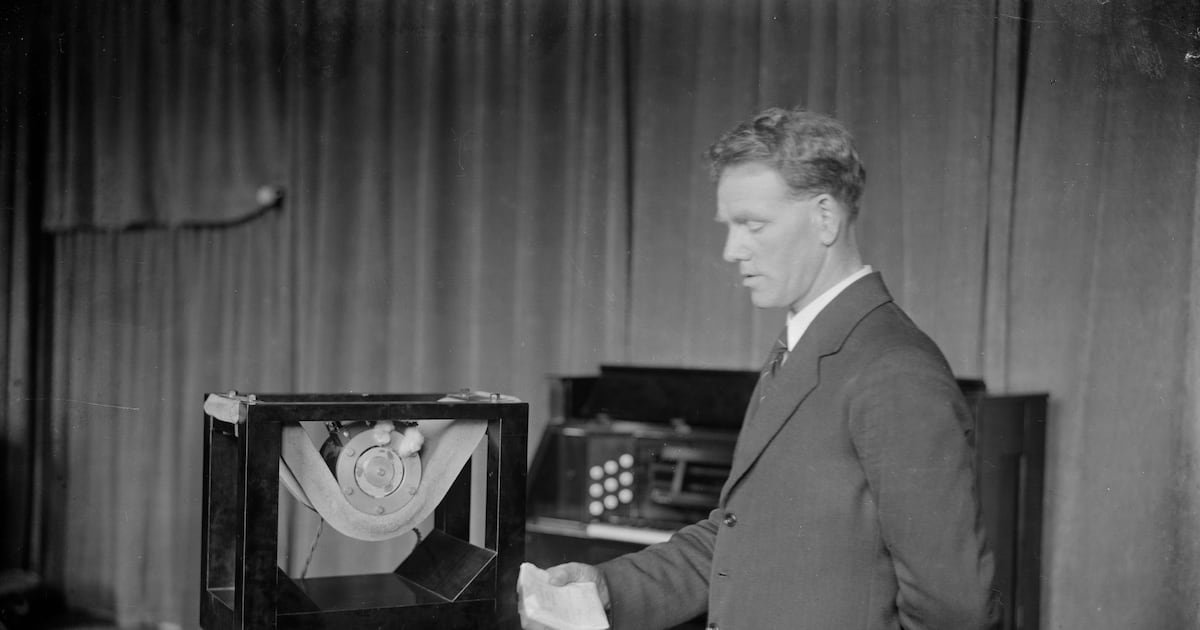
It was 1975, and I was presenting Pop Call. It was broadcast live on RTÉ radio at 11pm on Wednesday nights to respond to telephone requests from listeners. Other nights were occupied by recorded sponsored programmes. A colleague mentioned that he had been going through old copies of the RTÉ Guide, and it seemed that the following Wednesday would mark the 10th anniversary of the programme.
Thinking that the occasion should be marked, I went to the archives and got the log of records played on the first night, then invited Val Joyce, the first compere (presenters hadn’t been invented yet) to come in and host the programme with me.
I rang the Irish Independent and suggested they send a photographer. The following morning there was a picture of the two of us in the paper, with the caption “DJs celebrate 10 years of Pop Call”.
RTÉ’s radio editorial board met regularly on a Thursday morning, and, seeing the photo, the general cry was “Is that shaggin’ thing still on the air? I thought we got rid of it years ago.” And so the 10th-birthday edition of Pop Call was also the last edition of Pop Call, proving that, in RTÉ at least, it doesn’t pay to draw attention to anniversaries.
Apart from today, that is. On January 1st, 1926, Irish broadcasting began, as Douglas Hyde – later to become first president of the Republic – opened the radio station 2RN, located over a small post office on Little Denmark Street in Dublin. (It’s now part of the site of the Ilac Shopping Centre.)
The station was audible over a 30km radius, with many thousands of listeners, although the department of posts and telegraphs suspected there were many more sets than the number of licences sold. An Irish tradition that has continued.
The first director was Seamus Clandillon, a civil servant who, being a renowned traditional singer, would oblige with a few bars of a song if a programme under-ran. His wife, Máighréad Ní Annagáin, likewise sang on air – so often that she was dubbed Máighréad Ní On Again.
Seamus instituted a Station Orchestra, a grandiose title for what became known as a céilí band. The following year, the Cork station 6CK opened – but not for long. It closed three years later, with the promise of a new high-powered transmitter to cover the country.
Meanwhile, in October 1928, the GPO on the newly named O’Connell Street had been virtually rebuilt after the shelling and fires of 1916, so the small radio staff moved 100 metres down Henry Street into new studios on the top floor of the impressive building. Modest at first, with a small talks studio and a larger one for musicians and performers, the GPO became the home of Irish radio for the next 48 years.
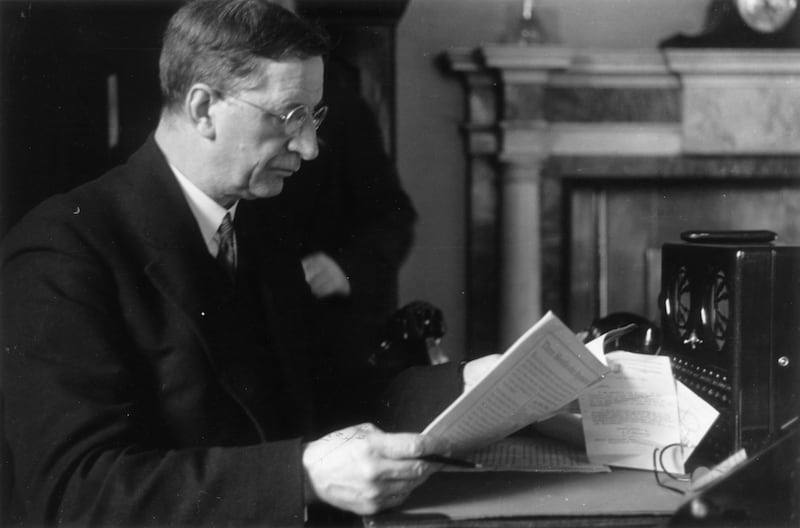 Radio Éireann: the station came into its own with Éamon de Valera’s reply to Winston Churchill about Ireland’s neutrality. Photograph: Haywood Magee/Picture Post/Hulton/Getty
In 1932, Ireland made its mark internationally when the new high-powered transmitter came on the air with a spectacular: the Eucharistic Congress in Dublin, viewed by many as Éamon de Valera’s trailer for a new Ireland.
The station appeared on some wireless sets as Radio Athlone. Six years later the new Irish Constitution was passed, and the new director of radio, TJ Kiernan, renamed the station Radio Éireann. (Kiernan, like his predecessor, was also married to a ballad singer, Delia Murphy.)
And what of the programmes? They had started in the 1920s as a sort of Edwardian musical evening, with polite talks about visits to Rangoon and refined songs about Moonlight on the Ganges. Under Kiernan, though, programmes had become more inventive, ingenious and sometimes positively surreal – golf and swimming lessons, the opening of an art exhibition at the Royal Hibernian Academy, and dancing lessons for schoolchildren.
During the war years, news bulletins were notable for their neutral and impartial reports covering both sides of the conflict: they might report that the British had claimed severe German losses at sea and follow with a report that the German navy had claimed that they won decisively.
Radio Éireann came into its own in 1945 with the celebrated reply by de Valera, as taoiseach, to Winston Churchill’s diatribe about Ireland’s neutrality. Dev’s moderate speech almost implied that Churchill may have celebrated a little too much and had, perhaps, been overserved.
Radio’s big changes came after the war, in 1947, when the station, with the authority of the department of posts and telegraphs, acquired a symphony orchestra, a light orchestra, a choir and a permanent repertory company of actors.
It was a remarkable artistic achievement, as well as a social one. Musicians and actors had always been worried freelance performers, but now they had regular and permanent jobs, with the bonus that when applying for motor insurance they could list their occupation as civil servant.
[ Live from the GPO: Brendan Balfe on making waves at Radio ÉireannOpens in new window ]
By the 1950s the studios were extended: a new studio on the fourth floor, mainly for sponsored programmes, and three along the front of the GPO, including a new drama suite. The studios were connected by a corridor about 100 metres long, with white tiles and frosted glass, that the British conductor John Barbirolli famously described as “the longest row of lavatories in the world”.
And the place was full of officers: talks officer, sponsored officer, balance and control officers.
This is the place I entered in 1964. I had written a letter that was a little cheeky, asking the head of music, Kevin Roche, for an audition. I got one and made my first broadcast on July 5th, with a music series called Then and Now. I was 18, and thus began my happy life as a broadcaster.
My career was coloured by many fortuitous events and unexpected opportunities. Shortly after my radio debut, I was asked by Harry Thuillier to write scripts for his sponsored programmes, including one he presented on Saturday nights at 11pm, sponsored by Urney Chocolates. The advertising agency involved also asked me to come up with a proposal for a new lunchtime programme.
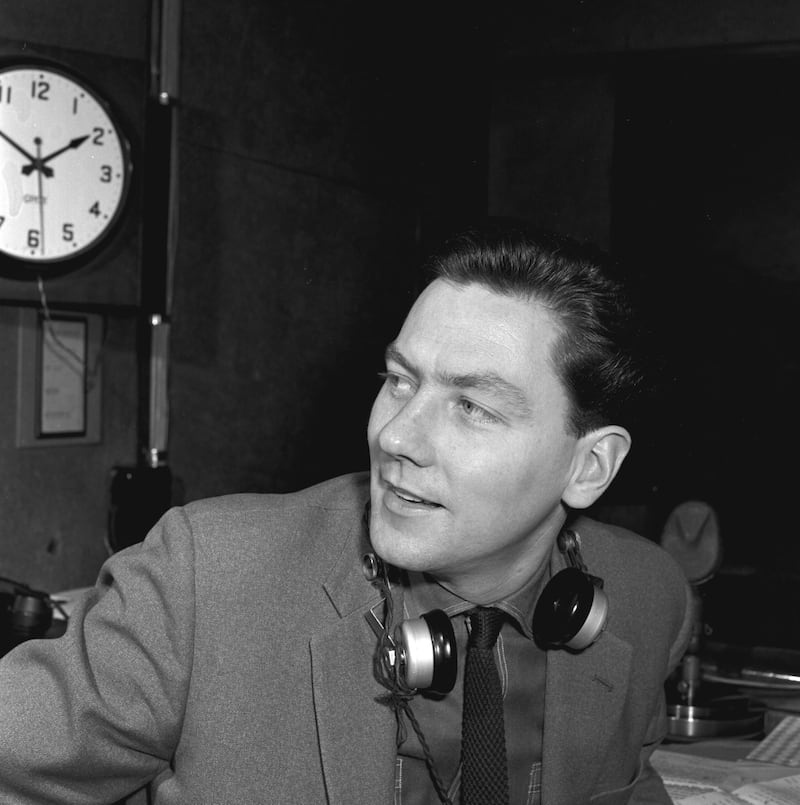 Radio Éireann: Gay Byrne in Studio 5 in 1963. Photograph: RTÉ
With help from a colleague, we did so, and the sponsor agreed to the new format, but only if we got Gay Byrne to present. So, at 19 years of age, I rang Gay and offered him the programme. He accepted, and I worked with him for many years after, producing many of his sponsored programmes.
I had met him earlier, when I responded to a TV ad looking for an audience for a new talkshow that night, July 6th, 1962. So, at 16 years of age, I was at the first Late Late Show and got Gay’s autograph. Some years later I recommended he use To Whom It Concerns as its theme tune. In 2019, the last programme I presented for RTÉ Radio 1 was a tribute to Gaybo, my pal and colleague.
In the meantime, in 1965, I had become a continuity announcer, under the tutelage of Denis Meehan and Terry Wogan.
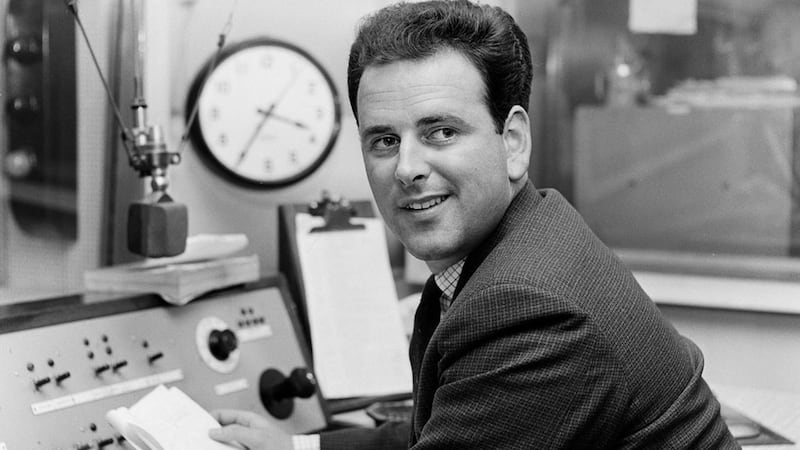 Radio Éireann: chief announcer Terry Wogan. Photograph: RTÉ
Always known as Henry Street, the location was a combination of university, arts club and training centre. The atmosphere was one of encouragement, creativity and freedom. Henry Street had always been a sort of refuge for artists, musicians and eccentrics, and we mixed with pop stars, poets and public personalities. We respected our audience and always did our best to serve them by upholding standards.
It was invaluable experience. Over one weekend in the 1960s I presented Céilí House, the Live Symphony Concert and Ireland’s Top Ten. By the 1970s I had left the announcing section and covered a huge range of programmes – features, documentaries, comedy, musicals, interviews, television, stage shows – had opened Radio 2 and had left the familiar surroundings of Henry Street for the new Radio Centre at Montrose (originally a home of Marconi’s mother). The last announcement from the GPO was made by Ray Lynott on Monday November 8th, 1976.
Before the move, the story goes, a radio operative went out to the Montrose campus to see the new radio building being completed. He talked to a colleague from TV and asked for a tour. His guide pointed out the Television Centre and then the Administration Building. The radio man asked what happened in each.
“Well,” his colleague replied, “in one there are about 200 people trying to make exciting, innovative and groundbreaking television programmes. And in the other there’s about 1,000 people trying to stop them.”
Happy anniversary, RTÉ.