
Cellphones have now been banned for a semester at all Nebraska schools, although some schools already had a cellphone policy in place. Here’s how schools have changed since they implemented cellphone bans.
Cellphones have been a nuisance for teachers for the past decade and a half, and they said the problem seemed to be only getting worse.
There wasn’t a class that went by without students picking up their phone to text their friends or check social media; most of the time, it was happening multiple times in a class period. While most schools already had a cellphone policy in place, it wasn’t until May of this year that legislation was put into place, approved by Gov. Jim Pillen, requiring all Nebraska schools to develop and adopt a universal policy.
The policy states that each school board of a public school district must “develop and adopt a policy relating to use of electronic communication devices by students as prescribed; and to declare an emergency.”
The Nebraska State Education (NSEA) president, Tim Royers, was relieved when there was finally a statewide regulation in place. Of course, there had been many different policies in place from school to school, each with its own interpretation of the best way to keep students off their phones, but it’s good to have a standard.
“Thankfully, we kind of had a pretty large state level resolution to that issue with the bill that was passed,” Royers said. “… I ran into this in my own classroom. I tried to hold a pretty strong standard on device use, and then I would instantly be told, ‘Well, that’s not how Mr. Morrison does it, or that’s not how Mr. Hayes does it,’ so I think there’s some relief on the part of educators of like, that element has been taken away.
“Whether this state law will work, obviously, remains to be seen, but it’s welcome to know this is the standard, and there’s no longer that variance that was there previously.”
Royers stated that in an interview in September, and now the results are in.
Many administrators and teachers — whether their school district had an existing cellphone policy or had implemented one this semester — noticed a difference.
It’s the little things that came back first. Students started to talk in the hallways again, students started to talk during lunchtime and more. Recess isn’t just an excuse for students to be engrossed by an algorithm anymore; it’s a time to play with their friends without a cellphone getting in the way.
Most schools had at least two different levels implemented into their policy. Either cellphones were allowed during times like passing periods and lunch, or cellphones were locked away for the entire day, in a lock box or in the student’s locker.
For Norfolk Public Schools and Battle Creek Public Schools, at the junior high, the policy is that usage is allowed before 8 a.m. and after 3:25 p.m.; otherwise, devices are kept in their lockers and turned off throughout the day. For high school, it’s a little different. At the high school, they are allowed during lunchtime and passing periods.
“We’ve got consequences on our code of conduct based on kids not following these expectations,” said Chuck Hughes, director of student services at NPS. “That’s just an office referral. Then, depending on if it’s your first time, second time, third time, then there are other consequences, like detentions or suspensions, involved in that.”
Each month, at the school board meetings, Hughes reads out the number of office referrals because of cellphones and, for the past couple of months, at the junior high, it has been going down.
“The biggest thing at the junior high they have noticed there’s a lot more student engagement, both inside and outside the classroom, which is obviously a positive,” Hughes said. “They’re building relationships with not only their peers, but with teachers and so extremely positive results with the junior high. Mr. (Jason) Settles at the high school has said that his senior high leadership team is pretty happy with the new policy and how things are going with them as well.”
At Battle Creek for grades 7-12, cellphones may be brought to school, but they must be silenced and placed in a designated phone holder at the start of class. The phones then can’t be taken out even if students leave the room. Younger students, seventh through ninth graders, can’t use their phones during lunch, although 10th through 12th graders can. However, they are permitted during the passing period.
Battle Creek implemented this cellphone policy during the 2023-24 school year and noticed a difference. Jeff Heimes, 7-12 principal of Battle Creek Public Schools, especially realized that bullying had dropped significantly, along with issues with cellphone distractions during school time. A lot of administrative staff agreed with the sentiment.
Stanton Community Schools first allowed cellphones during passing period and lunch time but recently updated its policy to extend the ban. Now, cellphones can’t be used at all during school hours.
“We opened up the gym during lunchtime, so we have more interaction and movement in the school day,” said Micah Buller, the secondary principal at Stanton Community Schools. “I know the kids call it ‘recess,’ but it’s just another place to hang out, so that way they can have face to face interactions.
“So that’s kind of what I see the most change with, is kids talking to each other more in the hallways and at lunchtime. We have kids more active and playing basketball and volleyball and getting some energy out that way.”
POUCHES AT ELKHORN VALLEY
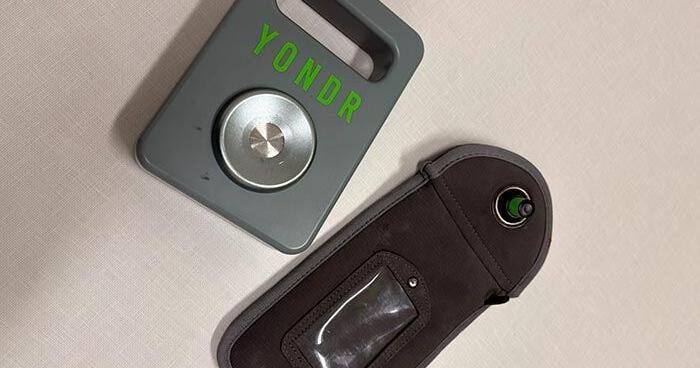
Elkhorn Valley Public Schools uses pouches for its cellphone policy, which has been developed for a year or so. The school also has been cracking down on students’ game play on their devices, blocking certain websites.
“Our down list (the list of office referrals) is probably the lowest it’s ever been since I’ve been here in seven years,” said Elkhorn Valley Schools 7-12 principal Patty Novicki. “We probably went from 25 kids to an average of four this semester.”
She agreed that most students were actually having conversations at lunch, saying, “They play cards with each other, because our kids have no cellphones, not at lunch, not in the halls, nothing. They go in a bag in the morning, and they get unlocked at the end of the day.”
Teachers and administrators said they’d noticed students greeting their teachers in the hallways and making sure they meet up and talk with their friends during breaks. With not being able to text each other during class, face-to-face meet-ups become the only way to interact during school hours.
“Our kids actually communicate with each other, they talk to the teachers,” Novicki said. “You know, when we first did it last year, we started it in January of last year because I had my research meetings with parents, chatted with the kids about things, had a teacher committee, then my overall teacher meetings, and that’s how we kind of come up with the rules that we have.”
Another thing that has changed within Elkhorn Valley Schools is that students are taking notes in class instead of just taking a picture of the board.
At Elkhorn Valley, there’s also a level of trust that goes into the policing of phones. Teachers and administrators alike have been telling students that if they see people using their phones, they need to tell them to knock it off, for there are serious consequences if they are caught. Students have the chance to use an “E-Hall Pass,” where they can use their phone for a limited time to go to the bathroom, but even that gets restricted at times. If a student is using that pass four times a day for 10 minutes, in Novicki’s words, you have a problem because no one should be using the restroom that often in eight hours.
“The teachers are very excited because it was becoming a problem,” Novicki said. “When you get caught, it’s an automatic in-school suspension the first day. The second time, your mom has to come and get that phone after school, and you’re also in ISS for a couple of days. So the rules are pretty tough if they get caught with them. So we had lots of meetings about this, and I told them, ‘Your friends are going to rat you out.’ I get emails from kids that will say, ‘So and so has their phone on them.’ ”
Novicki agreed that it’s a great way to make sure kids are following the policies, though she knows all the provisions put in place aren’t going to be enough to keep some students off their devices, but it’s a step in the right direction.
Unlike other schools, this policy was an investment from the board because of the need for the pouches. Novicki researched for about a year before petitioning the board about the policy. She even consulted with other schools about the best way to approach it.
It’s a policy that’s here to stay.
CELLPHONE POLICY UNCHANGED
For some schools, such as Pierce High School, the policy has been in place since phones started becoming more prevalent among younger students.
“Our cellphone rule has been the same since cellphones became commonplace about 15-20 years ago,” wrote Pierce High School principal Mark Brahmer. “The kids can bring them into the building, but they’ve got to keep them in their academic locker. They may not use their phones during the school day at all. They cannot have their phone with them during the day. If they need to contact someone with their phone, they can use it with my permission.
“If they get caught with their cellphone, they spend a day with me in an in-school suspension.”
Madison Public Schools has three levels with its cellphone policy, one for the elementary school, one for the junior high and one for the high school.
While elementary school and junior high students cannot have their phones in school at all, high school students are allowed to have them throughout the day but have to check them in when they enter the classroom. The policy also was in place last year.
“Nothing has been much different than it was last year, other than the kids are probably a little bit more aware of it,” said superintendent Justin Frederick. “We had some attorneys come out and talk to our student body about cellphone use and proper use and at the beginning of the year.”
Cellphones are here to stay, and they’re integrated into everything we do every day. No matter how hard schools try to ban them, no matter the intensity of the ban, they’re always going to show up. It’s something that a couple of the administrators brought up.
“They can be a distraction, but again, adults and kids and whatnot, rely on them pretty heavily,” Frederick said. “So, it’s kind of hard to get rid of them nowadays.”
Kevin Lein, an education professor at Wayne State College, had a similar thought.
“Every time we have new technology, we have this knee-jerk reaction,” Lein said. “We did it way back when with slide rules and then calculators, and then computers, and now we’re doing it with cellphones.”
When Lein went to a smaller school in Nebraska, he made two main observations: one that kids were on their phones until the last minute at 8:30 a.m., and second, that they were on their phones immediately at 3:30 p.m., seemingly sprinting to their cars for their devices.
“So in other words, here’s what we’re doing: We’re letting them use them for 16 hours a day without any instruction, without helping them learn how to use them well, when we have the most unbelievable opportunity to use that eight hours every day to let them have their cellphones and teach them how to use them in terrific ways,” Lein said.
Overall, schools expressed happiness with their cellphone policies. They could potentially get changed a little in the future, but, at their core, they’re there to make sure that students are focusing on their lessons and taking notes. Perhaps cellphone policies will shift with the times, becoming more lax as more schools allow students to use them to heighten their learning experience, as Lein stated, but for now, the bans are making sure students are staying attentive.