
Unlock the Editor’s Digest for free
Roula Khalaf, Editor of the FT, selects her favourite stories in this weekly newsletter.
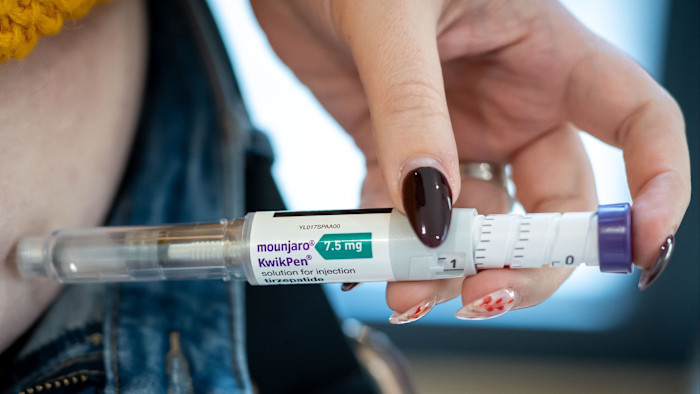
More than half of local health commissioners in England are tightening access to NHS weight-loss injections, leading to accusations the health service is “pulling up the drawbridge” for prescriptions.
The National Institute for Health and Care Excellence (Nice), England’s drug approval body, states that adults qualify for treatments such as Mounjaro and Wegovy if they are obese with a body mass index (BMI) of at least 35 and have at least one pre-existing weight-related health conditions.
NHS England has acknowledged the financial case for weight-loss treatments, describing them as “cost-effective” despite their high upfront price, because they can reduce the risk of far more expensive long-term complications.
However, some integrated care boards (ICBs), the organisations responsible for planning and commissioning health services for a local population, are setting higher thresholds than Nice for NHS patients to qualify.
An analysis shared with the Financial Times by Oviva, a major provider of weight-loss jabs to the NHS, shows 23 of 42 ICBs are not complying with the Nice criteria.
The varying thresholds of eligibility in different parts of the country underscore the tension between a political ambition in Westminster to expand access and the financial constraints being felt by local health leaders on the ground.
But uneven access could lead to poorer patients being prevented from accessing weight-loss drugs, according to experts, while wealthier users pay over the counter.
The pharmaceutical industry argues that the NHS England guidance includes wording that some ICBs are treating as permission to restrict access to weight-loss drugs and tighten the eligibility criteria.
NHS England has told local health commissioners they can prioritise access by grouping patients according to clinical need, a process it refers to as “cohorting”, in order to manage limited budgets and capacity.
The guidance also emphasises “appropriate prioritisation of resources”, which the pharmaceutical industry has warned is being interpreted by some local health leaders as permission to set higher eligibility thresholds than those recommended by Nice.
These include requiring adults to have a BMI above 40 and multiple comorbidities — meaning additional obesity-related conditions — while some stipulate that patients must have four out of five specified conditions before qualifying for NHS weight-loss drugs.
Martin Fidock, UK managing director of Oviva, said: “Investing in effective obesity treatment could save the health service billions of pounds and help people stay in work.
“Ministers know this, but instead the NHS is pulling up the drawbridge and restricting access to transformative weight-loss drugs as ICB budgets tighten.”
He added: “Access to obesity services should be based on clinical need, but instead the gap between national government policy and local NHS delivery is widening.”
The NHS estimates that just under 30 per cent of adult Britons are living with obesity. About 1.5mn Britons are estimated to be using weight-loss drugs, either privately or through specialist NHS weight-loss services.
Health secretary Wes Streeting has repeatedly spoken about his ambition to expand access to weight-loss jabs to more people through the NHS, warning against a “return to the days when health was determined by wealth”.
Nice has recommended that Mounjaro be prescribed for up to a possible 3.4mn people in England.
But it later agreed to a staged rollout, starting with about a quarter of a million people with the highest clinical needs in the first three years, to help manage the financial pressure this would put on the NHS.
“Demand for these new treatments has been high,” the NHS said. “Alongside establishing brand-new services in the community to improve access for patients — and the NHS continues to explore innovative ways to scale this up safely so that people will be able to access weight-loss medicines that have the potential to transform healthcare.”
The Department of Health declined to comment.