
Quantum 2.0: The Past, Present, and Future of Quantum Physics
Author: Paul Davies
ISBN-13: 978-0241655801
Publisher: Pelican
Guideline Price: £ 20
This month marks the centenary of the publication of Erwin Schrödinger’s science paper that changed the world forever by upturning centuries of understanding about the nature of matter and the way the physical world is put together.
Schrödinger’s equation was the birth of a new scientific discipline called quantum mechanics, which transformed our thinking on reality and the modern world. (The Austrian Nobel Prize physicist lived in Ireland from 1939 to 1956, becoming a naturalised citizen, with the Trinity College Dublin public lecture series What is Life? in 1943 a highlight of his stay).
I purposefully avoided quantum physics for years. Many of its foundational minds remained unconvinced by the theory, and if Bohr, Einstein, Planck et al were sceptical, who was I to argue? But Paul Davies’s new book is timely.
A renowned physicist who has had an asteroid named after him for his work on cosmic impacts, Davies creates an engaging and accessible account of the history and development of the quantum world, and how a “culture war” lasted for decades as to what was really going on.
He also skilfully explains the scientific leaps that occurred, such as the quantum tunnelling effect of a particle being here at one moment and there the next, and his analogies are always helpful, referring to Harry Potter passing through the wall of a train station for this phenomenon, or using a tumble dryer to explain quantum superpositions.
Grounding the quantum world, once memorably described as “like a great smoky dragon”, in our everyday lives is key to a reader persisting with (and ultimately enjoying) such a work.
Davies outlines how our connected world is thanks to quantum principles at work in countless devices we take for granted, from the mundanity of the supermarket checkout laser, to 1938’s discovery of nuclear magnetic resonance which eventually led to MRI machines.
[ Quantum physics, a century old, still passes understandingOpens in new window ]
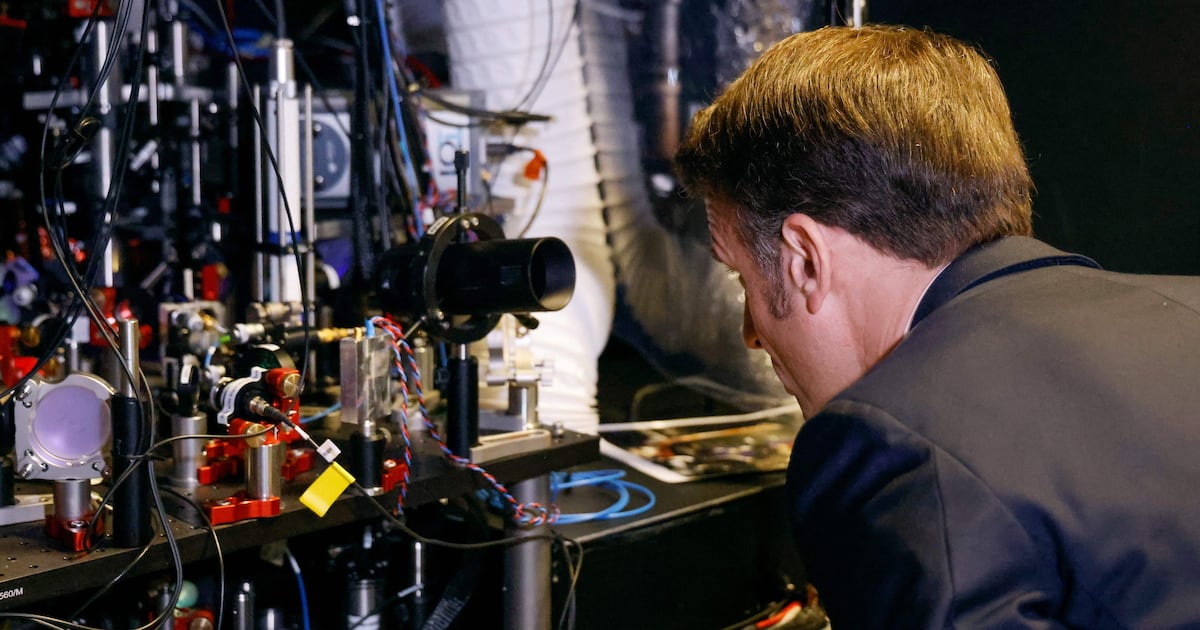
And he goes further in detailing a second quantum revolution that is under way, Quantum 2.0 as he calls it; the first one established its “weirdness”, whereas this one is exploiting its very weirdness through “reality engineering” and controlling it for practical ends: quantum computers and internet, quantum magnetic sensors or the awesome prospect of quantum AI (Davies doesn’t think human teleportation will ever happen, sadly). A challenging but cogent and rewarding book.