
Support CleanTechnica’s work through a Substack subscription or on Stripe.
The news headlines this morning celebrated the inauguration of New York City Mayor, Zohran Mamdani. During his inaugural address the Democratic Socialist pledged to turn the city’s efforts to uplifting working people. That news of egalitarianism is at the opposite end of the spectrum from a recent SpaceX letter to employees and other shareholders.
Bret Johnsen, SpaceX’s chief financial officer, wrote that the company and investors intend to buy $2.56 billion of shares from stockholders at $421 a share, nearly double its previous internal share price.
A possible public offering is being teased as well, according to the letter obtained by The New York Times. An initial public offering would seek to raise significantly more than $30 billion — it’s a transaction that Bloomberg News calls “the biggest listing of all time.” If enacted, the IPO could make SpaceX the most valuable private company in the world. The move would mean dreamlike wealth creation for shareholders.
CEO Elon Musk holds a 44% stake in the company, which is the largest portion of any investor. (He’s also the Chief Technology Officer of Space Exploration Technologies.) Billions of dollars in funding have come to SpaceX from investors like Founders Fund and Google’s parent company, Alphabet.
Johnsen explained that SpaceX would have opportunities for more innovation with a public offering. “That enables us to ramp Starship to an insane flight rate, deploy AI data centers in space, build Moonbase Alpha, and send uncrewed and crewed missions to Mars — ultimately increasing the probability of making life multi-planetary in our lifetimes,” he wrote.
Tongues are wagging that the company’s valuation could approach $1.5 trillion.
History of SpaceX
According to its website, SpaceX was “founded under the belief that a future where humanity is out exploring the stars is fundamentally more exciting than one where we are not.”
SpaceX emerged in 2002 as a fledgling entry in the aerospace industry and has evolved into a dominant force in the marketplace. While its rockets have become a staple at Cape Canaveral and the SpaceX Starbase in southern Texas, its Starlink satellite internet service has been a most productive profit-maker for Musk.
In 2024, SpaceX attempted 138 orbital missions — more than half of all global launches that year — and completed 165 launches in 2025. Here are the various technologies that fall under the SpaceX umbrella of companies and technologies.
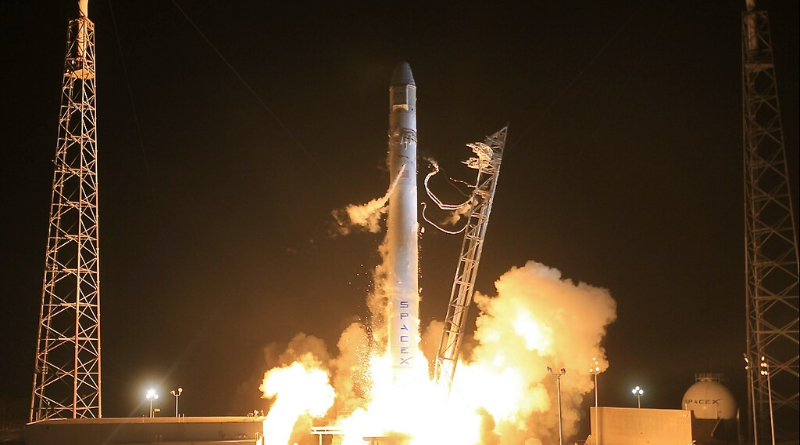
Falcon 9: The primary SpaceX rocket, the Falcon 9 is a medium-lift vehicle with a reusable booster. Reusability has been key to launch cost-cutting and has allowed SpaceX to ramp up its launch schedule.
Dragon: The Dragon spacecraft can carry up to seven passengers to and from Earth orbit. Currently, it is the sole spacecraft capable of returning significant amounts of cargo to Earth. It was the first private spacecraft to take humans to the International Space Station.
Starship: This is a 404-foot rocket. Musk has alluded many times on his social media site, X, about his goal to use the SpaceX rocket, Starship as a vehicle to transport humans to Mars. It is capable of carrying up to 150 metric tons fully reusable and 250 metric tons expendable. The first unmanned Starship to Mars is planned for 2026. The company is currently building the third-generation version of this rocket and the accompanying Super Heavy Booster.
Starlink: Providing connectivity to what had once seemed to be unreachable, remote regions, Starlink offers streaming, video calls, online gaming, and remote working. The company describes it as “the world’s most advanced internet system.” This satellite-internet business provides lots of the company’s revenue.
Starshield: Designed for government use, Starshield leverages SpaceX’s Starlink technology and launch capability to support national security efforts. It has three focus areas: Earth observation, communications, and hosted payloads. Starshield enhances SpaceX’s value with the US Pentagon and NASA.
Moving the possibility of an IPO forward, the SpaceX board of directors have started to implement plans for the listing and fundraising. New staff for essential roles are being interviewed, and so is brainstorming for capital projects once funding is secured. 🙂 Bloomberg News reports that SpaceX expects to use some of the funds raised in an IPO to develop space-based data centers, including purchasing the chips required to run them.
Imitation Breeds Contempt: SpaceX has Inspired China
China’s rocket startup, LandSpace has looked longingly at SpaceX for a while, and last month the company conducted its first reusable rocket test. The Zhuque-3 rocket test ended in failure, but the energy for future success remains high within the company. SpaceX “can push products to the edge and even into failure, quickly identifying limits and iterating,” Zhuque-3 chief designer Dai Zheng told state broadcaster CCTV after the rocket’s inaugural flight. If LandSpace can work out the kinks, it could offer China a reasonably priced launch option — sounds a lot like SpaceX’s reusable rocket Falcon 9, doesn’t it?
Also, much like SpaceX, LandSpace is preparing to go public as a means to increase its capital for future projects. Reuters reports that “Beijing is now looking to help leading domestic players tap into capital markets by making it easier for them to pursue IPOs.”
Elon Musk had been paying attention from afar. Finally, in October he uttered his first public comments about the project. “They have added aspects of Starship, such as use of stainless steel and methalox, to a Falcon 9 architecture, which would enable it to beat Falcon 9,” Musk admitted. “But Starship in another league.”
We’ve known for a long while now that many of Musk’s decisions are spontaneous and lack forethought, yet, ironically, his long term plans are intensely conceived — a combination of his unique worldview, data-driven insights, and intelligent automation. Tesla board chair, Robyn Denholm once referred to Musk in a social media post as a “Once-In-A-Generation Visionary.”
Musk’s capricious nature is evident in his quote that follows; as you read, it becomes clear that he has the audacity to pull off the SpaceX IPO.
“You want to wake up in the morning and think the future is going to be great — and that’s what being a spacefaring civilization is all about. It’s about believing in the future and thinking that the future will be better than the past. And I can’t think of anything more exciting than going out there and being among the stars.”
Resources
“China’s LandSpace gears up to take on Elon Musk and SpaceX.” Eduardo Baptista. Reuters. December 29, 2025.
“Elon Musk’s SpaceX valued at $800 billion, as it prepares to go public.” Ryan Mac. The New York Times. December 12, 2025.
“SpaceX to pursue 2026 IPO raising far above $30 billion.” Edward Ludlow and Eric Johnson. Bloomberg News. December 9, 2025.
“What SpaceX, Blue Origin, Rocket Lab, and others have in store for 2026.” William Gavin. Market Watch. December 30, 2025.
Sign up for CleanTechnica’s Weekly Substack for Zach and Scott’s in-depth analyses and high level summaries, sign up for our daily newsletter, and follow us on Google News!
Advertisement
Have a tip for CleanTechnica? Want to advertise? Want to suggest a guest for our CleanTech Talk podcast? Contact us here.
Sign up for our daily newsletter for 15 new cleantech stories a day. Or sign up for our weekly one on top stories of the week if daily is too frequent.
CleanTechnica uses affiliate links. See our policy here.