
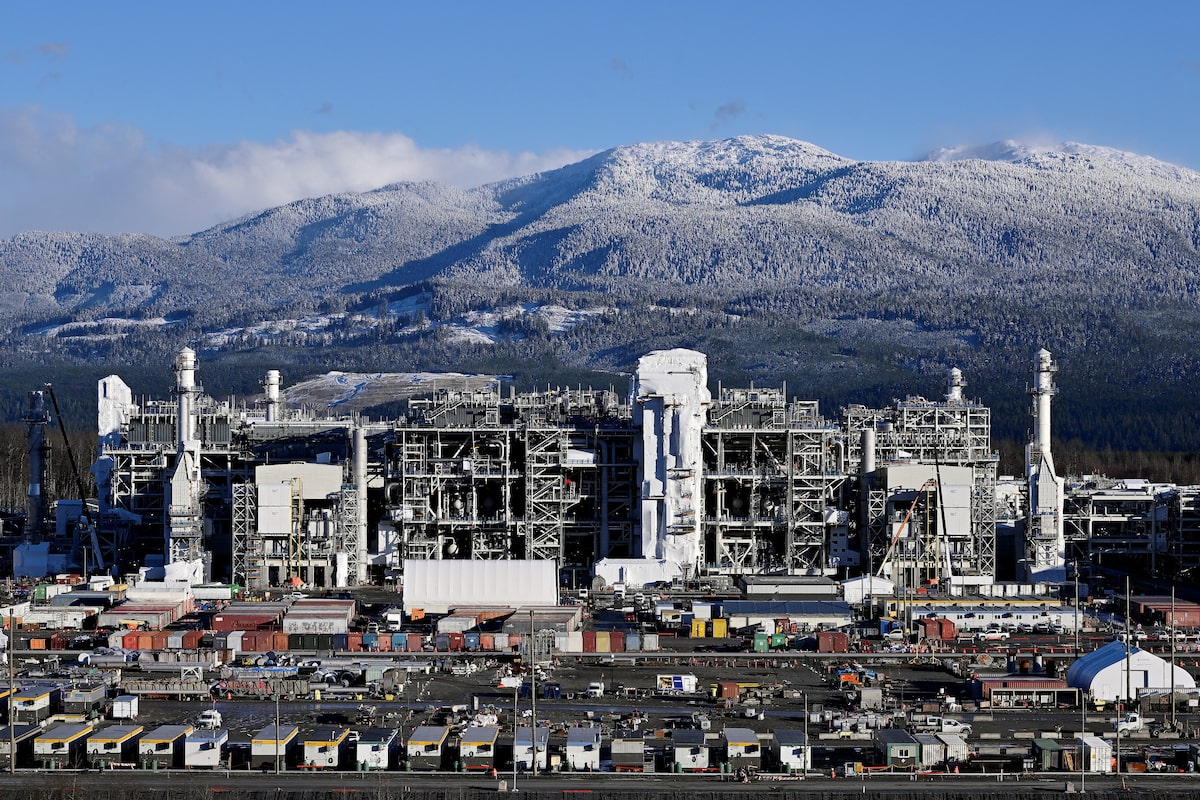
Train 2, an LNG processing unit at the liquified natural gas facility in Kitimat, B.C., in November, 2024.Jennifer Gauthier/Reuters
Conor Chell is a partner and national leader of sustainability, environment and regulatory law at KPMG Law LLP.
The proposed new amendments to the anti-greenwashing provisions in the federal Competition Act were intended to give businesses some breathing room. But if passed as currently drafted, they may do the opposite and constrain them by creating more legal risk, more uncertainty and a wider gap between what companies say and what they can actually prove.
For the last year, Canada has been home to some of the most stringent and widely discussed anti-greenwashing rules in the world. The original amendments under Bill C-59 required companies making environmental or climate-related claims about their business to substantiate them using “an internationally recognized methodology.” That language, although imperfect, at least pointed organizations toward established frameworks – the International Organization for Standardization (ISO), the Greenhouse Gas (GHG) Protocol, science-based target methodologies, and third-party assurance practices.
The government has now proposed removing the “internationally recognized methodology” requirement altogether and that change is expected to pass into law in early 2026. In its place, organizations will fall back on the general due-diligence standard that already exists in competition law: claims must be adequately and properly substantiated. On paper, that may sound flexible. In practice, it will be a problem.
Most organizations are not currently set up to substantiate their sustainability and climate-related representations to the level that Canadian courts and regulators have historically required when assessing “adequate and proper” testing. That threshold – shaped by decades of misleading advertising cases – is surprisingly high. It often requires objective, measurable evidence that is replicable, independently verifiable and directly linked to the claim being made. Many companies making forward-looking climate statements, high-level environmental, social and governance (ESG) claims, or qualitative sustainability assertions simply do not have that level of evidentiary rigour in place.
This wide disconnect exists despite the public believing that businesses are now under stricter scrutiny. The anti-greenwashing debate has been front-page news for months. The very idea that companies must be prepared to defend their climate and environmental claims has woven itself into Canada’s collective conscience. But removing the methodological requirement will not lower public expectations – it will raise questions about what substantiation means, and whether companies can credibly meet it.
The problem is even more acute when you look at how organizations assess their own readiness. According to KPMG’s most recent Global CEO Outlook, more than 60 per cent of the 1,350 CEOs polled believe they are on track to meet their net-zero ambitions and the sustainability claims underpinning them, yet fewer than 30 per cent have allocated the capital and resources needed to achieve those goals. This creates what I call a “substantiation gap”: companies feel confident enough to make sweeping climate and sustainability claims, but have not invested enough to credibly meet them.
Long a target of backlash, ESG looks to be headed for a rebrand
This gap is already visible in practice. In reviewing Canadian companies’ sustainability disclosures, we continue to find numerous misrepresentations. These issues ranged from minor overstatements to material omissions, but the volume alone demonstrates how far many companies still are from the level of evidence regulators and the courts expect.
Some argue that risk will decrease because the government also removed the new private right of access to the Competition Tribunal, which would have allowed private parties to bring greenwashing complaints. But this change is unlikely to meaningfully reduce exposure. In the months since Bill C-59 passed, no private complaints were filed – likely due to the cost, complexity and the inability for complainants to seek monetary damages. Meanwhile, greenwashing allegations have simply migrated elsewhere.
We have already seen:
a complaint to the Alberta Securities Commission alleging misleading climate representations,an enforcement proceeding initiated by the Ontario Securities Commission involving similar issues anda civil lawsuit alleging mismanagement of climate-related risks.
Opinion: Ottawa is scrapping Canada’s greenwashing rules. This is a mistake
In other words, even without a private right of action under the Competition Act, plaintiffs, investors, activists and regulators have found – and will continue to find – other avenues to advance greenwashing claims.
Taken together, these factors point in one direction: legal risk will increase, not decrease, if the proposed amendments are enacted. Companies will face higher expectations from the public, stricter scrutiny from regulators, more complex evidentiary standards and a growing substantiation gap between what they say and what they can prove.
The solution is not to avoid sustainability disclosures or retreat from climate commitments. It is to professionalize them. Canadian organizations would be well-served to undertake a formal, comprehensive legal risk assessment of their sustainability disclosures and to understand, in concrete terms, what is actually required to substantiate the claims they make.
Clear, credible sustainability communication is not a regulatory burden – it is a competitive advantage. But only if it can withstand scrutiny.