
As death toll rises, with more than 30 dead already, one brave protester says, “We have taken our life in our hands as our weapon”
The line on the other end of the phone went silent. Then, suddenly, a voice broke through. This is one of the ways Iranians inside Iran have managed to communicate when it has been difficult for the outside world to understand what is truly happening inside the country.
As protests grow stronger and more dangerous by the day, offering a clearer picture of realities on the ground has become essential to shaping informed responses at a moment when the Iranian regime is under pressure, and the world is watching closely.
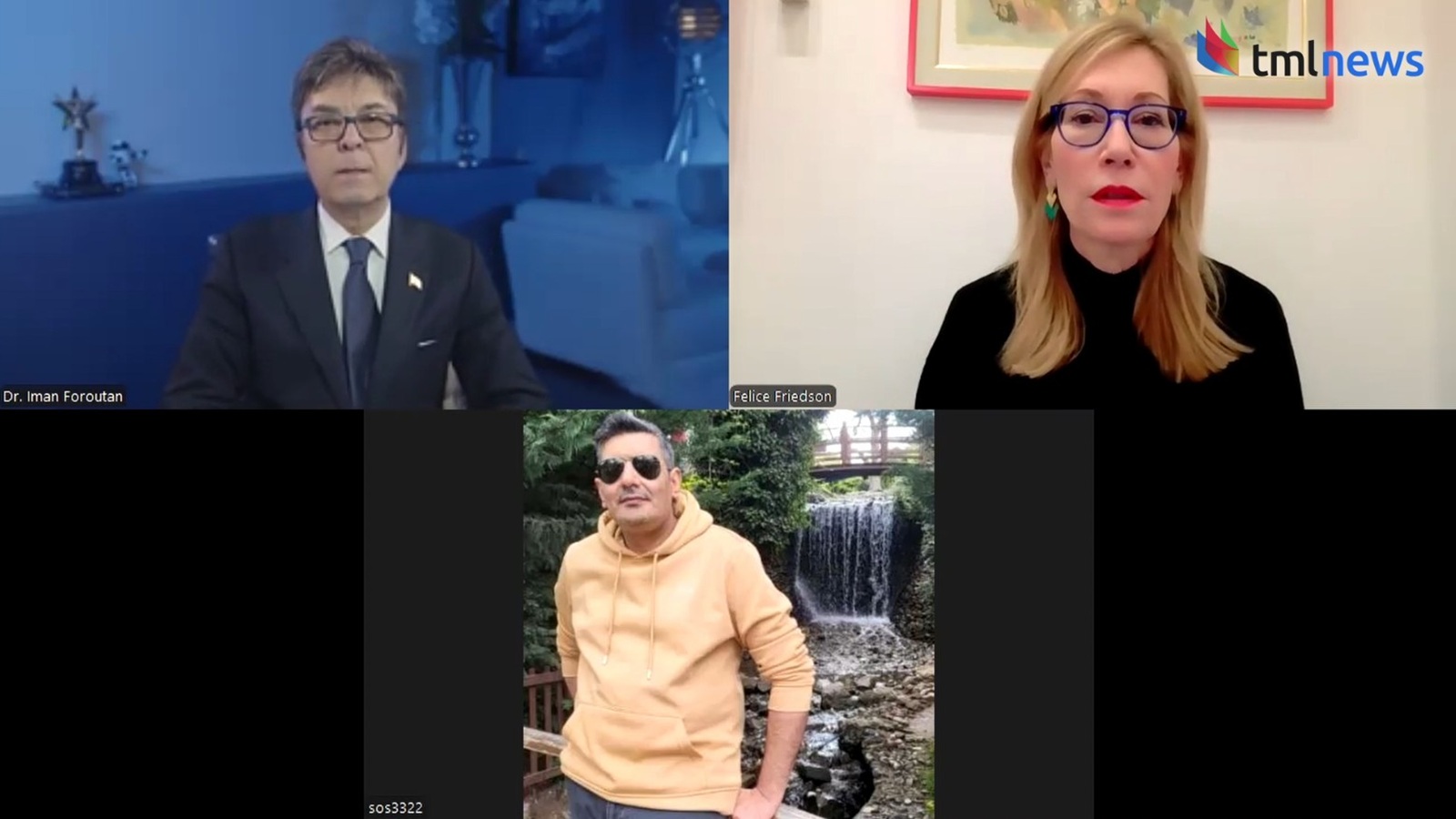
For years, The Media Line has been interviewing The New Iran—a US-based pro-democracy movement that seeks nonviolent regime change in Iran—since its inception in 2010. Today, it is one of the opposition groups that has built networks—both inside Iran and abroad—to assist Iranians in their fight for freedom. Dr. Iman Foroutan, chairman of the Board of Trustees of The New Iran and founder of SOS Iran, spoke with me about the current situation and translated for The New Iran’s director of civil disobedience, based in Turkey and identified only as Hesam, as well as two protesters in Iran, identified only by their aliases to protect their safety.
SOS Iran is a network created to help activists inside Iran connect and operate securely when communication is risky or disrupted. Participants are assigned an SOS number—an internal identifier used to protect identities while allowing organizers to verify a person’s role, route messages or footage through trusted channels, and track reports without exposing names or locations.
To reach me, the protesters used virtual private networks (VPNs) while disguising their locations, and the slow speed and instability of the internet connection made communication difficult at best, with audio cutting in and out.
That interview took place as Iran entered a seventh consecutive night of protests—an uprising that participants said had jumped from city to city and, in the span of a week, shifted from economic rage to direct political defiance.
Even the broken connections felt like part of the story. Foroutan (SOS-3390) described the regime’s familiar “playbook.” When demonstrations begin, authorities first weaken the internet, then cut it off entirely. He insisted the most brutal crackdowns often follow during those blackout windows, when people can’t show the world what’s happening and can’t coordinate easily across neighborhoods.
Still, the speakers noted, the movement learned to operate inside those constraints. They described protests built around small groups, decentralized upload systems, and networks designed to survive arrests, infiltration, and disruption.
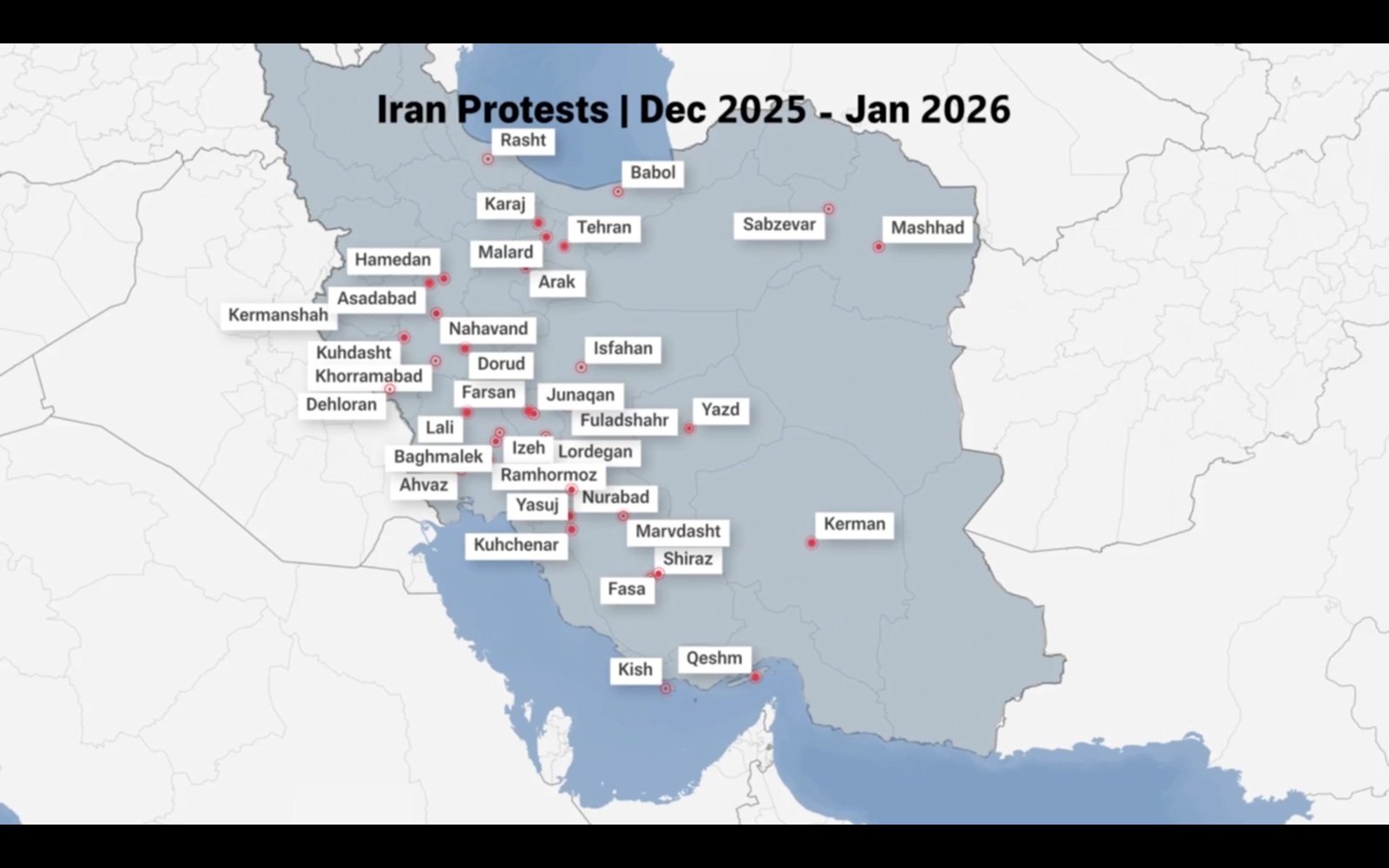
Hesam (SOS-3322), as relayed by Foroutan, said Iran was “starting the seventh night of protests inside Iran in over 35 cities,” ranging from large population centers to smaller towns. Hesam did not describe a slow roll of sporadic unrest. Instead, he listed city names as if he were tracking a live map, naming places where activity was happening “as we’re speaking right now during this interview.”
In those accounts, the size of each protest varied sharply by location, but the emphasis stayed on method over spectacle. Hesam explained that organizers trained people to begin in small groups in their local areas. That approach, he said, allowed protests to ignite widely without depending on one giant gathering that security forces could surround. His most conservative estimate put crowds “of at least 500 to over 8,000, depending on the city and the location,” while acknowledging that some videos suggested larger numbers in certain streets.
With the protests widening, the death toll became one of the most urgent and contested points. Hesam asserted that activists knew “20 people have been killed.” He said they had names for 15, while five remained unnamed but counted.
As we went to press, 30 people were confirmed to have been killed in the protests, and there appeared to be many more; the 30 were identified by name and confirmed from multiple sources.
He also rejected reports that a person described publicly as a “volunteer of the Basij or IRGC,” had been killed, framing it as “a trick of the government,” and maintaining that the man had been a protester and that the regime wanted “one casualty on their own side.”
Hadis Najafi (SOS-3607), speaking from inside Iran, described the uprising’s first spark as bluntly economic. “When this thing started seven days ago from the bazaar, which is the big market in downtown,” she said, people were “really only protesting against the quality of life.” She described a currency collapse so destabilizing that ordinary selling felt wrong. Stores were closing down, she said, and even store owners refused to sell because “those prices are not right.”
At first, she insisted, the mood leaned toward restraint. People wanted “to just protest peacefully about the condition of life before things got to where they got.”
Then, the regime forced the situation into a different category.
Najafi said security forces beat protesters, trying to suppress them. “Yes, the security forces are beating people up,” she said, then added, “unfortunately, they’re also shooting at people.”
She described an incident she presented as emblematic of escalation. “Something sad happened yesterday in the city of Hom, that they actually blew up a man, a very loved and respected man, a local man, with a grenade, and he went into pieces.” According to her account, a government official carried out the act.
Despite the risk, she said she still went to the protests herself. She located herself only as “in the vicinity of Tehran,” avoiding specifics for safety, and described seeing water cannons and other measures aimed not merely at dispersal but at prevention. Security forces tried, she said, to stop people from gathering at all, using “anything and everything,” including water cannons and “the BB guns that we have seen before.”
Another protester, referred to only as Guard e Javidan 74 (SOS-968), described the same pivot others stressed. In his account, the protests started with “the prices,” “the economy,” and “inflation,” but “very soon” the chants changed into “what people really want,” described as “freedom and calling the name of their leaders.”
We have taken our life in our hands as our weapon, and we’re in the streets
For Najafi, that shift demanded something stark from the people participating. “We have no choice but to succeed,” she said. She framed the street as a place where survival itself became leverage: “We have taken our life in our hands as our weapon, and we’re in the streets.”
She also described chants that, in her view, revealed where the movement aimed to go. In Mashhad and other cities that she referenced, she said people were chanting “the name of who they want, which is Reza Pahlavi.”
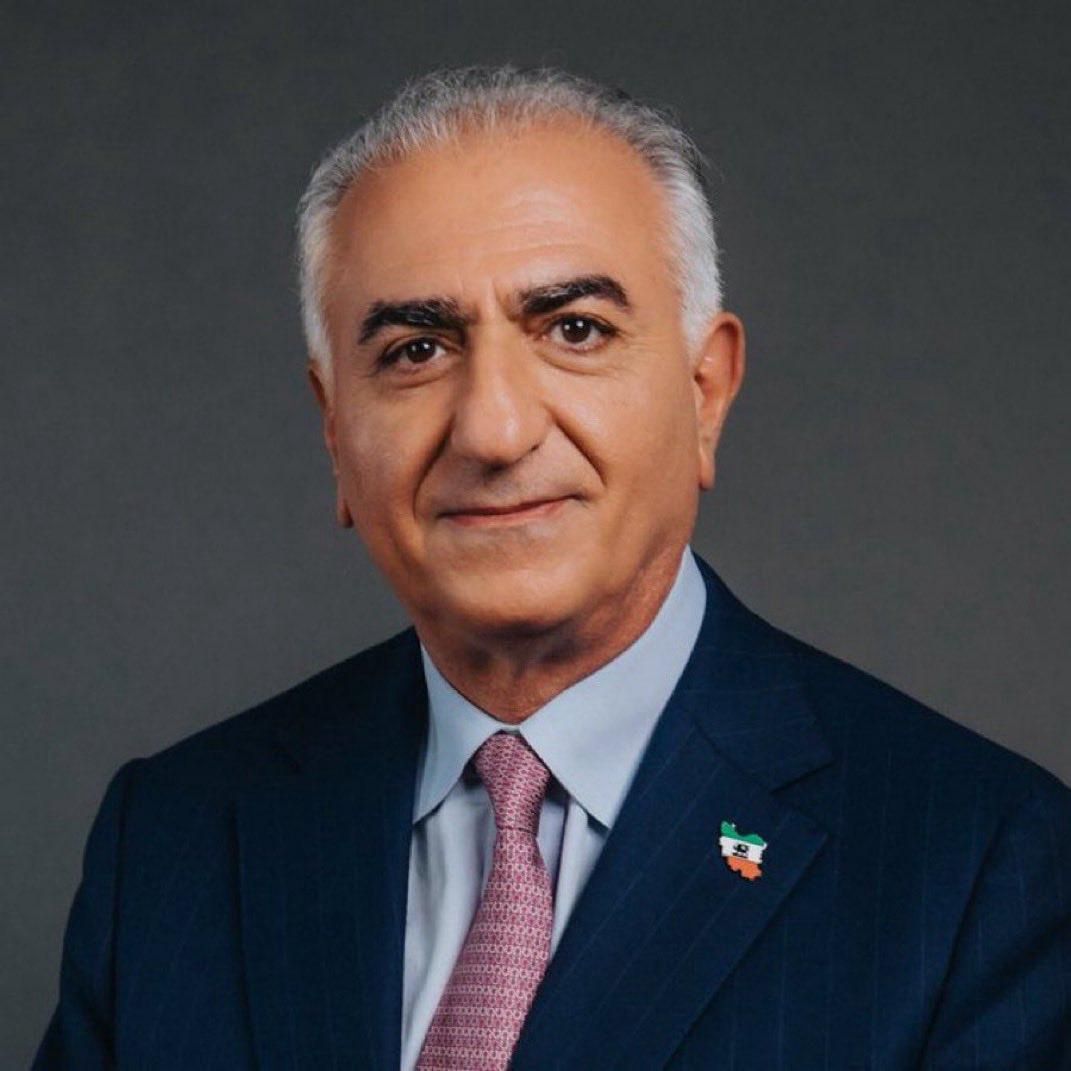
Reza Pahlavi, the crown prince of Iran. (Courtesy)
In her telling, fear no longer controlled the streets. “They have no fear,” she said. Then she offered a sweeping statement of unity: “It seems like the whole country is coming all together and united towards this finality that they have been all looking for.” Foroutan fought to hold back tears as he translated this for Najafi, clearly becoming emotional at her description.
It seems like the whole country is coming all together and united towards this finality that they have been all looking for
Global attention, she suggested, felt like a morale boost that also offered a thin kind of protection. She claimed that at the beginning of the events, Iran was trending number 22 on Twitter/X, and after the world began paying attention, “now Iran is top five trending on Twitter.” She interpreted the rise as evidence that “the world is looking at Iran,” and said that knowledge gave hope—proof that people outside were listening.
In that context, she spoke approvingly of President Donald Trump’s message. She said she supported President Trump, thanked him, and called it “fantastic” that his message gave her and others “the feeling that somebody outside, somebody powerful, is hearing their voice.” She added that he “has eliminated all the middlemen and is directly talking to people that he should be talking to,” and she described the message from “yesterday” as “very good.”
Hesam’s reaction treated that message as an accelerant. Since “yesterday and Trump’s note,” he said, more small and local cities rose up. He described people feeling that someone could speak “straight directly to Khamenei” and tell him what he could or could not do against Iranians. Hesam called the reaction “extremely positive.”
Venezuela surfaced as a warning sign. Hesam described events there as “a lesson for Khamenei,” adding that “what’s happening in Venezuela could repeat itself very soon inside Iran.”
Again, Foroutan described the internet shutdown pattern as predictable: The government, he said, first weakens the internet and then cuts it off; during those cutoffs, he argued, the regime commits the worst brutality.
The instability in the conversation itself echoed that claim. Foroutan said Najafi’s audio sounded poor at first because of the VPN quality and then improved. Guard e Javidan 74—speaking from a central province—remained difficult to understand because of cutoffs and dropped out again entirely “because of the internet.”
Yet Hesam’s network planned for exactly that. They trained people to take short videos and quick reports, then pass them outward through designated individuals equipped with VPNs and prepared devices. Each small group had a person responsible for uploading. Once a clip hit Instagram, Telegram, or similar channels, Foroutan said, information spread rapidly because “everybody around the world has access.”
The system aimed to solve a single problem: the regime’s effort to isolate each city and neighborhood from the next.
Najafi said the regime escalated arrests quickly. She described “a lot of people” taken, including “a lot of younger people,” even “a lot of people under 18 years old.” She mentioned a 14-year-old who had been killed, though the name does not appear in the transcript.
She also described violence outside Tehran—violence unfolding in smaller provinces where international attention might not naturally land. “As we speak right now, in the province of Elam, there is hell going on,” she said. She described forces shooting at people there and estimated “at least,” as she recalled, “10 injured, if not killed,” adding that activists had names.
The message behind her warning felt tactical: Visibility needed to extend beyond Tehran to the provinces as well.
In basic numbers, Najafi described an economy in free fall. She said she had never seen conditions this severe. A loaf of bread, she said—enough to feed “one, two, three people”—now costs “500,000 riyals, which is 50,000 tomans,” and she estimated that “in dollars, 500,000 tomans, it’s about 50 cents for one loaf of bread.”
Then she described the gap between wages and survival. She said the poverty threshold sat around “90 million,” while the average worker earned “12 million” per month. She described a missing “about 70 or so million,” and said a small family needed “90 million” just “to be able to live.”
In dollars, she estimated the poverty line at “$650 a month,” while workers earned “much less than $100.” In her telling, that disparity made desperation structural, not temporary.
Asked what drove the drought and deterioration, Najafi pointed to isolation—being “cut off from the rest of the world,” in trade and in outside scrutiny of life inside Iran. Foroutan added his own view, citing “the incompetency of the regime over the last few decades.”
On sanctions, she took a firm stance: “Absolutely, the sanctions have worked.” She argued sanctions—especially on oil—reduced the regime’s resources, leaving it with less money “to suppress people and beat them up.” She also described a willingness to endure the consequences, saying she and others accepted sanctions because they believed the pressure ultimately weakened the regime and supported Iran’s path toward both economic improvement and “human rights and freedom.”
Najafi placed herself inside the story, not as a distant observer but as a participant with a profession. She said she is a university professor and described students asking whether they should protest and whether she would join them. She said she answered, “Yes, I’ll go with you.”
Across “all layers of the society,” she said, people kept joining, and she offered an image that conveyed both frailty and defiance: “this old lady with a walker chanting” in the streets. Men and women, she said, kept joining daily.
She described how the danger escalated. In her account, the regime moved from BB guns and water cannons to live fire. “Now they’re actually shooting at people,” she said. Protesters try to protect themselves, she said, but “you never know,” because regime forces attack unpredictably.
Najafi returned to the sentence that captured the protest’s logic as she saw it: “all we have is our life in their hands, is our weapon.”
She also described the external promises that, in her telling, emboldened people to keep walking back into danger. She said people were “really counting on Bibi Netanyahu’s promise to protect the people of Iran if they get out.” She said they were also counting on President Trump, especially after “his message yesterday,” because “people cannot take it anymore.”
Then she gave the clearest personal reason she had. She said she was married and saw it as her duty to try to free Iran so her family could live a better life than hers.
She ended with gratitude and an affirmation of identity: “long live Iran,” and “Javid Shah.”
Foroutan described Iran’s leadership statements toward President Trump as threats he considered hollow. He argued the regime understood what the US and Israel could do if they chose, and he again connected Iran’s moment to Venezuela as a warning sign.
From a smaller western city, he said he had just listened to a voice describing chants spreading there as well—“Javid Shah,” “long live Shah,” and “death of dictator.” He said internal media showed none of it, so only those with access to international news or online platforms could see the scope, while others learned through whisper networks—quiet conversations that carried news faster than state television.
From what he said he was hearing, he framed two urgent requests directed chiefly at Prime Minister Netanyahu and President Trump.
First, he said protesters needed an unequivocal guarantee that Iran would remain whole. The regime, he argued, repeatedly tells Iranians that if it falls, “Iran is going to be divided” and the country will lose its territorial integrity. Foroutan said The New Iran prepared a letter to President Trump—going out “today”—asking him, and urging Netanyahu as well, to state clearly that outside powers will protect Iran’s territorial integrity during regime change and will not allow hostile forces like “ISIS or Taliban or whatever” to enter. He argued that assurance would strip away a central fear tactic and accelerate the uprising.
Second, he said protesters needed security and logistical help and, above all, free internet—so Iranians could document brutality in real time and coordinate across cities even during state interference.
Foroutan described President Trump as someone who takes “calculated risks,” and argued that the US president does not want to appear to the world as directly imposing regime change. He said many Iranians would have liked President Trump to go further sooner, but he believed the president waits until he feels sure—and until the world’s optics make the next move defensible.
He called Venezuela “an appetizer” for Iran and suggested Iran’s leadership understood it could face a similar trajectory. He also made an additional claim: “We know that Israelis and Mossad and Israeli agents are inside Iran,” he said, arguing people see signs of that “all the time.” He said President Trump now knew what was happening inside Iran, praised the American president’s message, and suggested stronger steps could come.
Foroutan then described a broader sequence he believed was unfolding: Venezuela nearing conclusion; President Trump wanting to finish the Russia-Ukraine war through a peace plan; and Iran becoming part of a negotiation formula in which Russia might withdraw support for the Islamic Republic. He speculated that “Putin probably will say, give me this so I will not support the Islamic Republic.”
He described Iran as increasingly isolated, listing what he claimed had already fallen away: “Hezbollah is gone. Hamas is gone. Venezuela is gone. Syria is gone.” In that framing, Khamenei had “nobody,” and bluffing no longer worked because “nobody believes him.” He ended with a vivid prediction: “sooner or later, one night we’ll wake up, and we’ll see Khamenei has, I don’t know, left,” and he speculated about destinations such as China, Russia, or Cuba.
Turning to the region, Foroutan described Arab states as cautious actors weighing risk and opportunity. He said Arab countries supported President Trump and Prime Minister Netanyahu’s actions “with regard to Gaza,” but suggested they might not welcome the rise of a powerful Iran, given Iran’s size and potential to become a regional military and economic power. At the same time, he acknowledged the Islamic Republic had attacked and destabilized Arab states, including strikes on Saudi targets like Aramco.
He predicted that Arab leaders would wait to see what President Trump decided and suggested the president might issue an ultimatum at the decisive moment. Foroutan doubted the US would carry out a direct invasion, arguing instead that change would occur inside Iran and through Israeli capabilities.
On Europe, Hesam’s view—relayed through Foroutan—was that people inside Iran no longer count on Europeans. He said Europeans had taken advantage of Iran’s resources for a long time, and therefore, Iranians did not expect them to support the uprising now. In the speakers’ framing, expectations centered on the United States, Israel, and the United Kingdom.
Hesam described SOS Iran as a tool that lets activists find one another “anonymously and safely.” Through the network, he said, he identified and worked with about 50 leaders—“ring leaders or team leaders”—around the country “without them knowing one another.”
Foroutan added long-range preparation and logistics. He said organizers printed thousands of lion and sun flags inside Iran and created “tens of thousands” of posters of Reza Pahlavi, starting a year and a half earlier, because they believed this day would come. He said the network shipped these materials through postal mail to different cities and had videos showing people picking them up. Foroutan said he saw footage “just this morning inside Iran” showing people carrying flags.
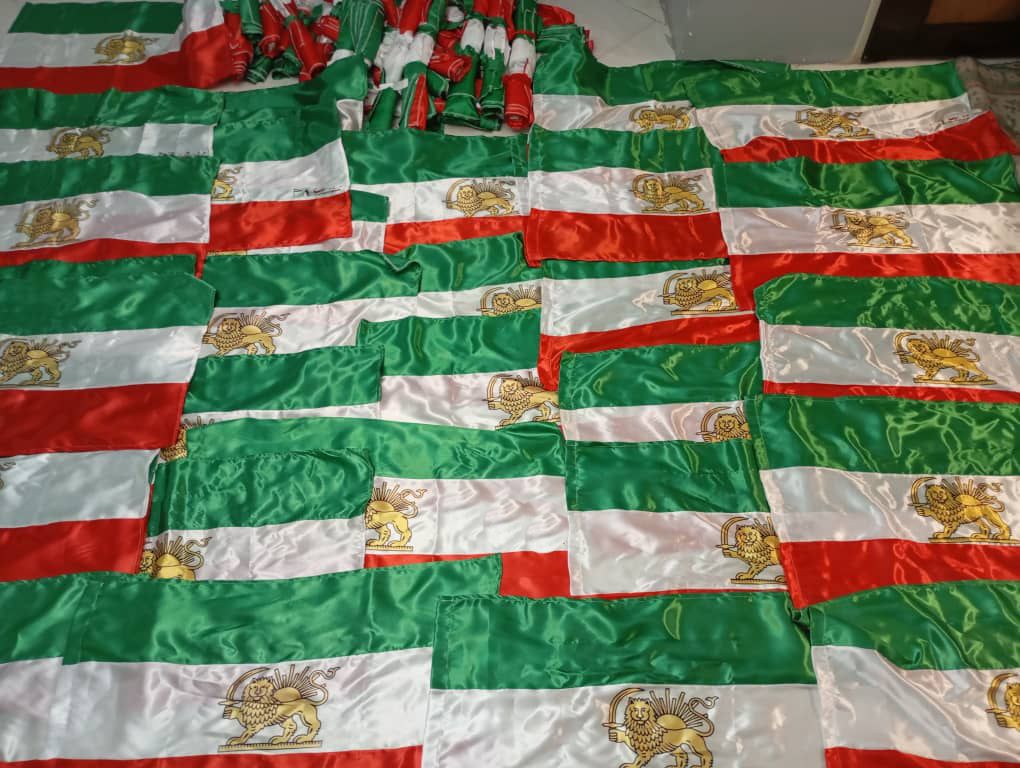
Lion and sun flags. (Courtesy)
He described SOS Iran as a “fighting machine,” built as a systematic network that “does not have a central head.” In their telling, that structure matters because it prevents the regime from collapsing the movement by cutting off a single leader.
Hesam’s list of urgent needs, as relayed by Foroutan, prioritized:
Free internet so Iranians can show the world the reality of the crackdown and coordinate accurately.
Outside help—especially from Israel—to neutralize suppression units as the regime escalates to crush demonstrations.
Official recognition of Prince Reza Pahlavi as the revolution’s leader, because Hesam said Iranians “truly only trust” him, and chants reflect that trust across cities.
Foroutan rejected the assumption that Reza Pahlavi aimed to restore a monarchy with himself as king. “Absolutely not,” he said, arguing that media portrayals casting Pahlavi as a would-be monarch or dictator distort the truth.
At a February 2025 meeting in Munich, he described how organizations urged Pahlavi to take leadership of the revolution—guiding Iran from Islamic Republic rule to freedom. Sitting beside Pahlavi, he said, he watched as organizations begged him “to become the king,” something he said Pahlavi did not want. He quoted Pahlavi’s frustration: “Do I want to become the person that the entire Iran believes in? And don’t make me this person that you want.” He also quoted him saying, “Don’t call me the king and all that stuff that you do. I’m only here to help you go to that side.”
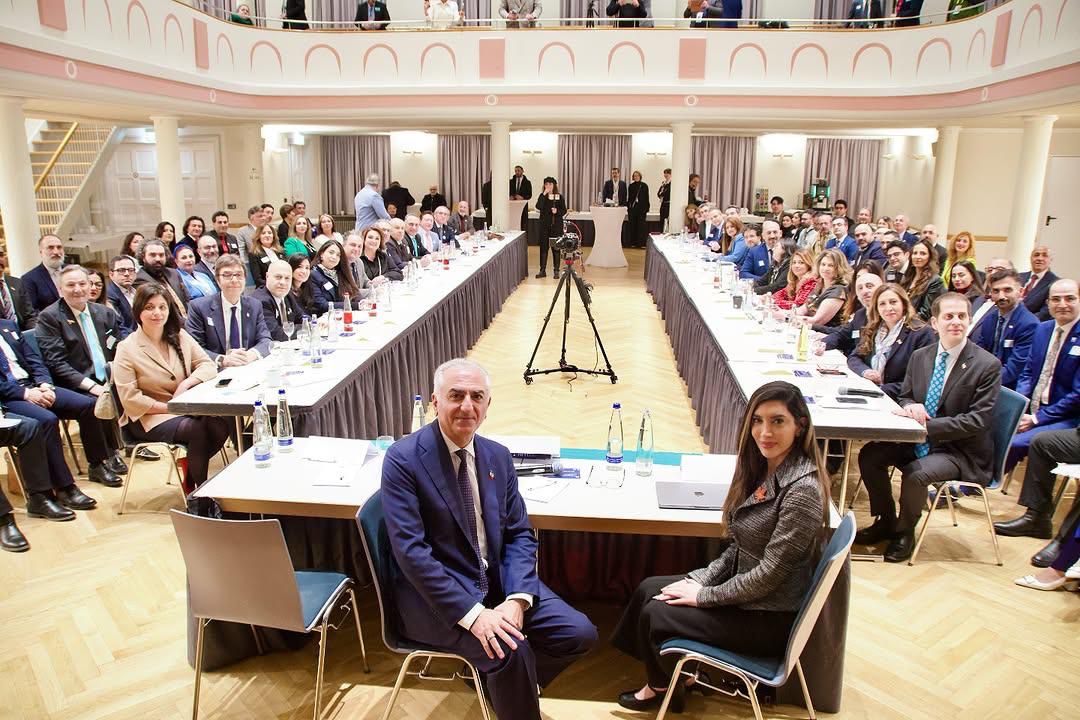
Crown Prince Reza Pahlavi attends the meeting of Iranian opposition organizations in Munich, Germany, February 2025. (Courtesy)
Over time, he emphasized, Pahlavi had repeated that stance for decades. In his telling, Pahlavi’s authority came from trust—trust in his father and grandfather and in his own steadiness. He stressed that Pahlavi did not call for military action against Iran and instead championed civil disobedience, arguing that the movement’s embrace of him grew “organically,” with Pahlavi having “been the leader of this and will be the leader until Iran is freed.”
As the voices from inside Iran faded back into unstable silence, the conversation ended the way it began—with gratitude for any channel that could carry their words outward and with reminders of risk. Najafi thanked those giving her a platform and said that when the dust settles, Iranians will not forget who helped them and who stood against them.
She ended with the same declaration she had carried through her testimony: “long live Iran,” and “Javid Shah.”