
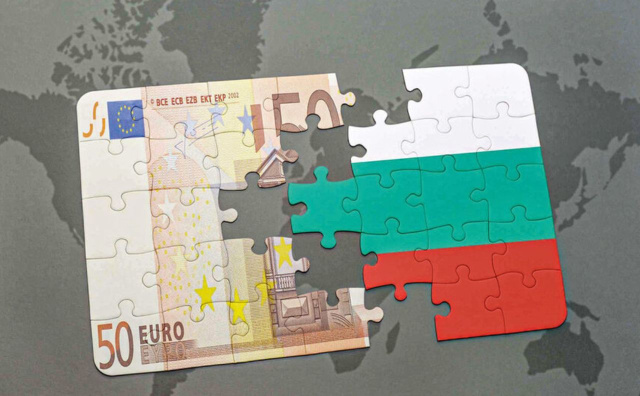
Bulgaria has now completed its transition to the euro, closing a chapter that began more than 28 years ago with the introduction of the currency board. That system was born out of crisis. The banking collapses and hyperinflation of 1996–1997 erased household savings and pushed the country to the very bottom of Europe, with GDP per capita in purchasing power terms falling below 30 percent of the EU average by the end of the 1990s.
What followed was a long period of mostly steady growth and gradual convergence. Nearly three decades later, Bulgaria is nearing 70 percent of the European average by the same measure and is closing the gap with Central and Eastern European countries that entered the EU in 2004 and advanced more quickly in the early transition years. In recent times, that group has typically ranged between 75 and 90 percent of the EU average.
The currency board delivered confidence and monetary stability, which translated into protection of purchasing power. In that sense, joining the eurozone is a natural continuation rather than a rupture. Still, stable money alone does not guarantee prosperity. This was true under the currency board and remains true within the euro area. Weak political direction, pressure on public finances, limited appetite for deep reforms, corruption, and an ineffective judicial system remain structural barriers that Bulgaria must address.
As the initial emotions around the euro changeover fade, attention needs to shift to long-term priorities and risks.
Bulgaria has the potential to be a place of opportunity, personal advancement, innovation, and achievement, including areas where it can play a leading role internationally. To reach this, the country needs a productive, modern economy driven by entrepreneurship, innovation, and the ability to compete successfully with goods and services on global markets.
Reaching average European income levels within a generation is an ambitious target, but not an unrealistic one. A more immediate objective should be to firmly position Bulgaria among the stronger-performing CEE economies within the next three to four years. This requires a predictable business environment, a favorable investment climate, and the preservation of low taxes that support initiative, capital formation, and sustained effort.
Sound public finances are also critical. The past three decades show that Bulgaria performs best when it follows a disciplined fiscal policy. Shifting the burden onto future generations through excessive debt has repeatedly led to political instability and weaker growth.
Equally important is the rule of law. An independent and effective judiciary is essential to protect citizens’ rights, ensure fair competition, safeguard property, and guarantee the enforcement of contracts. Without this foundation, neither domestic entrepreneurship nor foreign investment can fully flourish.
The public sector must deliver clear and measurable results for every euro spent. Education should produce adaptable, skilled individuals capable of lifelong learning and participation in a rapidly changing knowledge-based economy. Healthcare should translate public spending into longer lives and more years in good health.
Finally, economic progress must be felt beyond national averages. Growth needs to reach regions and municipalities, where quality of life depends directly on local capacity to invest, plan, and implement policies that improve the urban and social environment.
In essence, Bulgaria’s success inside the eurozone will depend on expanding economic freedom, strengthening the rule of law, and maintaining a small but effective and accountable state. These are the conditions under which the euro can become not just a symbol of integration, but a real engine of long-term prosperity.
Source: Institute for Market Economics